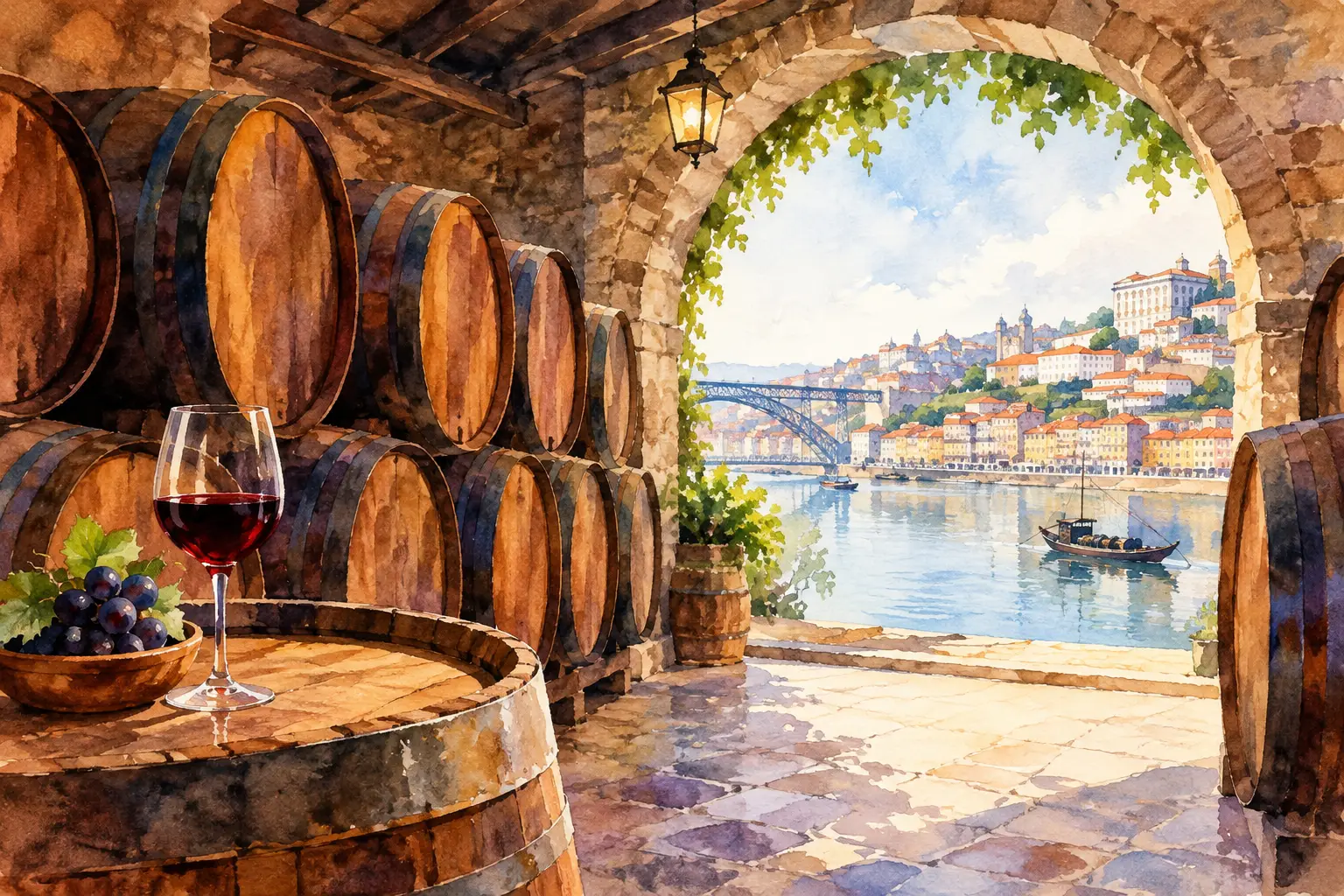



A Guide to Porto Wine Cellars Worth Visiting
The first glimpse of Vila Nova de Gaia from Porto’s riverbank is enough to explain why Port belongs to this landscape. Across the Douro, the great cellar houses rise above red-tiled roofs and rabelos – the traditional boats that once carried barrels downstream from the Douro Valley. A guide to Porto wine cellars begins with one useful distinction: the vineyards are inland, but the historic ageing lodges are here in Gaia, facing Porto’s World Heritage skyline.
This is not simply a tasting excursion. Beneath the cool, dim lodges, vast wooden vats and sleeping barrels hold a story of river trade, British merchants, Portuguese growers and patient craft. Whether you are already devoted to fortified wines or merely curious, an afternoon among the cellars brings Porto’s history into pleasingly vivid focus.
Why the Port wine cellars are in Gaia
Port is made from grapes grown in the terraced Douro Valley, roughly 100 kilometres east of Porto. After fermentation, grape spirit is added to preserve natural sweetness and raise the alcohol level. Historically, the young wine then travelled downriver to Gaia, where the cooler, more humid Atlantic climate offered better conditions for ageing than the hot valley.
The name can cause a little confusion. Visitors often speak of Porto wine cellars, yet nearly all the famous lodges stand on the Gaia side of the river. Reaching them is part of the pleasure: cross the lower deck of the Dom Luís I Bridge on foot, take the metro to Jardim do Morro, or follow the riverfront from Ribeira by boat or taxi. From Casa Camélia, the crossing makes a lovely destination for a late morning or a measured late-afternoon visit.
Choosing a cellar visit
There is no single best lodge for every traveller. The long-established houses tend to offer grander historic spaces, broader tour schedules and a clear introduction to Port’s principal styles. Smaller or more specialist producers can feel quieter and more personal, sometimes placing greater emphasis on particular vineyards, old tawnies or limited releases.
If this is your first encounter with Port, choose a guided visit that includes the cellars and a tasting of several styles. Seeing the barrels matters. It gives meaning to terms such as tawny, ruby and vintage that can otherwise sound rather abstract on a menu.
For visitors who know what they enjoy, seek a more focused tasting. A flight of aged tawnies is especially revealing, while a comparison of vintage Port from different years can show how much a harvest and decades of bottle ageing can change the wine. Do read the tasting description before reserving. Some experiences are designed as broad introductions; others assume a genuine interest in rarer bottles.
Advance booking is wise in spring, summer and over weekends, particularly for English-language tours. The lodges can be refreshingly cool, so bring a light layer even on a bright Portuguese afternoon. Comfortable shoes are also sensible: Gaia’s streets above the river are steep, cobbled and rather beautiful, but not always forgiving.
The Port styles worth knowing
A little vocabulary will make the tasting more rewarding. Ruby Port is generally youthful, vivid and fruit-led, often showing blackberry, cherry and dark chocolate notes. It is the most direct introduction to Port’s richness.
Tawny Port spends longer ageing in wooden casks, gradually taking on an amber colour and flavours of dried fruit, toasted nuts, caramel and orange peel. Labels such as 10, 20, 30 and 40 Years Old indicate the house style and average character, rather than the exact age of every drop in the bottle. A 10-year-old tawny is an excellent place to begin, while older examples become increasingly delicate and complex.
Late Bottled Vintage, usually called LBV, comes from a single year but is aged longer in cask before release. It offers much of vintage Port’s dark-fruited depth in a more approachable form. Vintage Port is made only in exceptional declared years and develops chiefly in bottle. It can be magnificent, but it is not necessarily the most useful choice in a first cellar tasting, especially if its youthful power and tannin are not your preference.
White Port deserves attention too. Served chilled, often with tonic and a twist of citrus, it is a graceful aperitif for a warm day. Rosé Port is a newer, fruitier style, while colheita is a tawny Port from one harvest year, cask-aged until bottling. If you enjoy the first glass, ask your host to explain the difference between a colheita and an age-indicated tawny – it is one of the most satisfying details in the Port world.
How to plan your tasting in Gaia
One cellar visit is enough for many travellers. Two can be delightful if you choose contrasting experiences, but three tours in a day can blur into a parade of oak and sugar. Port is stronger than table wine, commonly around 20% alcohol, and pours may seem modest for good reason.
A thoughtful rhythm is to visit one lodge before lunch, pause for a proper meal, then return for a second tasting or a glass on a terrace above the Douro. Gaia’s waterfront can become busy around sunset, so reserve that moment for the view rather than relying on a last-minute cellar tour. The panorama of Porto’s church towers, iron bridge and layered façades is particularly lovely as the light softens.
Do not arrive ravenous. Even a refined tasting can feel formidable without food. Water between glasses is essential, and it is perfectly acceptable to taste slowly, leave some wine in the glass, or ask for a smaller explanation rather than another pour. The point is pleasure and understanding, not endurance.
Families and non-drinkers can still enjoy the heritage of a lodge, although individual tours and tastings vary. Check the format before booking if this matters to your party. Equally, travellers with limited mobility should ask about steps, surfaces and lift access, as these historic buildings were not created with modern visitor routes in mind.
Pairing Port beyond dessert
Port’s reputation as an after-dinner drink is deserved, but incomplete. A chilled white Port works beautifully before a meal, especially alongside salted almonds, olives or smoked fish. Tawny Port is at home with aged cheese, almond pastries and desserts with caramel or dried fruit. Ruby and LBV can be excellent with dark chocolate, berries or blue cheese.
The most classic pairing is vintage Port and Stilton, yet Portuguese cheeses offer equally compelling company. Try a mature sheep’s cheese with a nutty tawny, or let a rich LBV meet a small plate of chocolate cake. The secret is balance: the food should not make the wine seem cloying, and the wine should not flatten the dish.
What to bring home from a cellar visit
Buying a bottle at the lodge can be a meaningful souvenir, particularly if you have tasted it in the place where it was aged. Still, choose for how you will drink it at home, not simply for the grandeur of the label. A 10- or 20-year-old tawny is ready when opened and keeps well for several weeks when properly recorked. It is often the most generous bottle to share after a holiday.
Ruby, LBV and vintage styles are more sensitive once opened. An LBV is a sensible choice for a dinner party soon after your return, while vintage Port may require decanting and deserves an occasion. If you are travelling with hand luggage only, remember that bottles must be packed in checked baggage or purchased after security at the airport. Ask the lodge about protective packaging if a bottle will travel in your suitcase.
A final note on taking your time
The finest cellar visits do not feel like a checklist. Let the cool scent of old wood linger, notice the painted signs above the vats, and allow time to stand outside afterwards with the Douro below. Porto is a city of tiles, granite, gardens and shifting river light. A glass of Port, tasted with care in Gaia, is one of the loveliest ways to carry that sense of place with you.