


Where Are Douro Departure Points in Porto?
The question, “where are Douro departure points?”, has more than one answer – and the right one depends on the kind of day you have planned. A short cruise beneath Porto’s six bridges begins beside the historic riverfront. A full-day journey into the vineyards may start from a central meeting point, your hotel, or occasionally Vila Nova de Gaia. Knowing which is which leaves more time for the river, the tiled façades and that first glass of Douro wine.
Where are Douro departure points for river cruises?
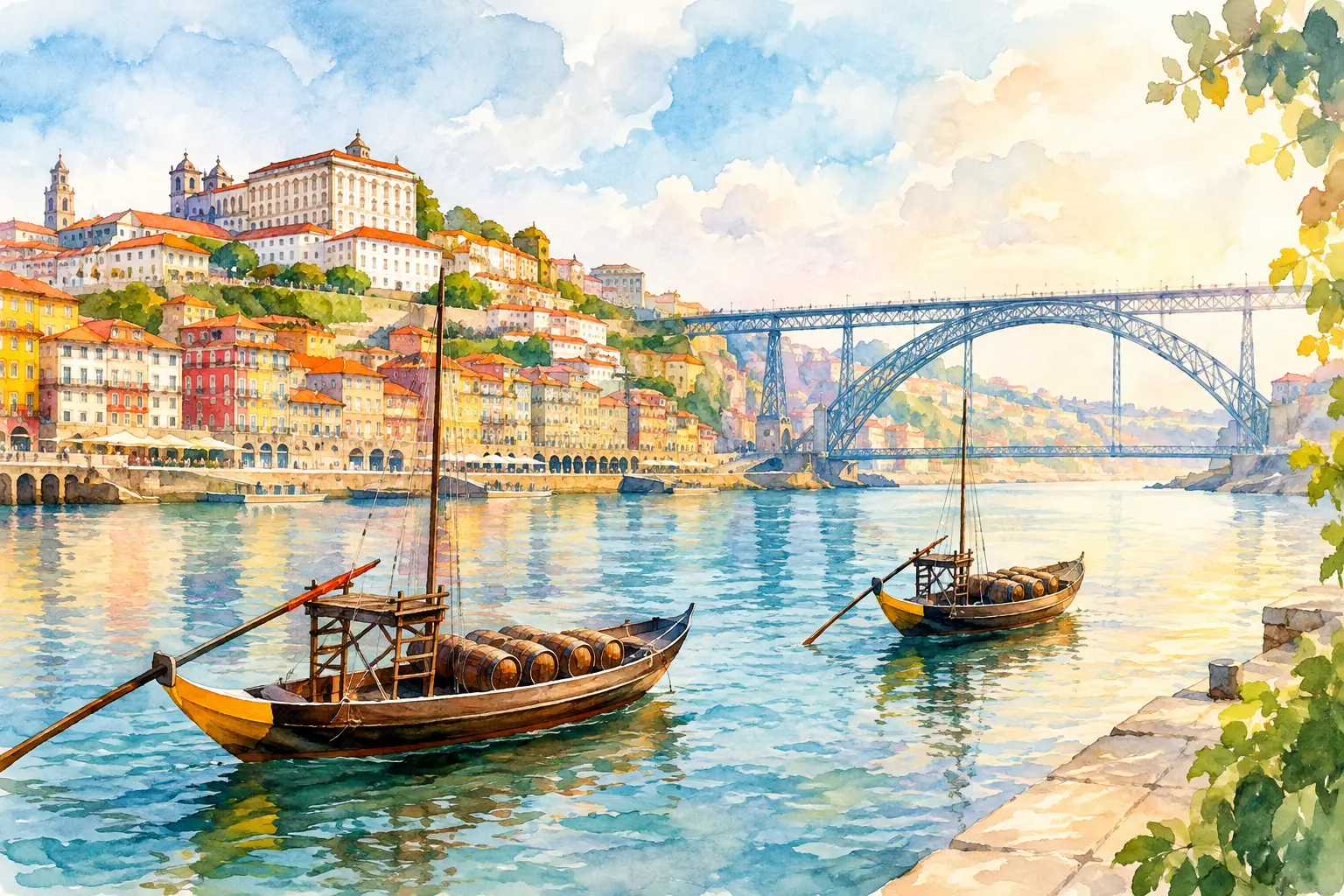
Most sightseeing cruises depart from the waterfront on either side of the Douro: Ribeira, in Porto, and Cais de Gaia, in Vila Nova de Gaia. The two quays face one another across the water, joined by the handsome iron arc of the Dom Luís I Bridge. They are only a short walk apart, but they offer rather different starts to the same experience.
On the Porto side, look for the jetties along Cais da Ribeira, below the colourful old houses and close to Praça da Ribeira. This is the classic setting for the popular Six Bridges cruise. It is particularly convenient after a morning around Sé Cathedral, São Bento Station or the narrow lanes of the World Heritage City’s old quarter. The promenade can be busy in high season, with cafés, musicians and visitors gathering by the water, so allow a little extra time to find the correct boat.
On the Gaia side, departure points are generally found along Avenida de Diogo Leite and the riverfront near the port wine cellars. Many guests choose this side after a cellar visit or lunch overlooking Porto’s hills. It also gives a lovely view back towards Ribeira, especially in the later afternoon when the city’s façade takes on a warm, honeyed colour.
The precise pontoon is determined by the operator and can change with river conditions, boat movements or the season. Your ticket or booking confirmation should name the pier, boat company and requested check-in time. Rather than simply heading to “the river”, look for the company’s sign at the quay and ask a member of staff if anything is unclear. Around the riverfront, this is entirely normal.
The Six Bridges cruise
The Six Bridges cruise is Porto’s easiest river excursion: usually around 50 minutes, with departures throughout much of the day. It passes beneath the bridges connecting Porto and Gaia, from the grand Dom Luís I to the distant Freixo Bridge, while offering a perspective on the city that no viewpoint can quite provide.
For this cruise, either Ribeira or Gaia is normally suitable. Choose Ribeira if your day is centred on Porto’s historic streets; choose Gaia if you are visiting the cellars, the riverside promenade or the cable car. The trade-off is simple: Ribeira is more atmospheric and often livelier, while Gaia can feel slightly more spacious and is practical for a port tasting afterwards.
Departure points for Douro Valley day tours
A Douro Valley tour is a different proposition. The valley begins beyond Porto, where the river narrows between terraced slopes and villages. Day tours by minibus or coach often collect guests from central hotels or arrange a meeting point in central Porto, frequently within easy reach of São Bento Station or Avenida dos Aliados.
Some tours use a designated meeting point rather than hotel collection because Porto’s historic streets are narrow, steep and not always accessible to larger vehicles. If your accommodation lies on a quieter central street, a short walk or taxi journey to the meeting point may be part of the arrangement. This should be confirmed before the day itself, rather than assumed from the tour description.
A small-group tour may offer hotel pick-up, which is especially welcome for guests setting off early. Larger coach tours are more likely to ask everyone to gather at one place. Both can be excellent choices. Small groups tend to feel more personal and may visit intimate family estates; larger tours can be better value and often follow a very efficient itinerary.
A few itineraries combine a road journey into the valley with a return cruise on the Douro. In these cases, the boat normally departs from a valley town such as Pinhão or Régua, not from Porto. You travel there first by road, visit a wine estate or two, then board later in the day for the gentler stretch downstream. Read the itinerary closely: a “Douro cruise” does not always mean boarding a boat in Porto.
If your Douro cruise begins in Porto
Longer cruises sailing between Porto and the Upper Douro use specific commercial jetties, often on the Gaia side or close to Ribeira, depending on the vessel. These are not necessarily the same pontoons used by the short sightseeing boats. Boarding times can be early, particularly for full-day sailings to Régua, and the check-in instructions deserve careful attention.
The river is working water as well as a beautiful one. Water levels, locks, weather and navigation schedules can affect the day’s order. A professional operator will tell you where to meet and whether a transfer is required, but it remains wise to save the address, keep your phone charged and arrive 20 to 30 minutes ahead of departure. Porto’s cobbles are charming underfoot, though less charming when you are hurrying with luggage or trying to locate a small pontoon.
Going independently by train
For travellers who prefer to set their own pace, the train offers another departure point altogether: São Bento Station in central Porto. Regional trains run from São Bento, generally via Campanhã, towards Régua and Pinhão. The journey itself is part of the pleasure. After Régua, the railway follows the river closely, revealing steep vine-covered terraces, whitewashed estates and small stations that seem to belong to another century.
Pinhão is the loveliest base for a short independent boat trip among the vineyards. These local cruises depart from the riverside near the village, rather than from the main Porto quays. Régua is a more practical transport hub and can suit visitors interested in wine museums or a shorter onward journey.
This option rewards a little planning. Train services are less frequent than city transport, and a same-day return can feel rushed if you hope to include a leisurely lunch, a tasting and a boat ride. An overnight stay in the valley allows its quieter character to emerge after the coaches have left, but a carefully planned day trip remains very worthwhile.
Choosing the right side of the river
For a short cruise, do not choose a departure point solely by which side sounds more scenic. Both sides are scenic. Instead, consider the rhythm of your day. Start from Ribeira when you are exploring Porto’s old centre, or from Gaia when port lodges and panoramic viewpoints are already on your plan.
Crossing the lower deck of Dom Luís I Bridge takes only a few minutes and is an experience in its own right, though its pavement can be crowded. If mobility, rain or time are considerations, a taxi can be the more restful choice. Porto is built on hills, and a walk that looks brief on a map may include a steep descent and an equally steep return.
Guests staying at Casa Camélia can enjoy an unhurried breakfast before making their way towards the river or a central tour meeting point. For early departures, arranging a taxi is often the calmest beginning, particularly if the morning brings rain or you would rather save your steps for the cobbled streets and vineyard paths ahead.
A few details that make the morning easier
Check your confirmation the evening before, including the departure side of the river, meeting time and whether your tour includes hotel collection. Bring water, a light layer and comfortable shoes. Even on bright days, the breeze on the Douro can be cool, while the valley is often warmer than Porto by midday.
Most importantly, do not let the word “departure” make the experience feel complicated. Porto’s riverfront is compact, beautiful and well used to welcoming visitors. Once you arrive at the correct quay, the city begins to rearrange itself: tiled roofs climbing the hill, rabelo boats on the water, Gaia’s cellars opposite, and the Douro opening patiently towards the vineyards.