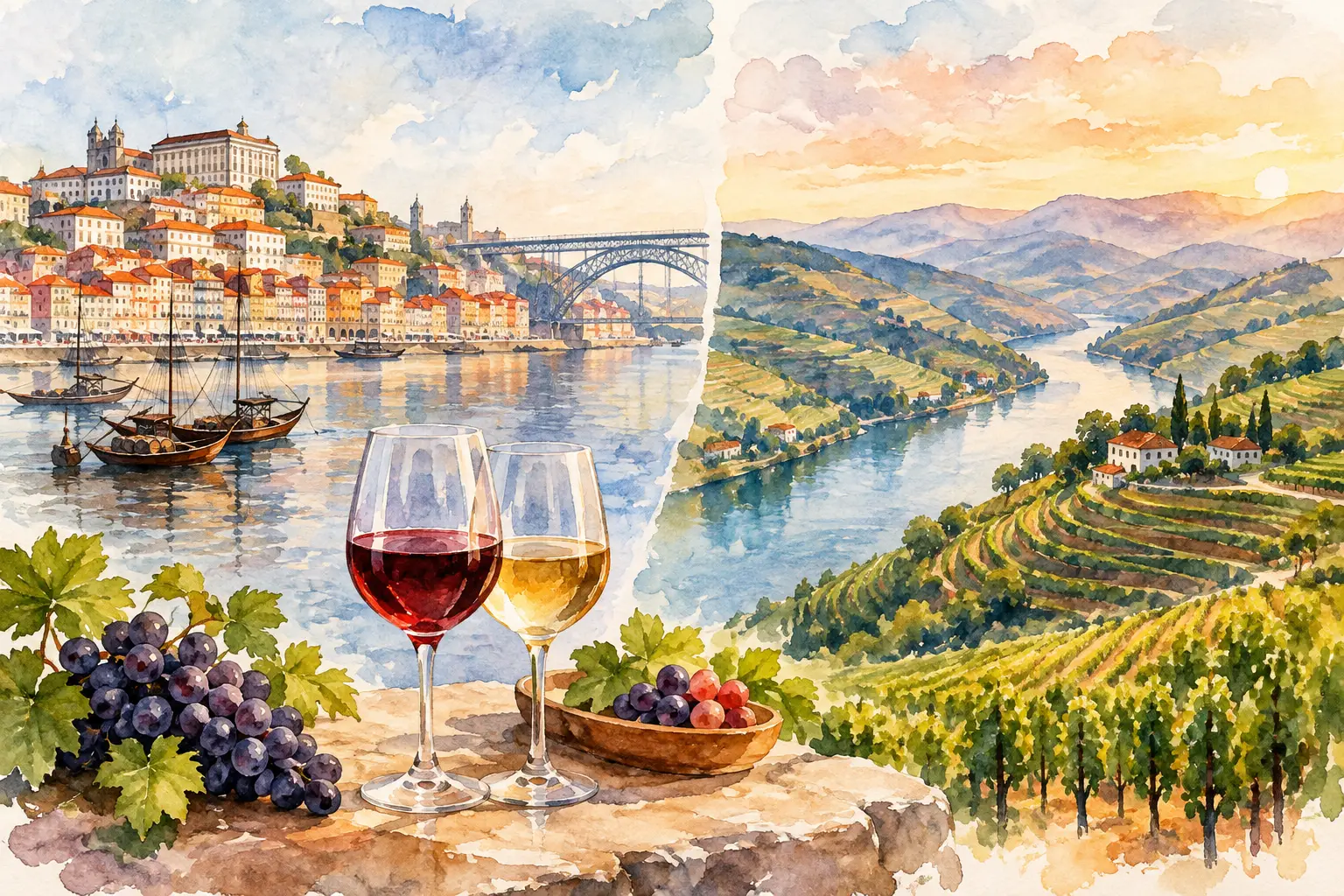



Douro Wine Tastings: Porto or the Valley?
A glass of tawny Port beside the river is one of Porto’s great small pleasures. Yet the most memorable Douro wine tastings often begin with a choice: stay close to the tiled streets and historic cellars of the city, or follow the river inland to the terraced vineyards where the grapes are grown. Both reveal something essential about Portugal’s most dramatic wine region, but they offer very different kinds of day.
For guests staying in Porto, the beauty is that neither choice need feel remote. The Douro is woven into the city’s daily life, visible from its bridges and riverbanks, while the valley opens beyond it in a succession of steep slopes, whitewashed quintas and shimmering water. A little planning makes room for the celebrated wines, the landscape behind them and, just as importantly, the unhurried conversation that turns a tasting into an experience.
What makes Douro wine tastings so distinctive?
The Douro is not simply the home of Port. It is a vast, historic wine landscape where vineyards cling to schist slopes in terraces shaped by generations of labour. The region was formally demarcated for wine production in 1756, making it one of the world’s oldest regulated wine regions, and its cultural landscape is recognised as a UNESCO World Heritage site.
Its most famous export, Port, is a fortified wine. Fermentation is stopped by the addition of grape spirit, preserving natural sweetness and raising the alcohol level. That is why a ruby Port can feel richly fruity, while a mature tawny brings notes of walnut, dried fig, caramel and orange peel. The same indigenous grapes also make increasingly admired still red, white and rosé wines, often fresh and mineral despite the valley’s warm summers.
A good tasting gives these styles context. Rather than rushing through a row of glasses, look for a host who explains how altitude, aspect, grape varieties and ageing influence what is in front of you. Touriga Nacional, Touriga Franca, Tinta Roriz and Tinta Barroca are names worth hearing, but there is no need to memorise them all. The pleasure lies in noticing how a bright young red differs from an older Port, and how the river, heat and stone seem to find their way into each wine.
Douro wine tastings in Porto: history in every cellar
For a first visit, Porto offers an excellent introduction. The traditional Port lodges sit across the river in Vila Nova de Gaia, their names painted proudly along the hillside. Here, barrels and vats have historically matured wines transported downriver from the Douro Valley. A cellar visit makes sense for travellers with limited time, or for those who would like to understand Port before choosing bottles in a restaurant.
Tours usually include a walk through the ageing cellars followed by a guided tasting. The setting may be grand and atmospheric, with the scent of old wood and wine lingering in cool rooms, but experiences vary considerably. Some are polished and popular, with set schedules and larger groups. Others are smaller in scale, more focused on a particular house’s history or on a premium range. Booking ahead is wise, especially from spring through autumn and at weekends.
Porto is also a strong place to taste still Douro wines. Wine bars and specialist tasting rooms can introduce producers from different sub-regions without requiring a full day’s travel. This is an appealing option if your holiday is centred on museums, galleries, long lunches and evenings in the city. You can enjoy a tasting before dinner, then let a sommelier guide you towards a Douro red with roasted meat or a dry white with Atlantic fish.
The trade-off is simple: in Gaia, you learn where Port matures and how it is presented to the world. In the valley, you see the vineyards themselves. Neither is the lesser choice. They answer different curiosities.
A simple way to taste Port with confidence
A tasting flight may include white, ruby and tawny Port, sometimes with a late bottled vintage or vintage expression. White Port is often floral, citrus-led and refreshing, particularly served chilled. Ruby styles are youthful and fruit-forward, with darker berry flavours. Tawny Port ages in wood and develops a softer, nutty complexity, becoming more delicate with greater age.
Begin by looking at the colour, then smell before tasting. Take a small sip and let the wine settle rather than swallowing immediately. You may notice sweetness first, followed by acidity, warmth and texture. There is no correct answer to whether ruby or tawny is better. A lively ruby can be wonderful with chocolate desserts, while tawny is especially graceful with almonds, aged cheese or simply a quiet moment after supper.
A day in the valley: vineyards, river and quinta life
A journey into the Douro Valley is for travellers who want the wine to be part of a wider landscape. From Porto, the journey takes roughly two hours by road, depending on your destination and traffic. The route slowly exchanges city streets for hills, then dramatic terraces that fold towards the river. By train, the line to Pinhão is particularly scenic, though it offers less flexibility for reaching estates away from the station.
Many quintas welcome visitors for tastings, vineyard walks, lunch or overnight stays. Some are intimate family estates, while others are larger properties with formal visitor programmes. The best choice depends on the pace you want. A full-day guided visit can be wonderfully easy: transport, appointments and lunch are organised, allowing everyone to taste without concern about driving. A private driver offers more freedom and may suit couples or small groups keen to choose particular wineries.
If you prefer independent travel, keep the day deliberately spacious. Two tastings, perhaps with a relaxed lunch and a short river cruise, are generally enough. Trying to visit four or five properties can turn a beautiful region into a timetable. The Douro rewards pauses: a viewpoint above the river, the quiet of a vineyard track, the changing colour of the slopes in late afternoon.
At an estate, expect a more direct encounter with still wines as well as Port. You may see the lagares, the shallow granite tanks traditionally used for foot-treading grapes during harvest, and hear about the demanding work of maintaining terraces. Harvest usually falls between late August and October, although the exact timing changes with the weather. It is an exhilarating period to visit, but availability can be limited and roads, restaurants and estates are busier.
When should you go?
Spring brings green slopes, wildflowers and milder temperatures. It is a lovely season for walking and outdoor lunches, although showers are possible. Summer is sunlit and energetic, but the valley can be very hot, especially in July and August. Earlier morning tastings and shaded terraces become particularly welcome.
September and October are prized for harvest atmosphere, golden light and the possibility of seeing activity in the vineyards. They are also popular months, so reserve transport, tastings and lunch well in advance. Winter is quieter and can feel deeply romantic, especially for those drawn to fireside reds and mist over the river, though some smaller venues reduce their visitor hours.
Whatever the season, avoid arranging an ambitious tasting before a long, winding car journey. Eat well, drink water between wines and allow time for the return to Porto. This is not restraint for its own sake; it is how you remain present for the final glass.
How to choose an experience that feels personal
Before booking, consider whether you are most interested in Port, dry Douro wines, architecture, food, vineyard scenery or a more technical explanation of winemaking. A grand historic lodge may be perfect for learning Port’s heritage. A small quinta may offer closer contact with the people making the wine. A food-led experience can be ideal if you remember places through flavour as much as views.
Ask what is included and how long the visit lasts. Some tastings are brief introductions; others include a tour, a seated flight and local pairings. If you have dietary requirements, mention them in advance. For guests travelling with children or those who do not drink alcohol, a vineyard visit can still be rewarding, but it is sensible to check whether the experience can be adapted.
There is also no need to feel intimidated by the language of wine. Tell your host what you usually enjoy: lighter reds, dry whites, sweeter styles or something entirely new. Portuguese hospitality is at its best when it becomes a conversation, not a performance.
After a day among the vines, returning to Porto has its own charm. The city’s granite façades, azulejo panels and riverside lights seem even more vivid when seen through the lens of the valley. At Casa Camélia, the calm of a private garden offers a gentle place to let the day settle – perhaps with a favourite bottle chosen not as a souvenir, but as a reminder of a particular terrace, view and welcome.
The finest tastings leave you with more than knowledge of labels. They give you a sense of the Douro’s scale, its patience and the people who continue to shape it, one steep vineyard at a time.