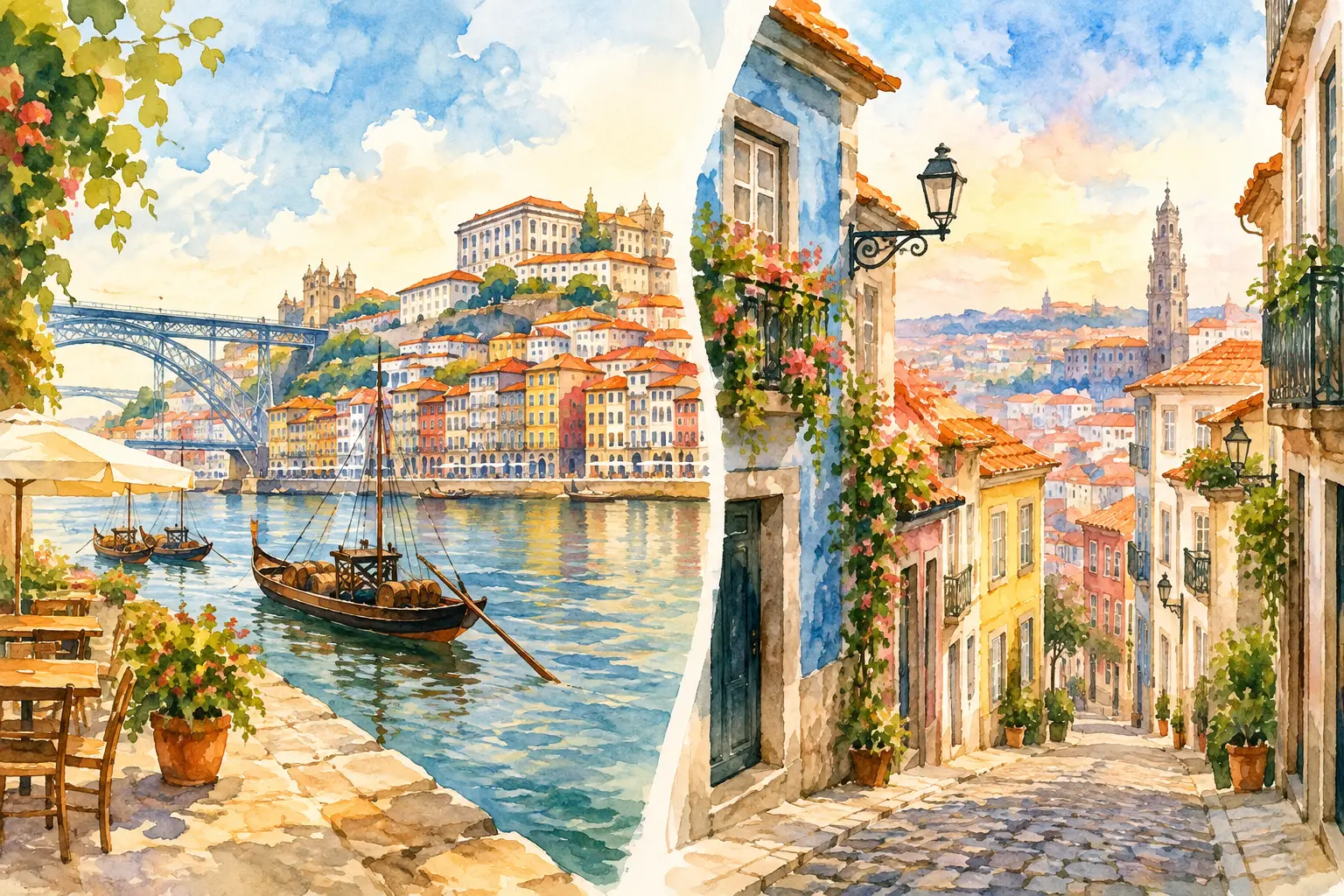



Ribeira versus Cedofeita Accommodation Guide
The choice between Ribeira versus Cedofeita accommodation shapes the rhythm of a Porto stay more than many visitors expect. One puts the Douro almost at your doorstep, with rabelo boats, tiled façades and the glow of Gaia across the water. The other places you among independent galleries, graceful streets, thoughtful cafés and some of the city’s most rewarding places to eat. Both are close to Porto’s great landmarks, yet they offer distinctly different mornings, evenings and ways of coming home.
For travellers who want a stay with character, the question is not simply which district is more convenient. It is whether your ideal Porto feels like a lively riverside stage or a more private, creative neighbourhood with room to linger.
Ribeira accommodation: Porto at its most theatrical
Ribeira is the Porto seen on postcards, although its appeal is far more vivid in person. The old riverfront unfolds beneath the Dom Luís I Bridge in layers of weathered colour: tall, narrow houses, linen on balconies, café tables and the changing light on the Douro. To stay here is to wake up within the World Heritage City’s most celebrated scene.
The pleasure of being beside the Douro
Ribeira makes particular sense for a first visit, a short city break, or anyone for whom the river is central to the holiday. Early in the morning, before day visitors arrive, the quayside has a gentle stillness. A stroll beside the water can lead naturally towards a bridge crossing, a port lodge visit in Gaia, or a boat trip through the Douro’s six bridges.
The location is also wonderfully practical for certain sights. São Francisco Church, Palácio da Bolsa and the lower reaches of the historic centre are close at hand. Dinner can be an unplanned affair: step outside, follow the sound of conversation, and choose a terrace looking across to Vila Nova de Gaia.
Ribeira’s romance is immediate. For couples, especially, there is something memorable about returning after sunset, when the bridge is illuminated and the river reflects the city’s lights. Guests with limited time often appreciate being able to experience Porto’s iconic riverfront without planning every journey around it.
What to consider before booking in Ribeira
The very qualities that make Ribeira exciting can make it less restful. It is one of Porto’s busiest areas, particularly from late spring to early autumn and at weekends. Restaurants, street musicians and passing groups create a vibrant atmosphere, but light sleepers may prefer a room set back from the liveliest lanes.
The historic fabric brings practical considerations too. Streets can be steep, pavements uneven and access by car restrictive. Many buildings have compact layouts, smaller rooms or steps that reflect their age. This is part of the district’s authentic charm, yet it is worth checking lift access, luggage arrangements and the exact position of a property before reserving.
Ribeira is ideal when being in the middle of the action matters more than having a quiet retreat. If you imagine long lunches by the water, late walks along the quay and a view that feels unmistakably Porto, it may be exactly right.
Cedofeita accommodation: creative Porto, lived at a gentler pace
Cedofeita offers another side of the city – elegant, expressive and more residential in feeling, while still wonderfully central. Its streets invite wandering rather than ticking off attractions. Here, former townhouses sit beside design shops, bookshops, contemporary galleries and restaurants where locals return for the cooking rather than the view.
This is Porto for travellers who enjoy noticing details: a painted doorway, a tiny specialist shop, the scent of coffee drifting from a neighbourhood café, or the grand proportions of a nineteenth-century façade. It remains close to the historic centre, but the experience feels less like staying on a stage and more like inhabiting the city for a few days.
A stronger fit for design, food and neighbourhood life
Cedofeita has long been associated with Porto’s artistic and independent spirit. The area around Rua de Miguel Bombarda is known for galleries and creative spaces, while nearby streets provide a rich choice of considered dining, wine bars and relaxed cafés. It is a natural base for guests who like to shape a day around an exhibition, a long lunch or a beautiful shop window.
The district also works especially well for longer stays. There is more variety beyond the headline sights, and the daily pace can feel easier after a full morning among the monuments. From Cedofeita, visitors can walk towards Clérigos, Livraria Lello, the gardens of Palácio de Cristal and the lively streets around Galerias de Paris, then return to a calmer corner of central Porto.
For solo travellers, Cedofeita can feel pleasantly sociable without being overwhelming. For small groups, it offers greater scope to choose between an evening close to home and a short walk into Porto’s nightlife. Couples often value the balance of cultural energy and privacy.
The trade-off: fewer river views, more breathing space
Cedofeita does not offer the immediate riverside drama of Ribeira. Reaching the Douro generally means a downhill walk or a short taxi journey, depending on where you stay and how much time you have. For some visitors, this is a compromise. For others, it is precisely the point: the river becomes a destination to enjoy, while the hotel remains a peaceful place to rest.
Its terrain is still unmistakably Porto, so comfortable shoes are wise. The walk back from Ribeira is uphill, particularly after an indulgent dinner by the water. Yet the reward is a different kind of evening – quieter streets, good local tables and the sense that Porto is still revealing itself beyond its most photographed corner.
Ribeira versus Cedofeita accommodation: which suits your stay?
Choose Ribeira if your time in Porto is short and you want the Douro to frame each day. It is particularly appealing for first-time visitors, celebratory weekends and travellers who want to be surrounded by historic spectacle from breakfast until the last evening stroll. A river-facing room can make an occasion feel extraordinary, provided you are comfortable with a busier setting.
Choose Cedofeita if you are drawn to local character, art, restaurants and a more relaxed return at the end of the day. It suits visitors staying three nights or more, repeat guests who have already fallen for Ribeira, and anyone who prefers an intimate neighbourhood base over a constant flow of people outside the door.
There is also a pleasing middle path. Porto is compact enough that a well-situated Cedofeita stay can place you within walking distance of both the river and the city’s cultural heart. Casa Camélia, a restored eighteenth-century manor house with a romantic and vast private garden, offers that rare sense of seclusion while keeping Porto’s landmarks, restaurants and evening life within easy reach.
Think beyond the map
When comparing districts, look at the accommodation itself as carefully as the pin on the map. In a city of hills and historic buildings, a few details make a meaningful difference: whether your room faces a lively street or a courtyard, whether breakfast is somewhere you will want to linger, and whether there is a garden, terrace or quiet salon to return to after exploring.
Consider the kind of Porto day you want. If you plan to take an early Douro Valley tour, being near a convenient collection point may matter more than a river view. If your holiday includes museums, contemporary art, shopping and unhurried dinners, Cedofeita’s location can be especially satisfying. If you dream of dawn light over the water and evenings when the river is only a few steps away, Ribeira has an allure that cannot be recreated elsewhere.
The loveliest Porto stays often combine both experiences. Spend an afternoon in Ribeira watching the boats pass beneath the bridge, then climb or ride back towards Cedofeita for dinner among the city’s creative streets. Whichever neighbourhood you choose, leave room in the itinerary for wandering – Porto’s most enduring pleasures are often found between the landmarks.