


Choosing a Porto Hotel Near Ribeira
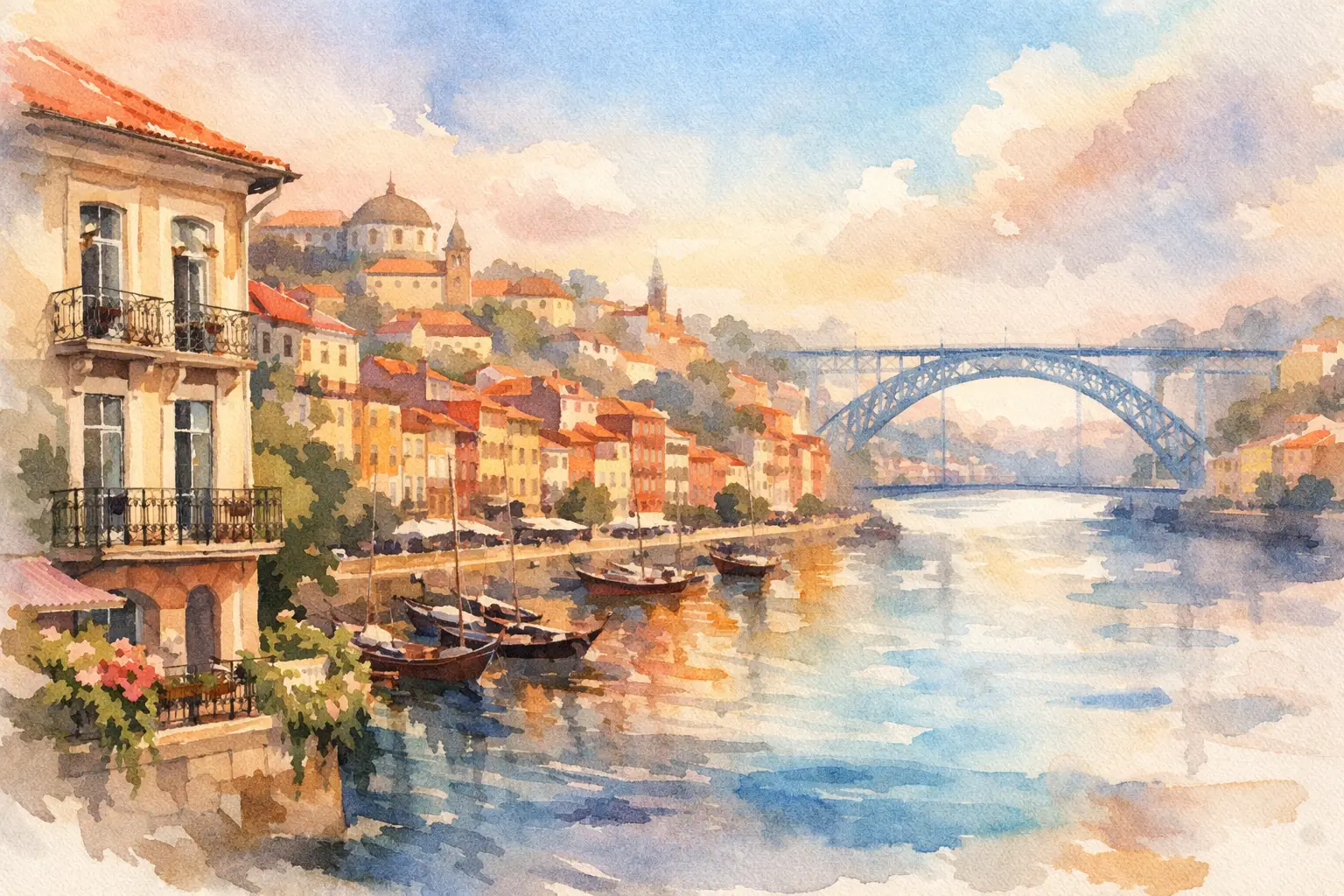
The view from Ribeira is rightly famous: painted façades rising above the Douro, rabelo boats on the water and the iron arc of Dom Luís I framing the opposite bank. Yet choosing a Porto hotel near Ribeira is not only about waking close to this postcard scene. It is about finding the right rhythm for a stay in a World Heritage City – near enough to reach the river in minutes, but with a little calm to return to when the cobbles, terraces and evening crowds have had their turn.
For travellers drawn to Porto’s history, food and artistic spirit, the best base is often just above the riverfront rather than directly on it. From the slopes around the historic centre, the city opens naturally: downhill towards Ribeira and the Douro, across to Vila Nova de Gaia’s port wine cellars, and upwards to galleries, independent shops and neighbourhood restaurants.
What it means to stay near Ribeira
Ribeira is Porto at its most theatrical. By day, it is a place for a slow coffee beside the river, a boat departure beneath the bridge, or an unhurried walk along Cais da Ribeira. At sunset, the granite buildings take on warmer tones and the quayside fills with people lingering over petiscos, vinho verde and the changing light on Gaia.
Staying nearby puts these pleasures within easy reach. You can arrive at the river early, before the excursion groups, and return late without thinking about taxis or steep unfamiliar streets. It also makes a simple evening stroll feel like an occasion: cross the lower deck of Dom Luís I, watch the lights appear across the water, then wander back through the old lanes of Porto.
There is, however, a useful distinction between near Ribeira and in the heart of its busiest strip. Riverside rooms may come with immediate views and a lively atmosphere, but they can also bring restaurant noise, passing voices and the constant movement of a popular visitor quarter. Porto’s old town is built on hills, so a quieter address a short walk above the river may involve a descent and ascent, particularly on the return journey. For many guests, that small effort is rewarded by better rest, more space and a stronger sense of residential Porto.
A Porto hotel near Ribeira, with the city beyond it
Ribeira is an excellent starting point, not a reason to see only one corner of the city. A well-placed hotel near the river should make Porto feel walkable in several directions.
From Ribeira, São Bento station is close enough for its extraordinary azulejo panels to become part of an ordinary morning. The Sé do Porto, with its Romanesque presence and broad views, stands above the river quarter. Continue north and the character changes again: Clérigos, Livraria Lello, the elegant streets around Aliados and the creative energy of Cedofeita each offer a different version of the city.
Across the bridge, Gaia is equally accessible. The riverside cellars are an obvious draw, but it is worth allowing time for the viewpoints higher up the hill. Jardim do Morro gives one of Porto’s most memorable sunset perspectives, while the upper deck of Dom Luís I reveals the Douro valley cutting through the city below.
This is why location deserves more thought than a pin on a map. A property can be only a few hundred metres from Ribeira yet sit behind difficult roads, on an exposed thoroughfare or far from the neighbourhoods you most want to experience. Look for a setting that connects the riverfront with the wider historic centre, rather than one that leaves you confined to the busiest promenade.
The pleasure of returning to a quieter street
After a full day, Porto asks to be enjoyed at a gentler pace. Perhaps that means taking a glass of port in Gaia, listening to the musicians by the river or sharing a late dinner in a small restaurant away from the main square. Afterwards, a boutique stay with a peaceful room and an outdoor corner can make all the difference.
Casa Camélia offers this contrast in a restored 18th-century manor house: a short walk from the Douro and Ribeira, while its romantic and vast private garden creates a quieter world behind the city streets. With only nine individually designed rooms, painted by Porto artist Marta Vilarinho de Freitas, it is for guests who would rather return to character, colour and intimacy than a standardised hotel corridor.
A garden is especially welcome in Porto’s warmer months, when the city’s stone streets hold the afternoon heat. It offers a place to read before dinner, to enjoy breakfast beneath the open sky, or simply to pause after climbing one of the city’s many slopes. In cooler weather, the reward is different but no less lovely: a sheltered, green view and the feeling of staying in a home with its own history.
How to choose the right area for your stay
The right address depends on how you wish to spend your days. Couples planning long riverside walks, a Douro cruise and candlelit dinners will appreciate being within a comfortable walk of Ribeira. Solo travellers may value the confidence of a central, well-connected location that still feels peaceful after dark. Friends travelling together might prefer the flexibility of being close to both the river and Porto’s bars around Galerias de Paris.
Consider the practical details with Porto’s geography in mind. The city is wonderfully compact, but it is not flat. Cobblestones can be uneven and many routes include steps or sharp inclines. If mobility is a concern, ask about access, lifts and the precise walking route to the river. A nearby funicular, tram stop or taxi rank can matter more than a short distance measured as the crow flies.
It is also worth thinking about your arrival. Porto’s historic streets were not designed for modern traffic, and a car can be more burden than convenience once you are in the centre. For a city break, walking and public transport are usually enough. If you plan day trips to the Douro Valley, the coast or northern Portugal, organised excursions and train journeys can spare you the challenge of parking while leaving more time for the landscape.
A room with a sense of Porto
When the days are filled with tiled churches, wine lodges and river views, accommodation should add something of its own. Historic buildings often bring high ceilings, original stonework, shuttered windows or unexpected corners. The finest renovations preserve these traces while making space for good beds, thoughtful lighting and the comforts that turn a beautiful room into a restful one.
Design-conscious travellers may also prefer rooms that are genuinely individual. Porto is a city of makers: ceramicists, painters, chefs, architects and craftspeople have all shaped its visual language. A stay that reflects this local character can feel more memorable than one that could belong to any European city.
The trade-off is that smaller heritage properties may not offer the facilities of a large hotel. There may be fewer public spaces, no extensive spa, and a more personal rather than round-the-clock style of service. For guests seeking anonymity or a full resort programme, a larger property may suit better. But for those who value warmth, beauty and the feeling of being welcomed into a particular place, the intimacy is precisely the point.
Make the river part of every day
A stay near Ribeira is best enjoyed by resisting the urge to do everything at once. Begin one morning at the quayside when it is still quiet, then take the steps towards the cathedral. On another day, cross to Gaia for a cellar visit and return over the bridge at dusk. Leave room for a detour down a lane that catches your eye, a pastry in a neighbourhood café, or an extra hour looking out over the Douro.
Porto rewards this kind of unhurried attention. Its grandest sights are compelling, but so are the smaller moments: laundry moving in an upper window, camellias in a hidden garden, the blue shine of azulejos after rain, and the sound of the river beneath the bridge. Choose a base close to Ribeira that lets you reach the city’s centre with ease, then gives you a beautiful, peaceful place from which to feel Porto linger a little longer.