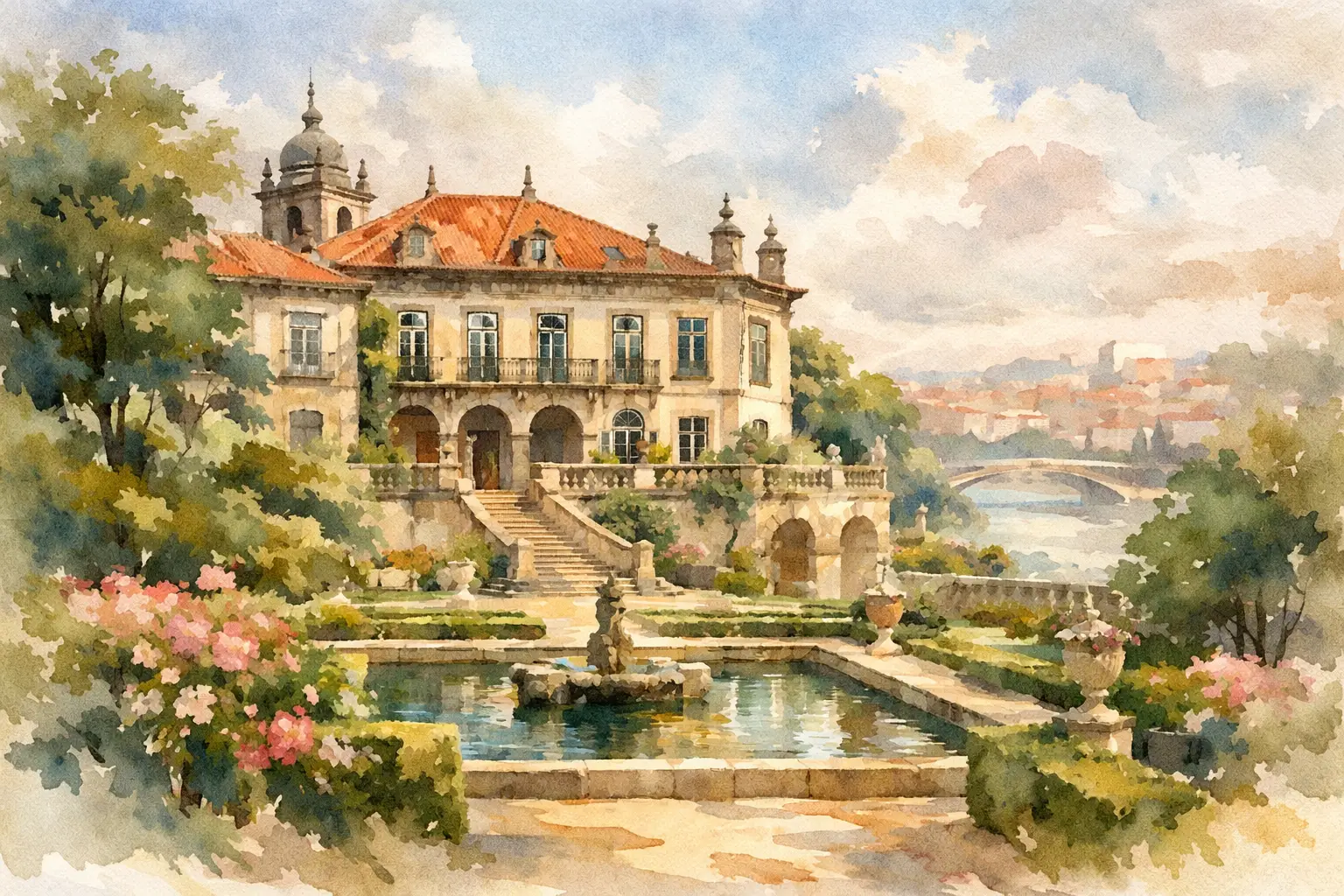



A Historic Manor House in Porto, Reimagined
The city reveals itself differently when your key opens a tall, time-worn door rather than a standard hotel lobby. For travellers searching for a historic manor house Porto can offer, the attraction is not simply age. It is the chance to wake within the city’s architectural story, then step outside and find its riverfront, tiled façades, wine bars and viewpoints close at hand.
Porto has never been a city best understood at speed. Its hills ask you to pause, its streets reward a wrong turn, and its old houses hold the quiet details that polished new buildings often leave behind: a stair rail shaped by generations of hands, high windows catching the Atlantic light, stone walls that keep a room deliciously cool in summer. A stay in a manor house gives those details their proper place.
What a historic manor house in Porto offers
A manor house is not a conventional hotel with period furniture placed in the corners. At its best, it is an intimate home with a distinct history, carefully renewed for contemporary travellers. The experience is shaped by scale. With fewer rooms, there is more room for personality: different proportions, different views, and a sense that each guest is part of the house’s daily rhythm rather than one arrival among hundreds.
This kind of stay suits visitors who want Porto to feel close. Couples may find romance in a garden breakfast before a walk towards the Douro. Solo travellers can appreciate the reassuring calm of a welcoming house after an evening in the livelier streets. Friends travelling together gain a more personal gathering place than a large, anonymous hotel can provide.
Architecture with a lived-in character
Eighteenth-century Porto was built with both grandeur and practicality. Houses of this period often combined formal façades with inward-looking spaces, protecting family life from the bustle beyond the street. Tall ceilings, generous windows and sturdy masonry create a feeling of space that is increasingly rare in city-centre accommodation.
There are trade-offs, and they are part of the charm. A restored historic property may have a staircase whose proportions belong to another century, or rooms whose layouts are pleasingly individual rather than perfectly identical. Guests who value uniformity, large-scale facilities or a business-hotel routine may prefer a modern property. Those who value atmosphere will usually find that these small irregularities are precisely what makes a historic house memorable.
Porto’s past is not kept behind glass
Porto is a World Heritage City, yet it remains delightfully inhabited. Laundry still moves in the breeze above narrow streets; neighbours stop to talk at doorways; the scent of coffee and warm pastry travels further than one expects in the morning. Its historic buildings are not merely monuments. They form the setting for daily life.
Choosing a historic base makes it easier to feel that living connection. From central Porto, mornings can begin with the city still soft and quiet, before the principal sights fill with visitors. Walk towards the river and watch the light alter across the tiled roofs. Cross to Vila Nova de Gaia for a tasting in the port wine lodges, or remain on the Porto side for galleries, independent shops and long lunches that turn naturally into dinner.
The pleasure lies in being able to follow curiosity without complicated journeys back to your room. A viewpoint before breakfast, an afternoon museum, an unplanned glass of vinho verde, a late walk beside the Douro: these are simple pleasures, but they become more generous when your accommodation is within walking distance of the city’s rhythm.
Restoration should make room for the present
Historic character alone is not enough for a restful holiday. The finest manor-house stays pair original architecture with thoughtful modern comfort: good bedding, considered lighting, quiet corners, well-designed bathrooms and spaces that invite guests to slow down. Restoration is successful when it respects the building without asking visitors to sacrifice ease.
This is also where local artistry matters. A house becomes far more than a heritage setting when its interiors respond to Porto’s creative life. Individually painted rooms, Portuguese materials and carefully chosen colours can make each stay feel personal, while avoiding the predictable period-drama look that sometimes overwhelms historic accommodation.
At CASA CAMÉLIA, an eighteenth-century house is brought into the present through rooms painted individually by Porto artist Marta Vilarinho de Freitas. The result honours the building’s age while allowing it to feel fresh, expressive and unmistakably of this city. It is an approach that understands that preservation is not imitation. A historic house should continue to gather new layers of beauty.
The rare luxury of a private garden
Porto is celebrated for its urban energy, but its green spaces offer a different kind of enchantment. A private garden within the centre can feel almost secret, particularly after a day on the city’s hills. There is relief in returning from cobbled streets to birdsong, shade and the gentle order of planted beds.
For CASA CAMÉLIA, the camélia is more than a beautiful flower. Porto is affectionately known as the City of Camélias, and these winter blooms have long belonged to the region’s gardens and grand houses. Their presence creates a quiet link between the property and local tradition, turning the garden into an extension of the city’s cultural identity.
A romantic and vast private garden changes the pace of a city break. It gives guests a place to read between outings, share a glass of wine before dinner, or simply do nothing for an hour. In a destination with so much to see, that pause is not wasted time. It is what allows the impressions of the day to settle.
A graceful base for Porto and beyond
A central manor house works beautifully for visitors who want both a city break and a wider northern Portugal itinerary. Porto’s centre can fill several unhurried days, from the grand spaces around Avenida dos Aliados to the characterful lanes near Ribeira. Yet the city is also a natural starting point for the Douro Valley, Atlantic beaches, coastal cycling, surf lessons and walks beyond the urban hills.
The choice depends on the holiday you want. If your days are devoted to museums, restaurants and neighbourhood wandering, central location matters most. If you are planning a Douro tour or a day by the ocean, a calm, well-connected house offers a particularly welcome return at the end of the journey. Rather than changing accommodation, you can let one distinctive address become the thread that holds the trip together.
Breakfast has its own role here. Before setting off, a generous buffet can turn planning into a pleasure: decide whether the day calls for a slow exploration of Cedofeita, a visit to the river, or a train journey through the north while enjoying a proper start to the morning. The best city stays leave space for both intention and spontaneity.
Choosing the right historic stay
When considering a manor house in Porto, look beyond the age of the building. Consider whether the location supports the way you like to travel, whether the property feels genuinely small enough to be personal, and whether its restoration has retained a sense of place. Photographs can show beautiful rooms, but the more revealing question is whether you can imagine returning there after a full day in the city.
For some travellers, a lively street outside the door is essential. For others, a garden retreat within reach of the action is the greater luxury. Neither preference is wrong. Porto rewards both, provided the house feels like a meaningful part of the journey rather than simply somewhere to leave a suitcase.
A historic manor house offers an invitation to travel with more attention. Let Porto’s old stone, painted tiles, river light and camélia gardens set the tempo, and give yourself enough time to enjoy the moments between the landmarks.