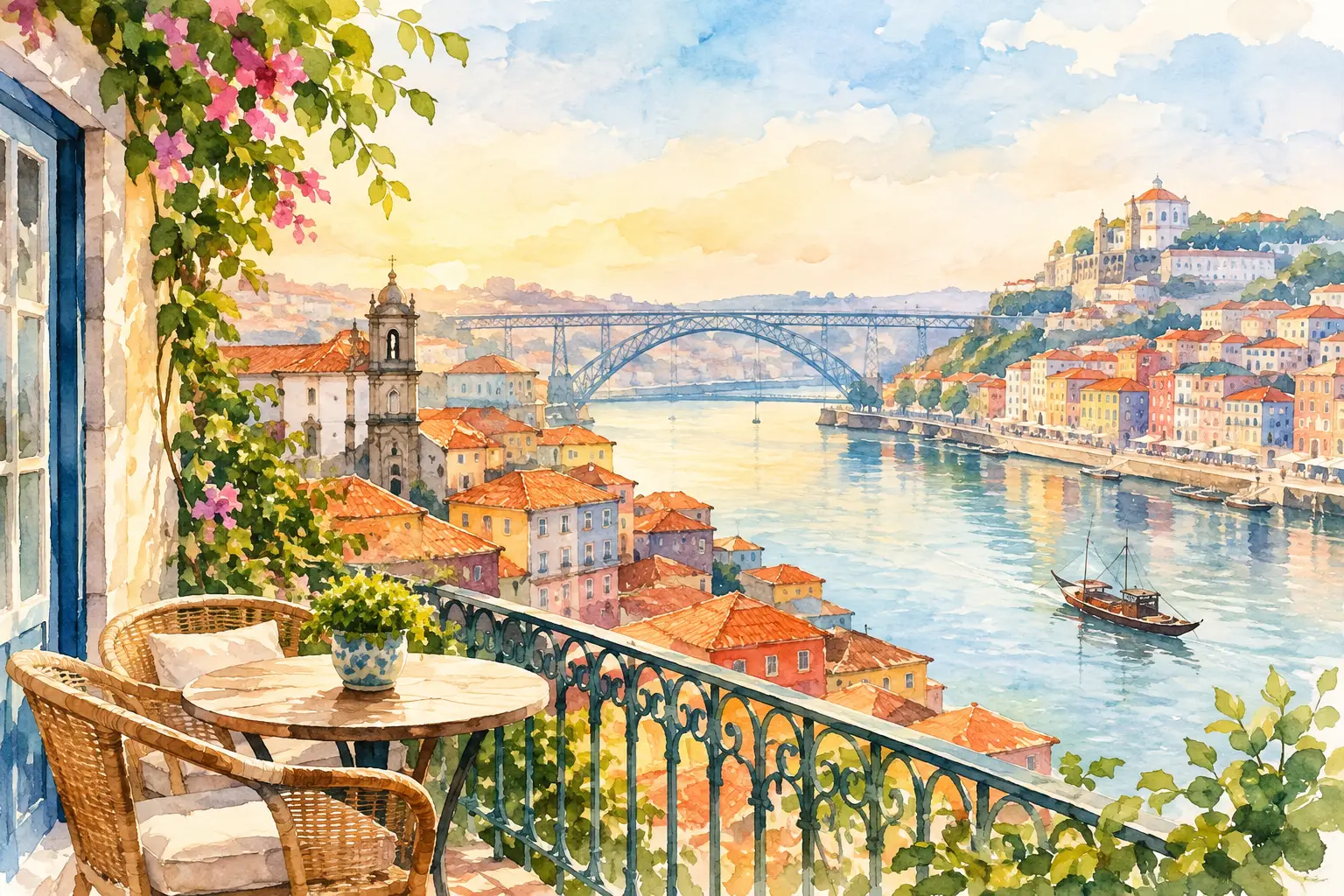



How to Find Peaceful Stays in Porto’s Centre
Porto is wonderfully alive: the rattle of the historic tram, conversation drifting from wine bars, church bells marking the hour, and the bright sweep of the Douro below. To find peaceful stays Porto visitors can truly enjoy, the answer is not to retreat far beyond the city. It is to choose a place that lets the city remain close, while giving you somewhere calm to return to after it has revealed its many voices.
For a city break, quiet is not simply the absence of sound. It is the feeling of having space to linger over breakfast, read beneath a tree, sleep well after dinner, and set out each morning without a long journey to the places that brought you to Porto in the first place. A well-chosen stay makes that rhythm possible.
What peaceful means in a living city
Porto’s most memorable districts are rarely silent, nor should they be. Ribeira has riverside energy and late-night life. Baixa offers grand avenues, cafés and easy access to major sights. Cedofeita has galleries, independent shops and a creative spirit. Each is part of the pleasure of being in a World Heritage City.
The distinction lies in the address and the building itself. A property on a busy square may be ideal for travellers who want to step straight into the evening, but less suited to those who value early nights or an unhurried morning. A quieter residential street, just behind the main routes, often offers the better balance: a short walk to restaurants and landmarks, with less passing traffic outside the window.
It also pays to think beyond the neighbourhood name. Ask where the room faces, whether there is a lift or a steep approach, and how the building manages sound between rooms. Historic Porto homes carry character in abundance, but their original proportions and wooden floors can vary greatly. Thoughtful restoration matters as much as location.
How to find peaceful stays in Porto
Begin by choosing the kind of calm you want. Some guests imagine a room high above the streets, with broad views and a little distance from the city below. Others prefer an enclosed garden, where birdsong and foliage soften the feeling of being in the centre. For many, the most appealing option is a small house with few rooms – personal enough to feel settled, yet private enough to disappear into at the end of the day.
Look for accommodation within walking distance of central Porto, but not necessarily on its busiest arteries. The slopes around Rua de Miguel Bombarda, the upper streets near Clérigos, and the quieter pockets between Cedofeita and the river can offer this welcome middle ground. You may still hear the city at moments, particularly during summer weekends and festival dates, but you are less likely to be in the centre of its constant movement.
A private outdoor space is especially valuable. Porto’s light changes beautifully through the day, and a terrace or garden gives you a chance to experience it without making another plan. It can be the place for a first coffee before a museum visit, or a quiet glass of Douro wine after walking back from the river. In a compact city, that small pause can transform the whole stay.
Choose small scale over standardisation
Large hotels can be convenient, particularly if you need extensive facilities or are arriving late with little time to spare. Yet for travellers drawn to atmosphere, a small boutique property often provides a gentler experience. Fewer guests usually means less activity in corridors and communal spaces, more considered conversation, and a greater sense that the house has its own personality.
The trade-off is that an intimate stay may not have a vast lobby, round-the-clock restaurant or every conceivable service on site. Instead, it may offer something more distinctive: rooms with individual character, breakfast in a light-filled room, and recommendations shaped by real familiarity with the neighbourhood. For a couple celebrating, a solo traveller seeking restoration, or friends sharing a cultural weekend, those details can matter more than scale.
Let the room influence the pace
Not every peaceful room looks the same. Garden-facing rooms offer a quieter, inward-looking mood. Upper-floor rooms can bring more daylight and an airy perspective over tiled roofs. Rooms in a separate pavilion may feel particularly secluded, though they may involve a few steps outdoors to reach breakfast or the street.
When booking, consider how you tend to travel. If you plan to spend long afternoons resting between walks, prioritise space, a comfortable chair and a pleasing view. If your days will be filled with galleries, river cruises and dinners, a beautifully composed smaller room may be all you need. Design is not merely decorative here; colour, natural light, good linens and a sense of proportion all affect how readily you can relax.
A garden changes the experience of central Porto
Porto is celebrated for its granite façades, narrow lanes and dramatic hills, but its gentler side is often found behind closed gates. A mature garden in the centre is a rarity and a pleasure: fragrant air, shade on warm days, and the soft visual relief of leaves after hours spent admiring azulejo-covered churches and river views.
This is one reason a restored manor house can make such a rewarding base. The architecture places you in conversation with the city’s past, while contemporary interiors keep the experience comfortable and fresh. At Casa Camélia, a romantic and vast private garden, filled with the flower so closely associated with Porto, creates precisely this sense of retreat without asking guests to leave the centre behind.
The value is practical as well as poetic. A garden gives a city break natural breathing space. It allows you to arrive early, leave luggage, gather your thoughts and ease into Porto rather than rushing immediately towards a checklist of landmarks. On a rainy morning, it offers a view worth lingering over. On a warm evening, it becomes a quiet alternative to another busy terrace.
Plan days that leave room for stillness
Where you stay is only half the equation. Porto rewards travellers who resist trying to see every landmark before lunch. Start early in the historic centre, when the streets are quieter and the light is soft on the cathedral and Luís I Bridge. Then return to your accommodation for a pause before the city takes on its livelier afternoon and evening character.
A gentle day might include a walk down towards the Douro, a visit to a gallery around Cedofeita, and a long lunch rather than a packed itinerary. Leave time for the small pleasures: watching boats from the riverbank, browsing a bookshop, or taking the funicular instead of climbing one more hill. Porto’s magic is often most apparent when you stop trying to capture all of it.
For those planning a Douro Valley day trip, a quiet central base is equally useful. An early departure is easier after a proper night’s sleep, and there is real comfort in returning to a familiar, peaceful room after a day among vineyards and river bends. The same applies to visits to Foz, Atlantic beaches, or the trails beyond the city.
A few questions worth asking before booking
Before confirming your stay, read recent guest comments for patterns rather than perfection. One reference to street noise may reflect a festival weekend; repeated mentions of thin walls deserve more attention. Check whether breakfast is served on site, whether the property has outdoor space, and whether your preferred room overlooks a garden, courtyard or street.
It is also wise to be honest about what you need. Guests with limited mobility may favour easy access over a historic hilltop setting. Light sleepers may prefer a rear-facing room and a quieter street, while travellers eager to experience Porto’s nightlife may accept more sound in exchange for a doorstep location. Peace is personal, and the best choice is one that suits the holiday you actually want.
Choose a stay that feels like a graceful pause within Porto, rather than an escape from it. Then the city’s music can remain where it belongs: outside your door, ready when you are.