


Porto City Break: A Beautiful Long Weekend
Porto rewards the traveller who leaves room for a little wandering. A Porto city break might begin with the blue-and-white tiles of São Bento station and end with a glass of port beside the Douro, but its most memorable moments often arrive in between: sunlight on weathered façades, the perfume of coffee drifting from a small café, or a quiet garden behind an old stone wall.
Compact enough to explore on foot yet rich enough to fill several unhurried days, Porto is a World Heritage City with a distinctly lived-in character. Its grand churches, mercantile history and river views sit alongside independent galleries, animated wine bars and a food scene that has become one of Portugal’s most appealing. The secret is not to rush from landmark to landmark. Let the city reveal itself by neighbourhood.
How long should a Porto city break be?
Three nights is a lovely introduction to Porto. It gives you time for the historic centre, the riverfront and Vila Nova de Gaia, with an afternoon reserved for the Atlantic or a slower discovery of the city’s less obvious corners. Four nights is even better for guests who like a generous breakfast, a pause in the afternoon and a late dinner rather than a tightly packed itinerary.
Porto is hilly, and that is part of its charm. Cobbled lanes rise unexpectedly, viewpoints call from above, and the walk back from the river asks a little of the legs. Comfortable shoes make a genuine difference. Taxis and ride-hailing services are useful after dinner or when the hills feel less romantic, while the historic trams offer a pleasingly atmospheric way to travel towards the sea.
Spring and early autumn are particularly beautiful, when the light is soft and terraces are inviting without the height of summer crowds. Winter brings rain from time to time, but also a more intimate rhythm, excellent museum afternoons and the pleasure of returning to a warm room after the city streets. Porto is not a destination that depends on perfect weather.
Begin in the historic heart of Porto
Start around the Sé, Porto’s cathedral, where the city’s medieval roots remain tangible in the narrow streets and steep steps around it. From here, walk downhill towards Ribeira, allowing time to look beyond the obvious views. Laundry hung between old houses, carved doorways and glimpses of the river all make this descent feel less like a route and more like an encounter.
São Bento station deserves more than a quick glance at the timetable. Its entrance hall is lined with vast azulejo panels depicting scenes from Portuguese history, each composed of thousands of hand-painted tiles. It is one of those rare everyday buildings that still stops visitors in their tracks.
Nearby, the Igreja do Carmo is another extraordinary study in tilework. Its side wall, richly decorated in blue and white, is much photographed, though the surrounding streets are equally worth your attention. This part of the city is ideal for drifting between bookshops, small design stores and cafés, with the Clérigos Tower rising above the rooftops as a familiar point of reference.
If you wish to climb the tower, go early in the morning or later in the day. The view reaches across terracotta roofs to the Douro and beyond, but the narrow staircase can feel busy at peak times. Those who prefer a quieter panorama may find one of Porto’s miradouros more rewarding, particularly at the end of a long walk.
Follow the Douro, then cross it
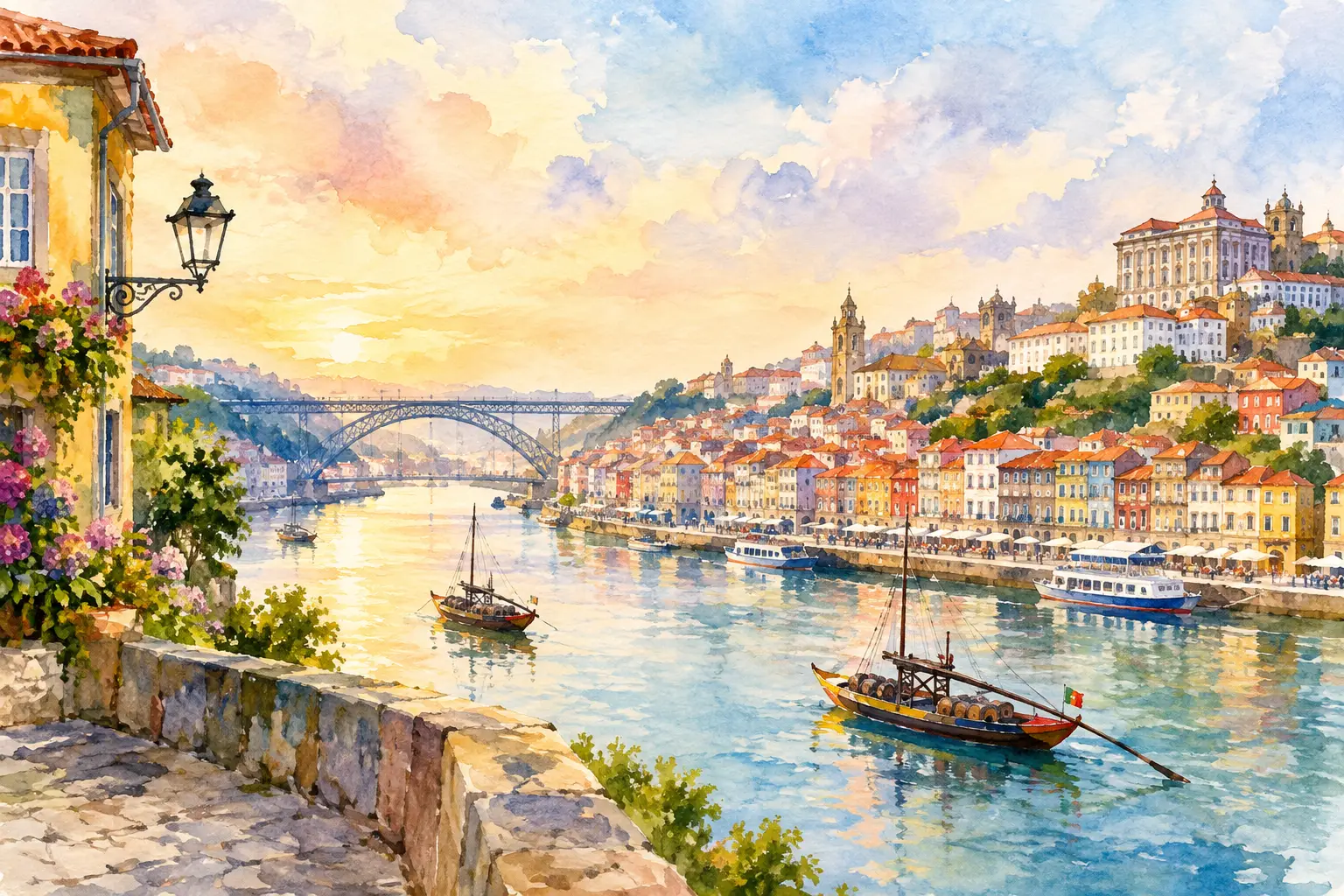
Ribeira is Porto at its most theatrical: painted façades, restaurant tables and rabelo boats gathered beneath the Dom Luís I Bridge. It is also the area most likely to feel crowded in high season. Come in the morning for calm photographs, or arrive around sunset for the changing colours over the water. For lunch, step one or two streets back from the riverfront to find a more local pace.
Cross the lower level of the Dom Luís I Bridge on foot to Vila Nova de Gaia. From the far bank, Porto’s hillside appears almost cinematic, with the cathedral and bridge forming a remarkable skyline. Gaia is inseparable from the history of port wine, and a cellar visit can be a fascinating addition to a Porto city break, especially for guests interested in craftsmanship, ageing and the stories held in old lodges.
There is no need to make every tasting a formal occasion. Choose one cellar experience that appeals to you, then leave time to sit by the river with a simple glass and watch the boats pass. The best travel days are often those with an unplanned hour in them.
Make time for art, gardens and the Atlantic
Porto’s creative life extends well beyond its historic core. The Serralves Foundation combines contemporary art with elegant architecture and expansive gardens, making it a refreshing change of scene after a day among churches and medieval streets. It is particularly appealing on a bright morning, when the grounds invite a slower pace.
Closer to the centre, the gardens of the Palácio de Cristal offer some of the city’s finest views over the Douro. Peacocks wander the paths, mature trees create welcome shade, and the terraces open towards the river valley. Bring a book, or simply take a seat and enjoy the fact that Porto still makes space for quietness.
For a glimpse of the Atlantic, take the tram or a taxi to Foz do Douro. Here the river meets the sea, promenades run beside the waves, and the air feels noticeably fresher. It is a graceful place for a late lunch or a long coastal walk. Foz is not essential on a short first visit, but it is a wonderful choice for guests staying four nights or more, or for anyone who prefers sea air to another museum.
Eat with curiosity, not a rigid plan
Porto’s dining scene can be sophisticated, but it remains grounded in generous Portuguese cooking. A good day might begin with fresh fruit, local cheeses and pastries, followed by a relaxed lunch of grilled fish or petiscos, then finish with a carefully chosen dinner in Cedofeita, Baixa or near the river.
The francesinha is Porto’s famous indulgence: a substantial sandwich layered with meat, covered in melted cheese and served with a rich beer-based sauce. It is not subtle, and it is not for every appetite, but sharing one at lunch is a cheerful local ritual. Seafood lovers should look for seasonal catches, while vegetarians will find an increasingly thoughtful selection of modern Portuguese and international cooking across the city.
Reservations are sensible for popular restaurants at weekends, particularly from Thursday to Saturday. Yet leave one evening free for spontaneity. Porto is made for following the warm light from one square to the next and choosing a table because it feels right.
Stay somewhere that lets the city breathe
Where you stay shapes the rhythm of a city break. A central address means you can return for a rest after the slopes of Ribeira, change before dinner, or enjoy a quieter morning before joining the streets again. It is especially valuable in Porto, where the temptation to keep walking is strong and a peaceful pause can make the rest of the day more enjoyable.
Casa Camélia offers that gentler counterpoint: a restored eighteenth-century manor house with just nine individually designed rooms, a romantic and vast private garden, and the feeling of being in Porto rather than simply beside it. Its position places the city’s restaurants, galleries, landmarks and nightlife within reach, while its garden offers a welcome retreat from the urban energy beyond the gates.
For couples, the balance of privacy and proximity is especially appealing. Solo travellers may value the sense of calm and personal character that larger hotels can struggle to create. Small groups, meanwhile, can make the most of Porto’s sociable evenings while still having a refined home base to return to.
Leave room for one day beyond the city
If your stay allows, Porto is an excellent starting point for the Douro Valley. Terraced vineyards, winding roads and the river’s changing landscapes offer a striking contrast to the city’s granite streets. A guided day trip is the easiest choice if you would rather taste wines than navigate unfamiliar roads, though an overnight stay is preferable for those wishing to experience the valley without watching the clock.
The coast, hiking routes and nearby towns also make tempting alternatives. The right choice depends on what you want from your holiday: the Douro for dramatic landscapes and wine, the Atlantic for open skies and surf, or an extra day in Porto for galleries, long lunches and those streets you did not quite have time to explore.
Leave Porto with one final walk, perhaps before breakfast, when shutters are still closed and the city belongs to its residents. The Douro will still be moving below the bridges, the tiles will catch the morning light, and there may be one more café, garden or viewpoint waiting to become the part you remember most.