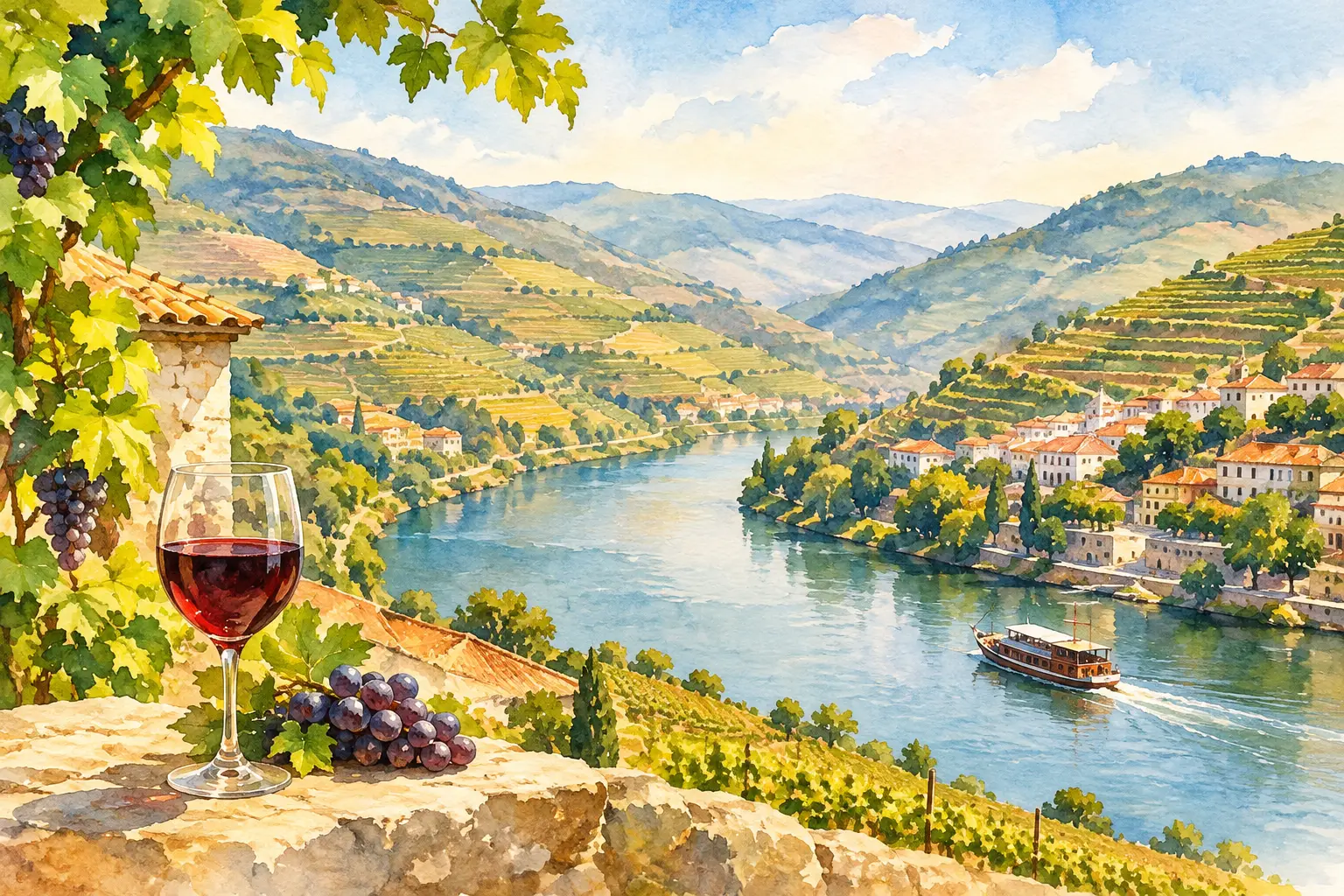



Douro Valley: A Beautiful Day Trip from Porto
The Douro Valley begins to reveal itself beyond Porto’s handsome streets and riverfront bustle, where the river narrows, the hills rise and terraces appear to have been carefully stitched into the landscape. For travellers staying in the city, it is one of Portugal’s most rewarding day trips: a journey into the source of the wines that have shaped Porto’s history, commerce and character for centuries.
This is not a place to hurry through. The valley’s beauty lies in its changing light, the patient geometry of its vineyards and the quiet drama of the river below. A well-planned visit allows time for a tasting, a leisurely lunch and, ideally, a moment simply to look out across the hills.
Why the Douro Valley feels so distinct
The Alto Douro Wine Region is a UNESCO World Heritage landscape, recognised not only for its striking scenery but for the extraordinary human work behind it. Generations of growers shaped these slopes with dry-stone walls and narrow terraces, making cultivation possible in a landscape that is both generous and demanding.
The Douro has long carried wine east to west, eventually reaching the cellars of Vila Nova de Gaia, just across the river from Porto. Port wine remains the region’s most celebrated export, but the valley also produces elegant reds, crisp whites and increasingly admired sparkling and rosé wines. A visit is therefore about more than a tasting. It is an introduction to a living cultural landscape, where agriculture, family estates and river life remain closely connected.
Its atmosphere changes with the seasons. Spring brings green vines and wild flowers along the roadsides. Summer is bright, warm and dry, with long golden evenings. In autumn, the slopes deepen into russet, amber and red, while the grape harvest brings a particular sense of purpose to the quintas. Winter is quieter and often beautifully clear, though some properties operate on reduced schedules.
Choosing the right Douro Valley day trip
From Porto, the journey to the heart of the valley generally takes between 90 minutes and two hours by road, depending on the destination and traffic. It is entirely possible to visit in one day, but the experience depends greatly on how you like to travel.
A small-group or private guided tour is usually the most relaxed choice for first-time visitors. It removes the question of driving after wine tastings and often includes a visit to one or two wine estates, lunch and a short river cruise from Pinhão. Private tours offer more flexibility, particularly for guests who are interested in architecture, photography, a particular style of wine or a slower lunch with a view.
Independent travel suits those who enjoy setting their own rhythm. The train from Porto follows the Douro for part of its route and offers a wonderfully scenic approach, especially once it passes Régua. It is a lovely choice for reaching Pinhão, although getting between wineries can be less straightforward without pre-arranged transport. Taxis are available but should be planned in advance, particularly outside the busiest months.
Driving offers freedom, but it asks something in return. The roads are winding, the viewpoints can be tempting and vineyard visits naturally involve wine. If you hire a car, appoint a driver who will not be tasting, keep the itinerary modest and allow extra time. The valley is far more enjoyable when there is no need to watch the clock.
Pinhão, Régua and the spaces between
Peso da Régua is often the first major stop in the valley and has strong connections to the historic wine trade. It is practical, lively and well placed for visitors who want to understand the region’s commercial story. Pinhão, further upriver, is smaller and more immediately picturesque. Its celebrated station, decorated with blue-and-white azulejo panels, is worth a pause before continuing towards the hills.
Yet some of the most memorable moments happen between these towns: a bend in the road revealing the river, a pale manor house above the vines, a tiny village church or a terrace where lunch stretches gently into the afternoon. Leave room for these unscripted details.
What a good winery visit should include
The best quinta visits give the landscape as much attention as the glass. You may walk through the vineyards, see the traditional lagares where grapes have historically been trodden, visit a barrel room or learn how grapes from different plots are selected and aged. The scale ranges from grand historic estates to intimate family-run producers.
When booking, look beyond the number of tastings included. Consider whether you would prefer a focus on Port, still wines or both; whether the visit includes a tour of the property; and whether lunch is served on site. A thoughtful meal overlooking the terraces can become the centrepiece of the day, particularly when regional dishes are paired with local wines.
Port tasting is often a revelation for people who only know one style. A dry white Port served chilled can be bright and aromatic; tawny Ports bring notes of dried fruit, nuts and spice from their time in wood; vintage Port is richer, darker and made for patience. There is no need to become an expert. Curiosity and a little time are enough.
A river cruise is lovely, but not essential
Short boat trips from Pinhão offer a peaceful view of the valley from the water. From the river, the terraces seem even steeper and the grander estates reveal their riverside facades. For many visitors, an hour on a traditional rabelo-style boat is a welcome contrast to travelling by road.
That said, a cruise is not compulsory. If your day already includes two generous estate visits and a long lunch, adding another scheduled activity can make the experience feel rushed. Choose it if the water is part of the appeal, not simply because it appears on every itinerary.
When to visit the Douro Valley
May, June, September and October often offer the most comfortable balance of weather, colour and vineyard activity. Summer brings dependable sunshine but also higher temperatures, especially in the enclosed valley. Early starts help, and shaded terraces become particularly welcome by lunchtime.
Harvest season, usually from late August into September, is one of the most atmospheric times to visit, though dates vary with the year’s conditions. Estates can be busy, and access to certain areas may be limited while work is under way. For travellers drawn to the energy of grape picking and production, that is part of the pleasure. For a quieter, more contemplative day, late spring or October may be preferable.
Whatever the season, reserve winery visits ahead. The most characterful properties are often small, and their hospitality is necessarily limited. Comfortable shoes, sunglasses, water and a light layer are sensible companions, even on a day that begins warm in Porto.
Returning to Porto with the valley still in view
A day among the vineyards makes Porto feel richer on your return. The bottles in the wine bars, the old merchant houses and the lodges across the river in Gaia become part of a larger story – one that begins far inland, on terraced slopes above the Douro.
Casa Camélia offers a peaceful place to return to after such an excursion, with its romantic and vast private garden providing a gentle counterpoint to the valley’s grand scale. Over breakfast the following morning, there may be time to savour the memory properly: the river’s deep curve, the scent of warm stone and the particular generosity of a table set among the vines.
The finest Douro Valley visit is rarely the one with the fullest programme. Choose a few experiences with care, travel at an unhurried pace and let the landscape do what it has done for centuries: make ordinary time feel beautifully suspended.