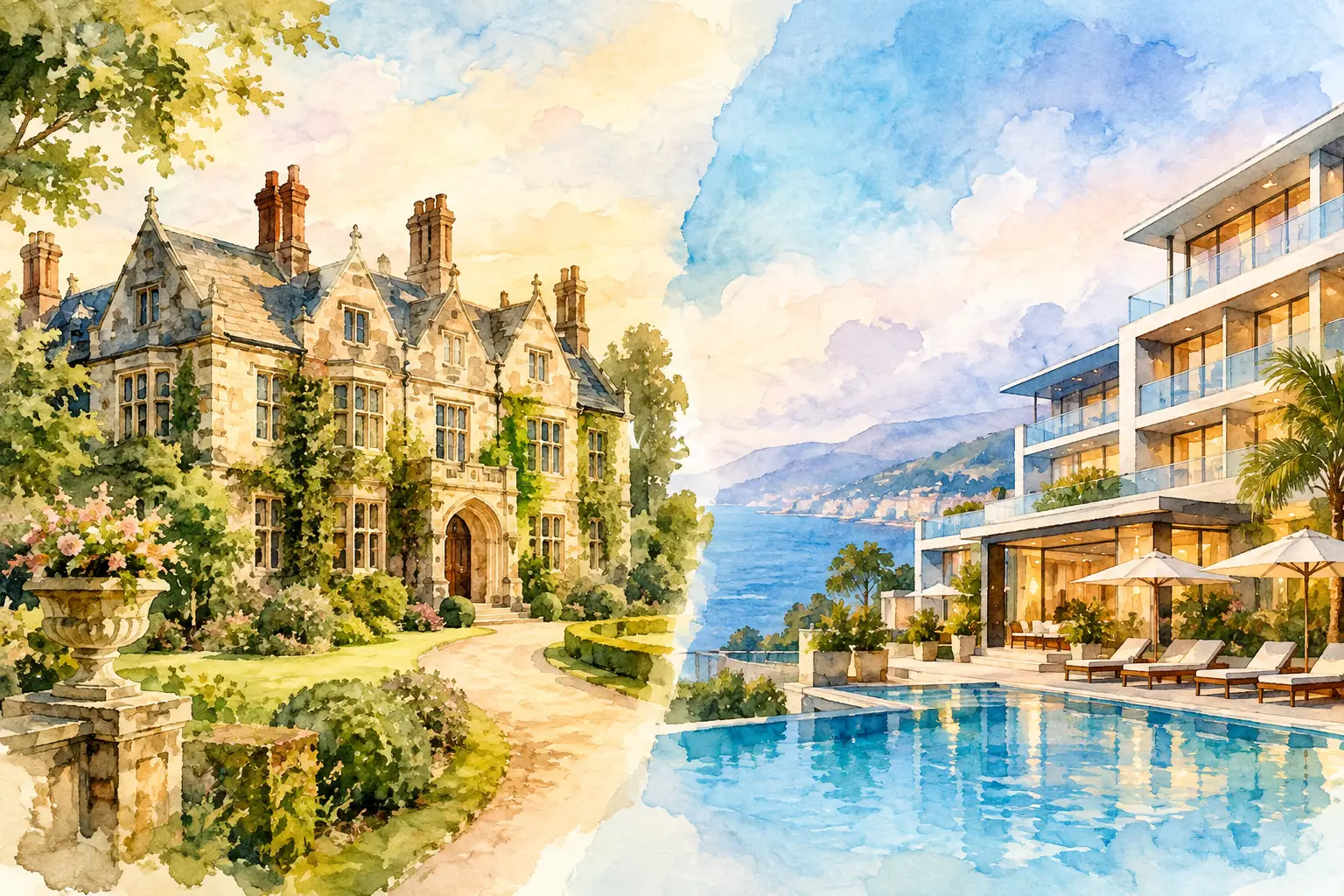



Historic Manor Versus Modern Hotel: Which Fits?
A stay in Porto is shaped by the hours between your walks along the Douro, late dinners and visits to tiled churches. The choice of a historic manor versus modern hotel therefore matters rather more than a room category: it determines whether you return to a place with its own story, or to a polished, predictable retreat.
For some travellers, the ease of a large contemporary hotel is exactly right. For others, especially those drawn to Porto’s old streets, creative life and layered architecture, a small historic house offers a more personal way to inhabit the city. Neither is automatically better. The most rewarding choice depends on how you like to travel, rest and remember a place.
Historic Manor Versus Modern Hotel: The Essential Difference
A modern hotel is designed for consistency. Its public spaces, bedrooms and service are often organised around clarity and efficiency, so guests can arrive late, understand the layout quickly and know what to expect. This can be reassuring on a busy itinerary, during a short business trip or when you need extensive facilities close at hand.
A historic manor offers a different kind of comfort. Its character comes from what cannot be reproduced: the proportions of an old staircase, worn stone, high ceilings, original shutters, a salon with a sense of occasion, or a garden sheltered behind a city façade. Even after a thoughtful renovation, the building retains its small irregularities and particular rhythms. These are not compromises when they are cared for well. They are part of the pleasure.
In Porto, this distinction feels especially meaningful. The city is best understood slowly, through viewpoints, neighbourhood cafés, river light and buildings that reveal their details over time. A manor house can feel less like a pause from the destination and more like an extension of it.
Character Is Not Just Decoration
There is a difference between a hotel that displays local style and a house that belongs to the place. Modern properties may use Portuguese tiles, photographs or a carefully selected colour palette to establish a sense of location. A historic residence begins with a deeper connection: its architecture, setting and past already form part of the city’s fabric.
That heritage can make the stay more atmospheric, particularly for couples and design-minded travellers. You may wake beneath a traditional ceiling, have breakfast in a room shaped by another century, then step into streets where Porto’s history continues around you. When original architecture meets contemporary design, the experience need not feel formal or museum-like. It can be fresh, comfortable and quietly expressive.
The finest small houses allow each bedroom to have its own identity rather than repeating a single scheme across floors. Individually chosen furnishings, locally made art and considered colours create the feeling that a room has been composed, not merely equipped. At Casa Camélia, rooms painted by Porto artist Marta Vilarinho de Freitas bring this sense of place into the private moments of a stay.
There is a trade-off. Guests who prefer identical room layouts, a highly minimal aesthetic or the certainty of every space being brand-new may be happier in a modern hotel. A historic building is more individual by nature, and that individuality is precisely what many guests seek.
Privacy, Scale and the Feeling of Being Looked After
The size of a property changes the emotional pace of a holiday. Larger hotels can offer anonymity, choice and constant movement. There may be a substantial lobby, several dining options, a fitness suite, a spa or round-the-clock activity. For families needing particular services, travellers attending an event, or anyone who enjoys a lively atmosphere, those facilities can be valuable.
A manor house usually offers something quieter: fewer rooms, fewer passing faces and a greater sense of retreat. You are more likely to recognise the people who welcome you, to enjoy breakfast without the sound of a crowded dining room, and to find a corner that feels temporarily your own. This intimacy is particularly appealing after a full day in Porto’s bustling centre.
Privacy does not mean distance. In a well-run boutique property, hospitality is attentive without becoming intrusive. Staff can offer practical guidance on neighbourhood restaurants, a viewpoint worth seeing at sunset or the easiest way to plan a Douro Valley day out. The tone is less about processing guests through a system and more about making a visit feel considered.
For solo travellers, this balance can be especially appealing. A small, welcoming house offers reassurance and human warmth, while still allowing complete independence. Couples often appreciate the same quality for different reasons: the possibility of an unhurried breakfast, a peaceful terrace or a garden walk before dinner.
The Case for a Garden in the City
One of the most overlooked differences between a historic manor and a modern hotel is the outdoor space. In a dense and walkable city, a private garden is not simply an attractive feature. It changes the shape of the day.
Porto rewards exploration, but its hills ask something of the legs. After climbing towards the cathedral, wandering through Cedofeita or returning from the river, a romantic and vast private garden offers a gentle interlude. A book, a cup of coffee, birdsong and the shade of mature planting can feel like a small luxury before the evening begins.
This is where a historic urban property can be unexpectedly generous. Behind an unassuming street entrance, old homes sometimes conceal courtyards, terraces and gardens that have been protected from the city’s pace. For visitors interested in the city’s camellia heritage, a garden filled with these flowers carries a particular local poetry. Porto is known as the City of Camélias, and the blossom is more than a decorative motif: it is part of the city’s cultural memory.
A modern hotel may compensate with a rooftop bar, pool terrace or dramatic skyline views. If your priority is socialising above the city or having a full leisure offering on site, that may suit you beautifully. But if you want calm at ground level, with the feeling of a private residence, a garden manor has a rare advantage.
Location: Walkability or Complete On-Site Convenience?
The best location is not always the busiest one. Staying directly beside a major attraction can make sightseeing simple, yet it may also mean noise, crowds and a more transient atmosphere. A historic house on the edge of the centre can offer a more balanced arrangement: close enough to walk to Porto’s galleries, restaurants, nightlife and riverside landmarks, but set back enough for restful sleep.
For a first visit, walkability matters. Porto’s most memorable encounters are often unplanned: a bakery discovered on the way to lunch, a tiled doorway, music drifting from a bar, the changing view as the streets descend towards the Douro. A well-positioned boutique stay gives you the freedom to follow those moments without relying on transport after every stop.
Modern hotels can be excellent choices near transport hubs, conference venues or the airport, especially when time is limited. They may also offer more immediate access to taxis, parking and larger-scale concierge services. Consider the practicalities of your own trip. If you plan to hire a car for beaches, surfing or the Douro Valley, parking and road access may matter more. If your holiday is centred on the World Heritage City itself, being able to walk out of the door can be the greater luxury.
Comfort Has Evolved, Even in an Old House
Choosing heritage no longer needs to mean accepting outdated comfort. Sensitive restoration can preserve period details while providing excellent beds, thoughtful bathrooms, reliable climate control and the small practical touches international guests expect. The strongest historic properties know that romance works best when it is underpinned by ease.
Still, it is sensible to match the building to your needs. Older houses may have stairs, varied room sizes or architectural features that are less straightforward than a purpose-built hotel. Guests with reduced mobility, those travelling with very young children, or anyone who needs a lift and extensive in-room space should check the details before booking. This is not a failing of historic accommodation, but a reality of preserving a building’s character.
Likewise, travellers who want a large gym, a business centre, a major restaurant or 24-hour room service may find a full-service hotel more suitable. A manor house tends to direct attention outward, towards the city and its pleasures, rather than attempting to contain every amenity within its walls.
Choose the Stay That Deepens Your Porto
Ask yourself what you hope to feel when you close the door at the end of the day. If you want efficiency, abundant facilities and familiar consistency, a modern hotel may give you the most relaxed stay. If you are travelling to find Porto’s artistic spirit, architectural grace and gentler private corners, a historic manor can turn accommodation into part of the journey itself.
Leave room in your plans for an unhurried morning. Porto has a way of rewarding those who linger: over breakfast, beneath camellia trees, or on the walk towards the river when the city is still opening its shutters.