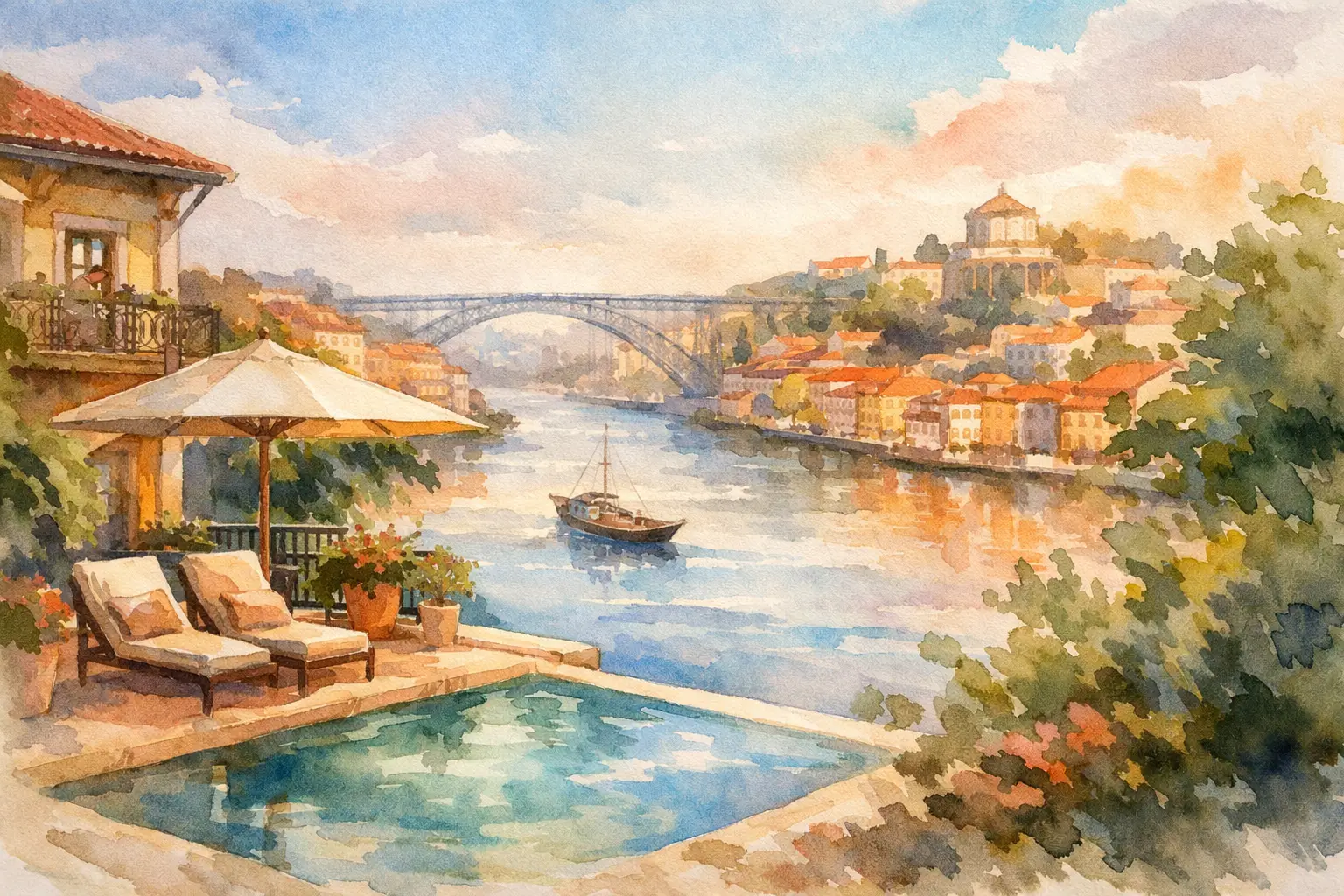



Luxury Guesthouse Porto for a Personal Stay
Porto rewards those who stay somewhere with a point of view. A luxury guesthouse Porto visitors choose should feel connected to the city’s particular character: tiled façades weathered by Atlantic light, steep streets leading towards the Douro, old merchant houses and an artistic spirit that refuses to become uniform. The right address is not simply a polished room between sightseeing plans. It becomes part of the memory of the city.
For travellers who value privacy, thoughtful design and a sense of place, a small guesthouse can offer something a larger hotel rarely can: the pleasure of returning each evening to a home with its own story.
What Defines a Luxury Guesthouse in Porto?
Luxury in Porto need not mean grand scale or formal distance. Often, it is found in the details that make a stay feel considered: original architecture treated with care, rooms with their own personality, generous quiet and hosts who understand the rhythm of the neighbourhood.
A guesthouse in a restored historic building offers a close encounter with the city’s past. High ceilings, old stone, timber floors and gracious proportions carry an atmosphere that cannot be reproduced in a new-build hotel. Yet heritage alone is not enough. The most appealing spaces balance these features with contemporary comfort, good lighting, beautiful bathrooms and interiors that feel lived in rather than staged.
Scale matters, too. A property with only a handful of rooms is naturally more intimate. Breakfast is unhurried, shared areas remain peaceful, and there is room for the small observations that shape a more personal welcome. This is especially appealing after a day in Porto’s lively centre, where church bells, trams, visitors and late-night conversation all add to the city’s energy.
The Value of a Garden in the City
Porto is wonderfully walkable, but its hills ask something of every visitor. After climbing from Ribeira, crossing towards the cathedral or wandering the lanes around Clérigos, a private garden becomes more than an attractive extra. It offers a place to pause.
A romantic and vast private garden is unusual in central Porto, particularly when it belongs to an old manor house. Here, the city feels briefly held at a distance. Morning coffee beneath the trees, a quiet read after lunch, or a glass of Portuguese wine as the evening softens can give a holiday a slower, more generous pace.
Camélias have a special place in Porto’s identity. The city is often known as the City of Camélias, and these winter flowers bring colour to gardens when much of Europe is still grey. Staying somewhere that honours this local heritage creates a gentle connection between the guesthouse and the city beyond its gates.
Choosing the Right Neighbourhood for Your Stay
Porto is compact, but the atmosphere changes from one area to another. The best location depends on how you imagine spending your days and evenings.
A central, slightly elevated position is ideal for travellers who want to walk to both historic sights and the river. From here, it is easy to reach the tiled São Bento Station, the baroque drama of Clérigos, bookshops, galleries and independent restaurants, before continuing down towards the Douro. The walk back may be uphill, but it brings the reward of quieter residential streets and remarkable views appearing between the houses.
Being near the city centre does not have to mean being surrounded by noise. A tucked-away guesthouse offers a valuable contrast: close enough for an impromptu dinner or a late drink, yet discreet enough for proper rest. Couples often appreciate this balance, while solo travellers may find it reassuring to have the city’s landmarks within easy reach.
For those planning a short city break, walkability is particularly useful. Porto is a place for following curiosity: stopping for pastries, entering a small gallery, noticing an azulejo panel, or taking a different route downhill simply because the light is beautiful. A well-placed guesthouse allows room for such detours.
Rooms That Carry an Artistic Signature
The difference between a pleasant room and a memorable one is often character. In a design-led guesthouse, rooms should not feel copied and pasted from a standard hotel plan. Individual colour palettes, original paintings, antique elements and carefully chosen furnishings can make each stay feel singular.
There is a trade-off worth considering. Historic rooms may have charmingly individual layouts rather than identical dimensions, and a garden pavilion may offer a different experience from a room in the main house. Rather than treating this as a complication, it is worth choosing according to the holiday you want. A couple seeking privacy may prefer the feeling of a separate garden room; travellers drawn to architectural detail may favour the generous proportions of the manor house itself.
At Casa Camélia, each guest room is individually painted by Porto artist Marta Vilarinho de Freitas. It is the kind of detail that gives a room a true relationship with its setting. The art is not a generic finishing touch but an expression of local creative life, inviting guests to look more closely at the city around them.
A Better Rhythm for Seeing Porto
A luxury stay should leave space for both plans and spontaneity. Begin with breakfast, then choose one part of the World Heritage City to explore rather than trying to see everything before lunch. Porto is best appreciated in layers.
Spend a morning around the cathedral and the old streets descending to Ribeira, where the river opens wide beneath the Dom Luís I Bridge. Another day, cross to Vila Nova de Gaia for the famous port cellars and views back across Porto’s rooftops. In the evening, return to the centre for modern Portuguese cooking, wine bars and the easy sociability of the city after dark.
A guesthouse can also be an elegant base for travelling beyond Porto. The Douro Valley offers vineyards, river landscapes and long lunches among the terraces. Atlantic beaches are close enough for a change of scene, while hiking, cycling and surfing can add a more active note to a longer holiday. The advantage of returning to a quiet, characterful address is that each excursion still begins and ends with a sense of calm.
What to Look for Before You Book
Photographs are useful, but the most revealing details are often found in the description. Look for clear information about the building’s history, the number of rooms, the setting and the kind of shared spaces available. A small property with a terrace or garden will feel very different from one facing a busy street, even if both sit in the same part of town.
Consider your priorities honestly. If you want a large gym, twenty-four-hour room service and every facility under one roof, a full-service hotel may suit you better. If you prefer an intimate welcome, distinctive interiors and a place that feels rooted in Porto rather than interchangeable with any European city, a boutique guesthouse is likely the more rewarding choice.
It is also wise to consider the season. Spring brings gardens into life and long days for wandering. Summer is vibrant, warm and busy, while autumn lends the Douro a softer light and an excellent excuse for long meals indoors. Winter can be especially atmospheric, with fewer crowds and camélias bringing brightness to the garden.
A well-chosen stay changes the texture of a holiday. Leave a little unplanned time for the garden, the view from a hillside street and the dinner recommendation that was not in your original itinerary. Porto is at its most generous when you let the city set the pace.