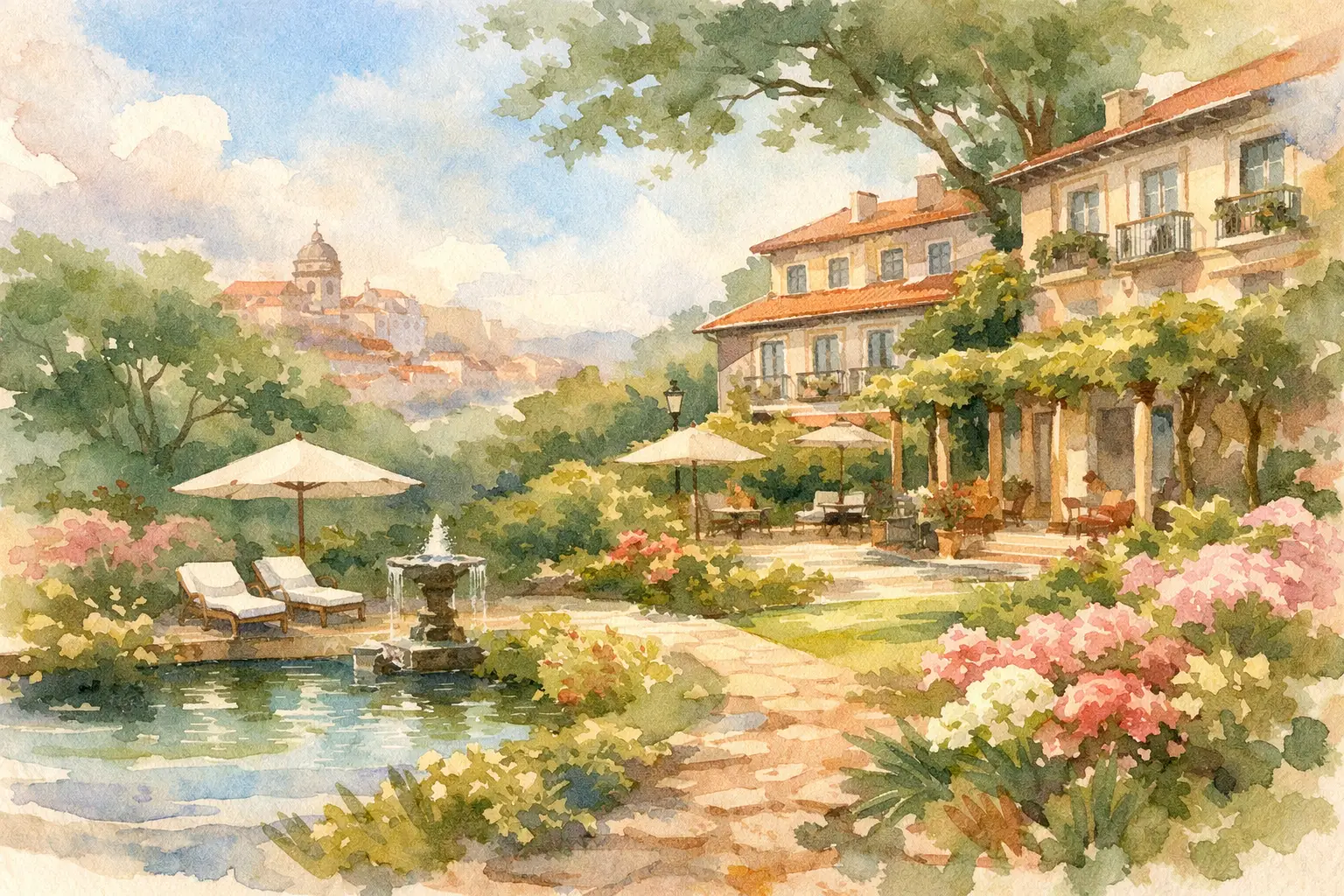



A Hotel with a Garden in Porto for Quiet Stays
Porto is a city of tiled façades, steep streets and late dinners that can carry wonderfully into the night. Yet the pleasure of staying here is often greatest when the day has a gentler counterpoint: a private garden where breakfast lingers, the air feels still, and the sound of the city recedes behind leaves and birdsong. For travellers seeking a hotel with a garden in Porto, that balance is more than a pleasant extra. It changes the rhythm of a city break.
A garden is particularly precious in a historic city built for walking. After the climb from Ribeira, a morning among the galleries, or an afternoon crossing the Dom Luís I Bridge, a tranquil outdoor corner gives Porto room to breathe. It offers a place to pause without stepping away from the life of the city.
Why a hotel with a garden in Porto feels different
Porto rewards curiosity. Its most memorable details are rarely arranged in one neat sequence: a carved doorway on a quiet street, the scent of coffee from a neighbourhood café, the sudden blue of azulejo tiles in the rain. Days here tend to be full, whether they are planned around museums, port cellars, river cruises or long lunches.
A garden provides a graceful beginning and end to that exploration. In the morning, it turns breakfast into an occasion rather than a hurried stop before sightseeing. In the evening, it offers a calm setting for reading, sharing a bottle of Portuguese wine or simply deciding where to dine. This is especially appealing for couples on a romantic escape, solo travellers who value a private place to reflect, and small groups who want to be together without remaining in their rooms.
There is also a practical distinction. Many central properties place guests close to Porto’s energy, but city-centre accommodation can bring street noise, compact common spaces and little opportunity to sit outdoors. A garden does not remove you from the city. It gives you a softer way to return to it.
That said, not every garden stay is the same. Some properties have a small courtyard intended mainly for passing through; others offer a genuinely secluded outdoor space, with shade, planting and places to settle for an hour. When choosing, it is worth looking beyond the word “garden” and considering how the space fits into the stay you imagine.
Porto, the City of Camélias
The Camélia has a special place in Porto’s cultural landscape. These elegant flowering trees arrived in Portugal through nineteenth-century trade routes and found a happy home in the north’s mild, damp climate. Over time, their blooms became part of the city’s gardens, estates and winter colour, giving Porto its affectionate identity as the City of Camélias.
For a visitor, this heritage adds a lovely sense of season and place. A garden planted with Camélias is not simply decorative. It belongs to the story of northern Portugal, where botanical curiosity, historic gardens and mercantile connections have long met. In bloom, the flowers bring shades of white, blush and deep rose against glossy green leaves. Outside flowering season, their evergreen structure remains quietly beautiful.
At Casa Camélia, a restored eighteenth-century manor house in central Porto, the private garden is shaped by precisely this spirit. It is a romantic and vast private garden, hidden behind the architecture of the city and created as a peaceful counterpart to days spent exploring. The house has just nine individually designed rooms, which preserves the intimate feeling that larger hotels can struggle to offer.
Historic character matters as much as outdoor space
The best garden hotels in Porto do not treat history as a backdrop. They allow the building, its materials and its setting to inform the experience. A restored manor house may have high ceilings, original proportions, worn stone and a sense of arrival that a newer building cannot easily reproduce. Contemporary comfort still matters, of course, but it feels more meaningful when it sits respectfully alongside old architecture.
This is part of what makes boutique accommodation so suitable for Porto. The city is a World Heritage City with a strong visual identity, and a stay can feel richer when it reflects that identity rather than repeating the same interiors found in any major European destination. Locally commissioned art, thoughtful colour and individually furnished rooms bring personality to the quiet hours between outings.
There is a trade-off to welcome. Historic houses can have stairs, irregular layouts and the occasional architectural quirk. Guests who need step-free access, a gym, a full-service restaurant or the predictability of a large international hotel may prefer a different type of property. Those who choose a small historic house tend to do so for atmosphere, personal scale and the feeling of staying somewhere particular to Porto.
A garden base for exploring central Porto
A central garden stay works best when it gives you two things at once: a retreat and an easy route into the city. Porto is wonderfully walkable in spirit, though its hills ask for comfortable shoes and a little patience. From a well-positioned address, much of the city unfolds on foot.
Begin near the river, where Ribeira’s layered houses face the Douro and traditional rabelos recall the wine trade. Cross the bridge towards Vila Nova de Gaia for port lodges and wide views back over Porto’s rooftops. In the upper city, linger around São Bento station, the cathedral quarter and the streets leading towards Clérigos. Bookshops, galleries, churches and independent shops appear naturally along the way.
A garden also helps make room for less scheduled pleasures. Return after a morning of walking for a cup of tea under the trees, then go out again when the light softens. Porto’s restaurants and wine bars are at their most inviting when there is no need to rush between an itinerary and a distant hotel. A peaceful base close to the action lets you follow the city’s pace while keeping your own.
For guests staying several nights, the same calm is valuable after a day beyond Porto. The Douro Valley, with its terraced vineyards and river scenery, makes a rewarding excursion. So do the Atlantic beaches, where the mood changes from granite streets to open horizons. Hiking, cycling and surfing can all find a place in a longer northern Portugal holiday. Returning to a garden after these outings offers a welcome sense of homecoming.
What to look for before booking
Photographs can tell part of the story, but a few details are worth considering carefully. First, establish whether the garden is private to guests and whether there are comfortable places to sit. A beautiful view from a window is different from a space you can actually inhabit.
Next, consider location in relation to your plans. If you want to spend evenings around the riverfront or explore Porto’s dining scene, central access is likely to matter more than a large garden far from the historic centre. If quiet is your highest priority, look for a property where the outdoor space sits away from the road and is sheltered by the house or mature planting.
Finally, think about scale. A nine-room guesthouse and a large hotel may both offer greenery, but their atmosphere will be quite different. Smaller properties often create more privacy and a more personal welcome, while larger ones may offer broader facilities. Neither is automatically better; the right choice depends on whether you are looking for sociable convenience or a more intimate, design-led stay.
Let the garden shape the day
Porto does not need to be hurried. Its pleasures are found in the spaces between landmarks: a slow breakfast, a shaded bench, a small glass of vinho verde before dinner, the changing colour of the Douro at dusk. Choosing a hotel with a garden allows those moments to become part of the holiday rather than an afterthought.
Leave one morning unplanned. Take your breakfast into the garden, listen for the city waking beyond its walls, and let Porto reveal the next part of the day at its own generous pace.