


A Day Trip to the Douro Valley from Porto
The Douro does not reveal itself all at once. Leaving Porto, the city’s tiled façades, bridges and river quays gradually give way to steep, folded hills, their slopes traced with vineyards and stone terraces. A day trip to the Douro Valley from Porto is a long, rewarding day – one best enjoyed with a little planning and enough room in the schedule to pause for the view.
For guests who choose Porto for its history, artistry and riverside life, the valley offers a beautiful change of scale. Here, the river becomes broad and unhurried, villages appear beneath vine-covered slopes, and the work of generations is written into the landscape. It is a UNESCO World Heritage wine region, but it is also a place of family estates, quiet railway stations, olive trees and lunch tables set in the sun.
Is a day trip to the Douro Valley from Porto worthwhile?
Yes, especially for a first visit to Porto, provided you choose your pace. The valley is large, and no single day can encompass its many quintas, viewpoints and riverside villages. A well-planned excursion, however, offers a vivid sense of the region: a journey along the river, a tasting at a wine estate, a generous Portuguese lunch, and time in Pinhão or Régua.
The trade-off is time. Expect to spend several hours travelling in total, depending on your destination and chosen transport. If your holiday allows, an overnight stay in the valley brings quieter mornings and softer evening light. Yet for travellers based in Porto for a city break, a day is more than enough to understand why the Douro holds such a special place in Portuguese life.
Choose the right way to travel
The best route depends on whether you want the ease of a hosted day, the romance of the train, or the freedom to make your own stops.
A small-group or private tour
For many visitors, a guided tour is the most relaxed choice. Transport, estate appointments and lunch are generally arranged in advance, which matters in a region where distances are deceptively large and the loveliest roads are winding. A good small-group itinerary usually includes two contrasting wineries, perhaps one with a river cruise from Pinhão, alongside time to admire the landscape.
Private tours suit couples or families who would prefer to travel at their own rhythm. They can be shaped around dry wines, Port, architecture, local food or photography. The crucial question is not simply how many tastings are included, but how much unscripted time is left to enjoy the valley itself.
The train to Régua or Pinhão
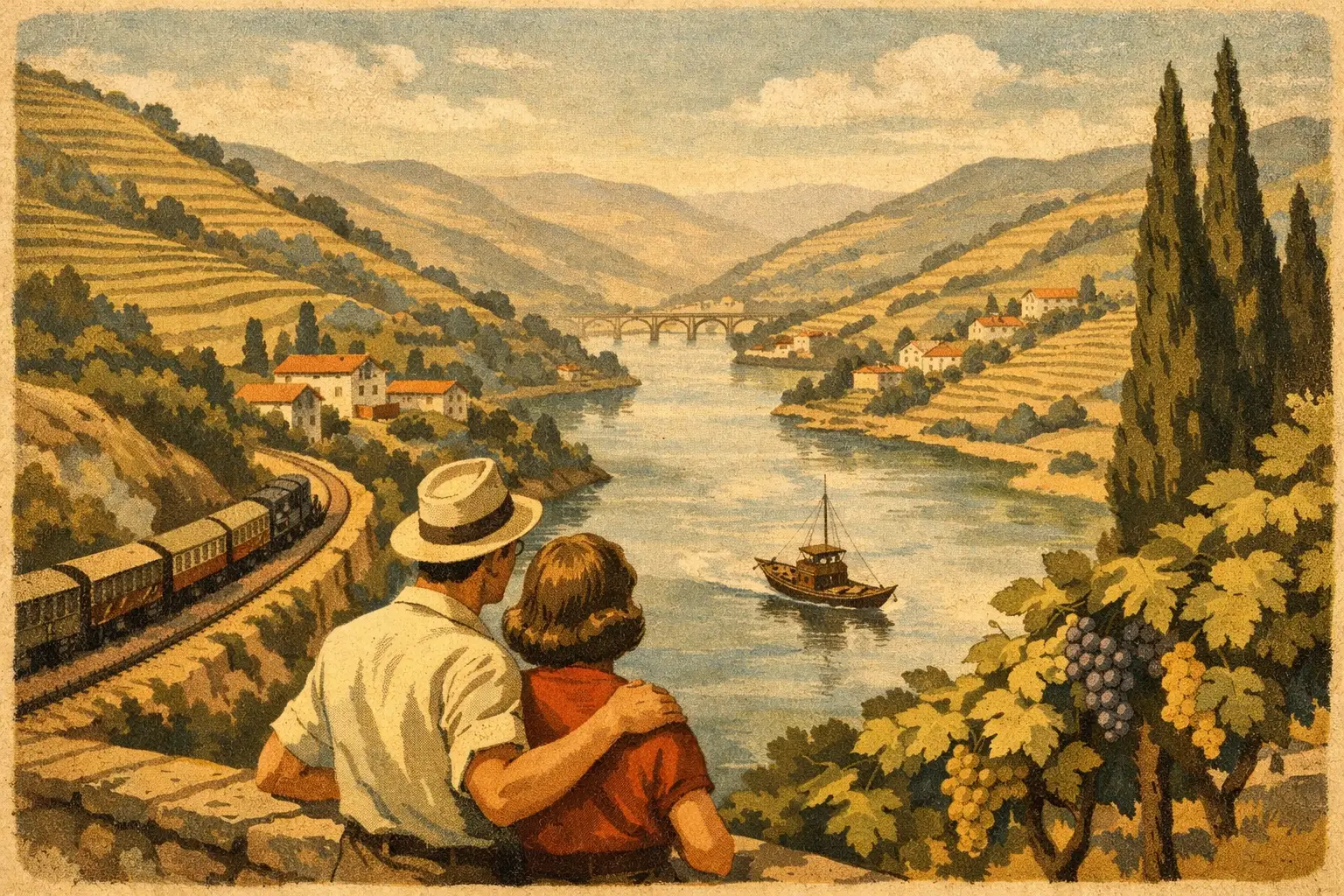
The train is a particularly lovely option for independent travellers. Services depart from Porto and follow the Douro for part of the journey, with the scenery becoming increasingly dramatic beyond Régua. Pinhão is the more picturesque destination for a day out: its small station is known for blue-and-white azulejo panels, while the village sits at the meeting of the Douro and Pinhão rivers.
Travelling by rail calls for advance organisation. Check the timetable carefully, as a late departure can leave too little time for a proper visit, and reserve any estate tasting before you set off. Some quintas are reachable by taxi from Pinhão, while others are farther away than they appear on a map. The train gives you the pleasure of looking out rather than looking at the road, but it offers less flexibility once you arrive.
Driving yourself
A hire car can make an extraordinary day for confident drivers. It allows detours to viewpoints such as São Leonardo da Galafura, pauses in small villages, and the chance to follow quieter routes between the hills. It also comes with responsibilities: roads can be narrow, steep and slow, parking at popular stops is limited, and wine tasting is best enjoyed when somebody else is driving.
If you drive, choose one part of the valley rather than trying to cross the entire region. Régua, Pinhão and the N222 road offer plenty for a single day. Start early, use a designated driver, and allow more time than navigation apps suggest.
A graceful one-day Douro itinerary
Begin Porto early, ideally after breakfast rather than before it. The point is not to race into the countryside but to arrive with enough time for a late-morning estate visit. For guests at Casa Camélia, the calm of the private garden makes a fitting prelude to a day among terraced hillsides and river light.
Aim to reach the valley by late morning. If travelling with a guide, this will be arranged for you. Independent rail travellers may prefer to book a tasting near Pinhão around midday, allowing a little time to walk beside the river and see the station. A visit normally introduces the local grapes, the demanding work of maintaining terraces, and the distinction between still Douro wines and the fortified Port wines historically shipped downriver to Vila Nova de Gaia.
Lunch deserves more than a hurried stop. The valley’s cooking is hearty and regional: olive oil, cured meats, river fish, roast dishes and seasonal vegetables all have a place at the table. Estate restaurants can offer spectacular views, while a family-run restaurant in Régua or Pinhão may feel more informal. In high season, reserve ahead, particularly at restaurants with terraces.
In the afternoon, choose one main pleasure. A short traditional boat trip from Pinhão offers a different perspective on the terraces, though it can be busy in summer. A second tasting can be wonderful if you are genuinely interested in wine, but one thoughtful visit followed by a scenic drive or a slow riverside walk is often more memorable than trying to fit in every cellar door.
Save a little attention for the journey back to Porto. The late-afternoon light turns the schist slopes warm and amber, especially in autumn. By the time the river leads you towards the city again, Porto’s streets and gardens may feel newly connected to the landscape beyond them.
What to book before you leave Porto
The Douro rewards spontaneity in its views, not always in its practicalities. Wine estates often require appointments, and sought-after lunch tables and small-group tours fill quickly between late spring and the grape harvest. If you have a particular quinta in mind, contact it well ahead of your visit.
It is also wise to confirm what each tasting includes. Some focus on Port, others on elegant reds and whites from the Douro DOC, and some combine a vineyard walk, cellar visit or lunch. There is no universally best experience. A historic Port-focused estate may appeal to travellers interested in the region’s trading story, while a smaller producer can offer an intimate introduction to contemporary Douro wines.
Pack water, sun protection and comfortable shoes with a good grip. Terraces are beautiful but uneven, and shade can be scarce. Even in warmer months, take a light layer for an air-conditioned train or a breezy boat journey. During harvest, usually from late August into September, roads and estates are especially active, and booking ahead becomes essential.
When to visit the Douro Valley
Spring brings fresh green vines, flowering hillsides and mild walking weather. It is a beautiful season for travellers who prefer softer colours and fewer crowds. Summer offers long bright days and a festive atmosphere, but temperatures can be intense in the inland valley, so an early start and a shaded lunch are welcome.
Autumn is often the most atmospheric time for a Douro Valley day trip from Porto. The vineyards shift through gold, russet and deep red, while harvest lends the region an unmistakable energy. Availability can be tighter and some experiences cost more, but the landscape is at its most theatrical.
Winter is quieter and has its own appeal: mist over the river, bare vines and the warmth of a tasting room. Weather may be cooler and wetter, and boat schedules or estate opening times can be reduced. For visitors seeking a more contemplative experience, that slower rhythm can be part of the charm.
A day in the Douro is not about ticking off wineries. Leave Porto with one or two reservations, a clear route, and the willingness to linger when the river bends and the hills open before you. Those unplanned moments are often what return with you to the city.