


A Porto Itinerary for Couples in Three Days
Porto is at its most persuasive in the pauses: a first coffee beneath painted tiles, the hush of an old church, the river changing colour as the light settles over Vila Nova de Gaia. This Porto itinerary for couples is designed around those moments, with enough structure to see the city well and enough freedom to linger when a terrace, viewpoint or glass of port asks you to stay a little longer.
Three days offers a lovely balance. You can absorb Porto’s historic centre without racing between landmarks, spend an evening beside the Douro, and still make room for the valley that gives the city’s most famous wine its character. The hills are real, and so are the cobbles, so comfortable shoes will serve you better than a packed timetable.
Day one: Old Porto, tiles and the river
Begin in the centre, where Porto’s layered history appears almost immediately. São Bento Station is a fitting first stop, even if you are not catching a train. Its grand hall is lined with azulejo panels depicting Portuguese history and rural life, offering an intimate introduction to the country’s visual language. Arrive early if you can, before the day’s arrivals make the station feel hurried.
From here, wander towards Sé do Porto, the cathedral that has watched over the city since the twelfth century. The route climbs through lanes that reveal washing lines, small doorways and unexpected views across red roofs to the river. The cathedral precinct feels wonderfully removed from the movement below. Step into the cloister for its blue-and-white tile work, then take time on the terrace outside, where Porto opens beneath you.
Continue downhill into Ribeira at an unhurried pace. This World Heritage quarter is undeniably popular, but its charm survives the attention: tall, narrow houses in faded colours, boats moving on the Douro, and the gentle theatre of the riverfront. Rather than choosing the first available table, walk a little beyond the busiest stretch for a relaxed lunch of grilled fish, petiscos to share, or a simple bifana with a cold drink.
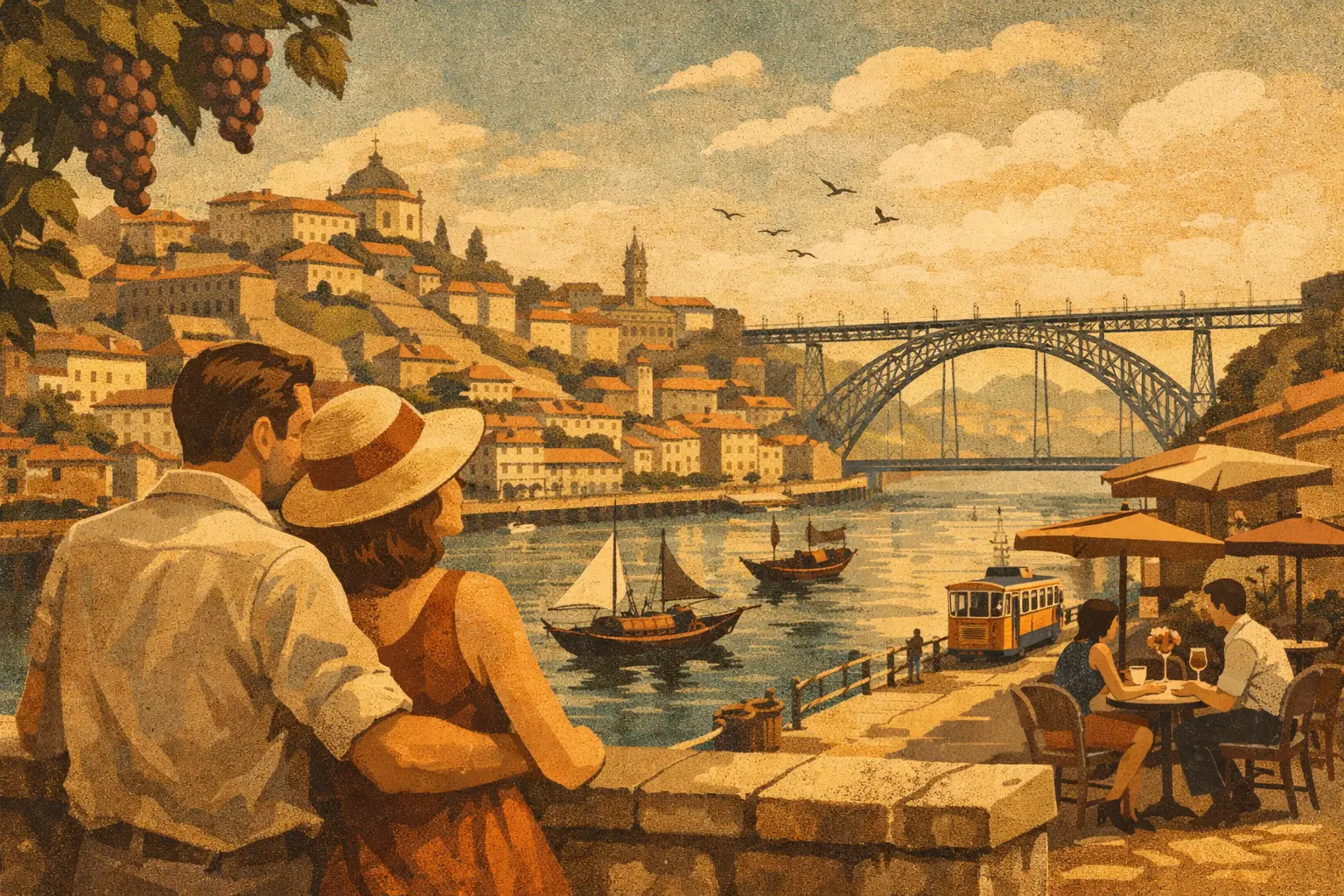
In the afternoon, cross the lower deck of the Dom Luís I Bridge on foot. The scale of the iron structure is thrilling, and the river views are best enjoyed slowly. On the Gaia side, book a visit to one of the historic port cellars. Tastings vary considerably, so choose according to your curiosity. A classic tour provides useful context for first-time visitors, while a smaller tasting focused on aged tawny or vintage styles can feel more personal for couples who already enjoy wine.
As evening approaches, stay on the Gaia riverfront for the view back to Porto, or take the cable car up the hillside if your legs would appreciate a rest. For dinner, return to Porto and seek out a restaurant away from the most crowded riverside lanes. The city rewards reservation-making, particularly on Fridays and Saturdays. A table in a traditional dining room, followed by a short walk through the illuminated streets, makes a graceful first night.
Day two: A Porto itinerary for couples who love design
Porto is a city of surfaces: weathered granite, polished wood, patterned tiles and elaborate iron balconies. Let the second day be led by architecture, independent shops and the kind of details that make the city feel deeply lived-in rather than simply visited.
Start around Rua das Flores, a historic street where handsome façades now hold small boutiques, cafés and galleries. It is a pleasant place for a slower breakfast if you are not taking it at your hotel. From there, visit Igreja do Carmo, known for its extraordinary tiled exterior. The adjoining Carmelite church and the narrow house once separating the two religious buildings carry a story as memorable as the façade itself.
A short walk brings you to the gardens of the Palácio de Cristal. Although the original nineteenth-century palace no longer stands, the grounds remain one of Porto’s most romantic places for a morning stroll. Peacocks wander among the paths, and the viewpoints frame the Douro, its bridges and the distant hills. Bring a pastry or simply sit for a while. It is the sort of place where an itinerary improves by doing less.
For lunch, consider the Cedofeita area, where contemporary cafés and small restaurants sit comfortably beside traditional businesses. Porto’s dining scene has range, but the most rewarding meals often balance excellent produce with restraint. Ask for seasonal dishes, local greens, Atlantic fish or a regional wine from the Douro, Dão or Vinho Verde.
The afternoon is ideal for one or two cultural stops rather than an ambitious circuit. Livraria Lello is beautiful, though it can be busy enough to diminish the pleasure of browsing. If its staircase is on your wish list, reserve a timed entry and go early. If not, choose the nearby Clérigos Church and Tower instead. The climb is demanding, but the rooftop view is one of the clearest ways to understand Porto’s geography: a city of ridges, riverbanks and tightly gathered rooftops.
For a different mood, visit a gallery, browse Portuguese ceramics, or return to your room before the evening. A small manor-house stay such as Casa Camélia offers a particularly welcome pause, with its artistic interiors and private garden creating a calm counterpoint to the city’s animated streets.
Tonight, make room for music. An intimate fado performance can be moving when it is treated as a listening experience rather than background entertainment. Alternatively, choose a wine bar with thoughtful Portuguese bottles and share a few plates. Porto after dark is sociable without demanding that you hurry.
Day three: Choose the Douro Valley or the Atlantic
The final day depends on the kind of escape you want. Couples who are drawn to vineyards, grand landscapes and long lunches should choose the Douro Valley. Those who prefer sea air and a lighter schedule may find Foz do Douro or Matosinhos more appealing.
For a day in the Douro Valley
The Douro is at its most beautiful when there is time to look at it. Terraced vineyards fold down towards the river, whitewashed estates punctuate the slopes, and each bend seems to offer another view worth photographing. A guided day trip removes the complication of driving on winding roads after a tasting, and it is often the easiest choice for a short stay.
Try to select an itinerary that includes one quality estate visit, a proper lunch and a short river cruise or scenic train journey, rather than several rushed tastings. More is not always better here. The valley deserves quiet attention, and a leisurely meal with a glass of local wine is often the day’s most memorable part.
Independent travellers can take the train from São Bento towards Pinhão, a journey valued as much for the changing scenery as for the destination. It requires an early start and some planning around estate visits, but suits couples who enjoy travelling at their own rhythm. In high season, book ahead and allow generous margins for connections.
For an afternoon by the sea
If the thought of another full day of sightseeing feels less romantic than a long coastal walk, follow the Douro west towards Foz. The river meets the Atlantic beside old fortifications, promenades and broad, wind-swept beaches. It is especially lovely in the late afternoon, when the light softens and the city feels farther away.
Matosinhos is the better choice if seafood is the priority. Its grills are known for fresh fish, and a lunch here is pleasingly uncomplicated: choose what looks best, let the charcoal do its work, and order a crisp white wine. The trade-off is that the coastal atmosphere is less historic than central Porto, but that can be exactly what a final day needs.
Small details that make the trip feel easier
Porto is compact, but it is not flat. Use the trams, metro and occasional taxi strategically, especially after a long dinner or when moving between the riverfront and the upper city. Walking remains the best way to notice the carved doorways and tiny cafés that do not appear on a map.
For the most comfortable experience, reserve key restaurants, port-cellar visits and Douro trips before arrival. Then leave blank spaces in each day. A Porto holiday becomes more romantic when there is time for an extra coffee, a seat in the garden, or the decision to follow a beautiful street simply because it leads downhill towards the river.
On your final evening, find a viewpoint above the Douro and watch the lights appear one by one. Porto does not ask to be conquered in three days. It asks to be noticed, and shared.