


Porto Cultural Weekend Guide for Art and Atmosphere
Porto rewards the unhurried traveller. A tiled church façade catches the early light, the Douro appears between steep streets, and an old shopfront may conceal a remarkable bookshop, gallery or wine bar. This Porto cultural weekend guide is designed for two days of looking closely: at the city’s mercantile grandeur, its contemporary creative spirit, and the smaller rituals that make a stay here feel personal.
For a first visit, resist the temptation to cross every landmark off a list. Porto is compact, but its hills are real, its viewpoints invite lingering, and its most memorable moments often happen between the celebrated places. A well-paced weekend leaves room for a second coffee, a glass of wine beside the river, and a quiet return through the lanes after dark.
Friday evening: begin with the city at your door
Arrive with enough time to settle into the changing light. The centre of Porto is particularly handsome in the evening, when granite façades soften and the sound of glasses and conversation spills from doorways. From Casa Camélia, the historic heart of the city, the river and many of Porto’s most compelling neighbourhoods are within an enjoyable walk.
Start around Cedofeita and Clérigos, where independent shops, galleries and long-established cafés sit close together. Rua de Miguel Bombarda is especially rewarding for contemporary art, though exhibition opening times vary. If your weekend coincides with a gallery opening, it offers a lively glimpse of Porto’s artistic community. At other times, the street still makes a pleasing pre-dinner walk, with design shops and unexpected details in the surrounding lanes.
For dinner, choose a Portuguese restaurant with a short, seasonal menu rather than trying to locate one particular address at the last minute. The city’s best tables are often intimate and book up, particularly from Thursday to Saturday. Ask for a table at a sensible hour, then let the evening continue naturally in the bars around Galerias de Paris or the quieter streets towards Vitória. Porto’s nightlife has energy, but it need not be noisy: there are excellent places for a measured cocktail, a local wine, or simply a final stroll beneath the illuminated Clérigos Tower.
Saturday: tiles, books and a river of history
Begin in the old commercial centre
Take breakfast without rushing. Porto’s cultural fabric is best appreciated on foot, and an early start gives you the city before the busiest hours. Walk towards São Bento Station, not merely as a point of arrival but as a work of public art. Its great entrance hall is lined with thousands of azulejo tiles by Jorge Colaço, depicting battles, rural life and episodes from Portuguese history. Stand back first to take in the scale, then move closer to see the storytelling in the painted detail.
From here, make your way to the Cathedral, known locally as Sé. The setting alone is worth the climb: the surrounding streets retain a medieval character, and the terrace looks across roofs towards the river. The cathedral complex holds Romanesque, Gothic and Baroque layers, a concise lesson in the city’s long architectural life. Those with a particular interest in sacred art should allow time for the cloister, where tiled walls and stone arcades offer a calmer counterpoint to the bustle outside.
Livraria Lello is nearby and remains one of Porto’s most photographed interiors. Its carved wood, stained glass and sweeping staircase are undeniably theatrical. It can also be very busy. If seeing it matters to you, reserve a timed visit and go early; if you prefer a quieter literary experience, enjoy the surrounding streets and seek out one of Porto’s smaller bookshops instead. A cultural weekend should accommodate both the famous room and the pleasure of avoiding a queue.
Choose one museum, not three
By late morning, turn towards the gardens and galleries of the city. The Museu Nacional Soares dos Reis, housed in the former Carrancas Palace, is a fine choice for Portuguese painting, sculpture and decorative arts. Its collections give valuable context to the domestic objects, religious imagery and neoclassical architecture encountered elsewhere in Porto.
Alternatively, devote the afternoon to Serralves. The journey from the centre requires a taxi or bus, but the combination of contemporary art museum, Art Deco villa and expansive grounds is exceptional. It suits travellers who enjoy modern art and landscape as much as historic streets. On a dry day, allow time to walk the park rather than treating the museum as a quick stop.
There is no need to do both in one day. Serralves is an absorbing half-day destination, while Soares dos Reis leaves more time for the old centre. The better choice depends on whether your curiosity leans towards Portugal’s artistic past or the international contemporary scene.
For lunch, return to the centre or eat near your chosen museum. A simple plate of grilled fish, vegetable soup or petiscos is often ideal before an afternoon on the hills. Porto’s food culture is generous, but a heavy francesinha is best saved for the day when a long walk is part of the plan.
Follow the descent to Ribeira
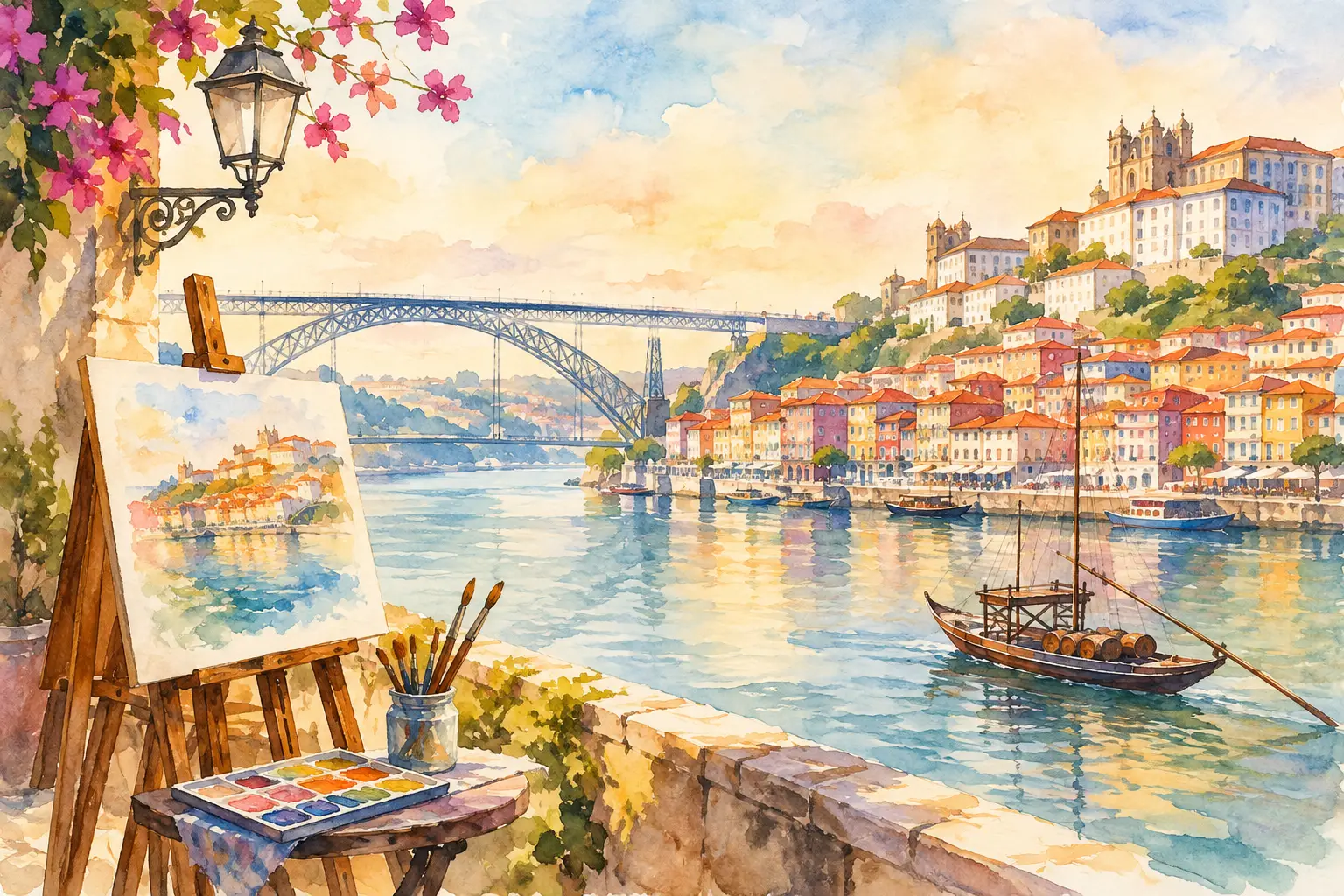
In the later afternoon, walk downhill towards Ribeira. This is Porto at its most recognisable: tall, narrow houses, washing above the lanes, boats on the Douro, and the iron sweep of the Dom Luís I Bridge. It is also one of the city’s busiest quarters, especially in warmer months. The key is timing. Come for the light and the view, then step a street or two away when you want a quieter table.
Cross the lower level of the bridge to Vila Nova de Gaia for a port wine cellar visit. The historic lodges explain how wines from the Douro Valley were brought downstream and matured here, close to the Atlantic’s cooling influence. Tasting rooms differ in style, from traditional to highly polished, so choose according to your interest. A focused visit with a thoughtful tasting will usually be more memorable than attempting several cellars in an afternoon.
As the sun lowers, take the cable car only if you value the aerial view more than the walk. Otherwise, climb slowly through Gaia’s upper streets or return across the bridge and find a viewpoint on Porto’s side. The river is at its most beautiful when the city lights begin to appear, reflected in the water below.
Sunday: Porto’s quieter creative rhythm
A morning for neighbourhood detail
Sunday is made for a gentler Porto. Begin around Bolhão, where the restored market offers a vivid sense of daily city life, though individual stall and opening patterns can change. Nearby, Capela das Almas is covered in blue-and-white tiles depicting the lives of saints, while the broad Avenida dos Aliados reveals the civic confidence of early twentieth-century Porto.
Continue to Igreja do Carmo, whose tiled side wall is among the city’s most striking sights. Look, too, at the narrow house separating it from the Carmelite church beside it. This small architectural curiosity is a reminder that Porto’s drama often lies in close observation rather than grand scale alone.
If your interests include photography, consider a visit to the Portuguese Centre of Photography, set within a former prison. The building contributes as much atmosphere as the exhibitions, and the changing programme means it is worth checking what is on during your stay. For design and architecture enthusiasts, simply walking through Cedofeita, Miragaia and the streets around Praça de Carlos Alberto can be equally rewarding. Porto is a city where worn stone, iron balconies and carefully restored interiors sit in revealing conversation.
End where the river opens out
For your final afternoon, choose the mood you want to take home. Foz do Douro offers sea air, long promenades and the meeting of river and Atlantic, reached by bus or taxi from the centre. It is a graceful contrast to the dense historic core, especially if the weekend has been full of museums and steep streets.
If you would rather remain central, take a short Douro cruise or return to a favourite viewpoint with a pastry and coffee. Repetition has its pleasures in Porto. Seeing the same riverbank in morning sun, afternoon brightness and evening shadow reveals why the city has inspired painters, poets and travellers for centuries.
Before you leave, save a little time for the unscheduled things: the painted sign above a grocer’s door, a camellia in bloom behind a gate, the sound of a tram turning a corner. A cultural weekend in Porto is not only about the institutions and monuments. It is about allowing this World Heritage City to reveal its texture at walking pace.