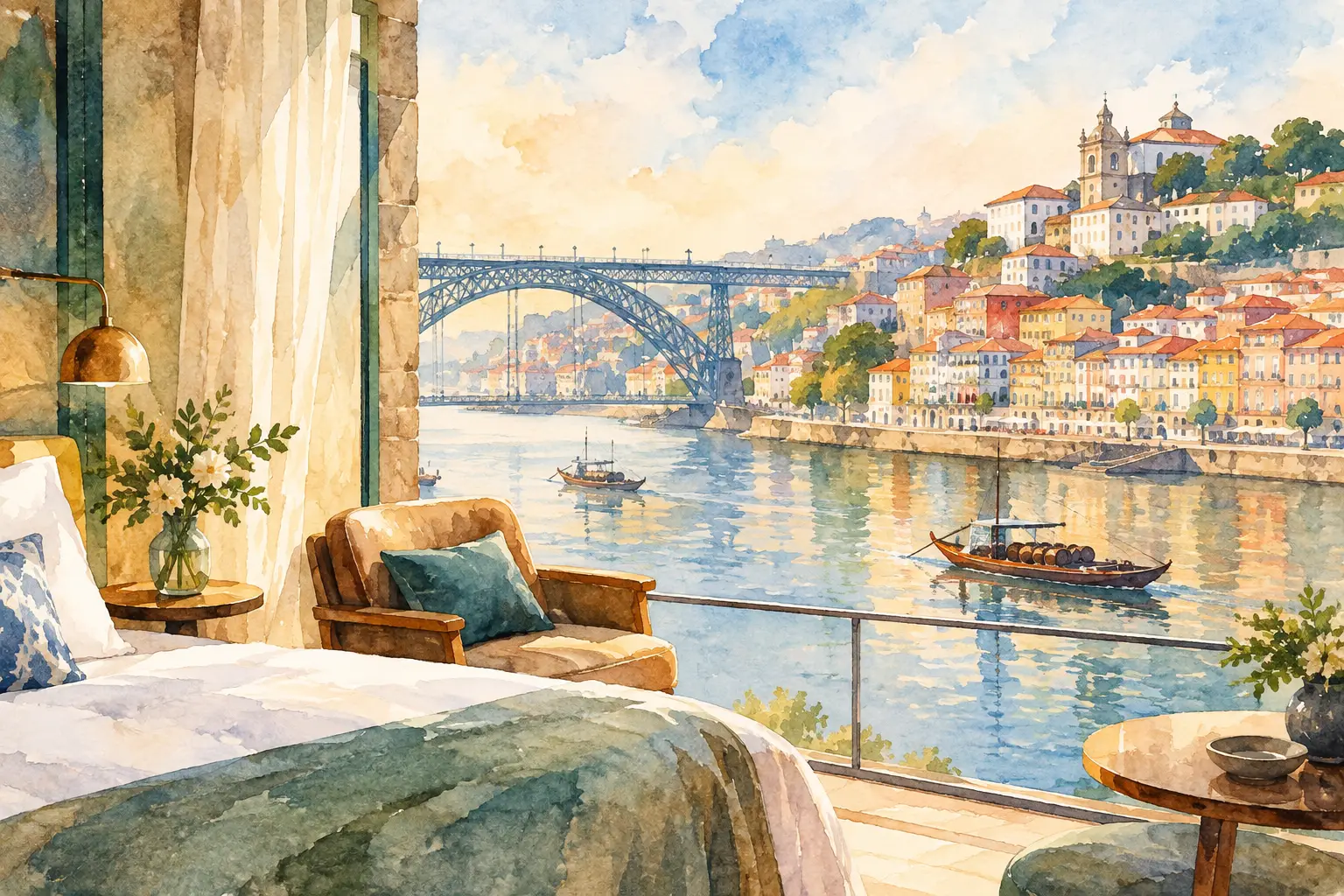



Design Hotels in Porto With a True Sense of Place
A stay in Porto should begin before the first glass of port, the first view over the Douro, or the first tiled façade admired from a steep cobbled street. The best design hotels make that possible: they give the city a presence in the room itself, through materials, art, light, scent and a feeling that could belong nowhere else.
For travellers who choose a city break for its atmosphere as much as its landmarks, design-led accommodation offers something more lasting than a handsome photograph. It can turn the pause between outings into part of the holiday: a quiet morning among original details, a return to a garden after dinner, or a room that feels composed rather than merely furnished.
What makes design hotels memorable?
Design is sometimes mistaken for a particular look: crisp minimalism, dramatic lighting, sculptural chairs or a carefully placed vase. Those things may be beautiful, but a memorable hotel is not made by decoration alone. Its design should have an idea behind it.
In a historic city such as Porto, that idea often begins with the building. An eighteenth-century manor house, a former merchant’s residence or a townhouse with a weathered stone façade already carries a history. A thoughtful restoration does not erase this character in pursuit of uniformity. It respects the proportions of old rooms, reveals original features where possible, and introduces contemporary comforts with restraint.
The result need not feel museum-like. Quite the opposite: the pleasure comes from living comfortably among traces of another time. High ceilings, timber floors, shutters and imperfect walls gain new life when paired with considered lighting, excellent linens and furniture chosen for both comfort and character. The contrast between old and new is often where the romance lies.
Scale matters, too. Large hotels can offer impressive facilities, but smaller properties have an advantage when it comes to atmosphere. With fewer rooms, there is more room for individuality. A guest may remember the colour on one bedroom wall, a particular artwork beside the bed, or the changing view from a window. These are details that resist the anonymous rhythm of travel.
Design hotels in Porto should feel rooted in the city
Porto is a World Heritage City of granite, blue-and-white tiles, wrought iron balconies and hills that lead towards the river. It also has a lively contemporary culture, shaped by independent galleries, ceramic studios, bookshops, cafés and a dining scene that rewards curiosity. A hotel’s interiors should acknowledge both sides of the city: its enduring grandeur and its creative present.
Local art is one of the clearest ways to do this. A painting made by a Porto artist does more than fill a wall. It gives guests a genuine encounter with the city’s talent, and it creates a visual language that cannot simply be copied into a hotel elsewhere. Likewise, Portuguese textiles, ceramics and crafted objects bring warmth and texture without turning a room into a souvenir shop.
Colour has a particular role in Porto. The city can appear silver-grey in Atlantic light, then suddenly vivid in the painted façades of Cedofeita or the garden flowers behind an old gate. Interiors that use colour with confidence can reflect this shifting character. The most successful choices feel personal rather than fashionable: deep greens, mineral blues, soft earth shades or unexpected tones that make a room feel quietly theatrical.
There is a balance to be found. A design hotel should not compete with the city so fiercely that guests feel they are staying inside a showroom. Nor should it rely on historical references so heavily that comfort is forgotten. The finest spaces are layered but calm. They invite attention, then allow guests to rest.
The garden is part of the design
In a densely built city, outdoor space changes the experience of a stay. Porto’s streets are full of energy, especially in the evening, and that vitality is one of its great pleasures. Yet after a day walking from Clérigos to Ribeira, or returning from a long lunch by the coast, a private garden offers a welcome change of pace.
A garden is not simply an extra amenity. It is an extension of the house and, in a carefully designed property, a living part of the architecture. A terrace becomes a place for an unhurried breakfast. A shaded corner gives a solo traveller space to read. Camélias, so closely associated with Porto, bring seasonal colour and a gentle reminder that the city’s beauty has always included its hidden green spaces.
This is especially valuable for couples and small groups. You may want to be within walking distance of the restaurants and nightlife around Galerias, but not hear the city until the moment you choose to rejoin it. Privacy does not mean isolation. It means having the freedom to move between the liveliness of Porto and a more intimate setting.
Look beyond the photographs
Beautiful photographs are a good beginning, but they cannot tell the whole story. When choosing between design hotels, consider how the property will support the way you hope to travel.
Location is more than a pin on a map. A central address can make a short break feel generous, allowing time to wander rather than constantly arrange transport. From the right base, mornings might begin in a local café, afternoons may lead to São Bento station, the riverside or the gardens of the Palácio de Cristal, and evenings can unfold without the pressure of a long journey home.
Consider the rhythm of the house as well. If you are travelling for a birthday or anniversary, you may value a room with a distinctive character and a peaceful garden over a larger hotel with a busy lobby. If you are visiting alone, a warm welcome and a location that feels safe and connected may matter more than extensive facilities. For friends travelling together, individual rooms with different personalities can make the stay feel more considered than identical corridors and numbered doors.
Practical comfort deserves equal attention. Fine design should include a bed that encourages deep sleep, a bathroom that works beautifully in the morning rush, good sound insulation where it is possible, and lighting suitable for both reading and getting ready for dinner. Character is delightful; inconvenience is not. Older buildings can bring staircases, unusual room layouts or smaller lifts, so it is wise to choose according to your own needs rather than assuming every historic property suits every stay.
A hotel can shape the pace of a Porto visit
Porto rewards both planning and wandering. Its major sights are essential, but some of the city’s finest moments arrive between them: a tiled doorway on a quiet street, the scent of roasting coffee, the sound of gulls above the river or an impromptu stop for a glass of vinho verde. A hotel that feels connected to its neighbourhood makes room for these moments.
It can also provide a graceful starting point for journeys beyond the city. The Douro Valley, Atlantic beaches, surf breaks and walking routes are all within reach, but returning to Porto after a day away is part of the pleasure. A well-designed room feels particularly welcoming at that point – not as an interchangeable place to sleep, but as a familiar retreat.
At Casa Camélia, the idea is expressed through a restored manor house, nine individually conceived rooms and a romantic, vast private garden filled with the flowers that gave Porto its reputation as the City of Camélias. It is a small-scale approach, but one that reflects a larger truth about thoughtful hospitality: a stay becomes more meaningful when it belongs to the place around it.
When selecting where to stay, let the photographs draw you in, but let the character of the house make the decision. Choose the place that gives you a sense of Porto even when you are still at the window, deciding where to walk next.