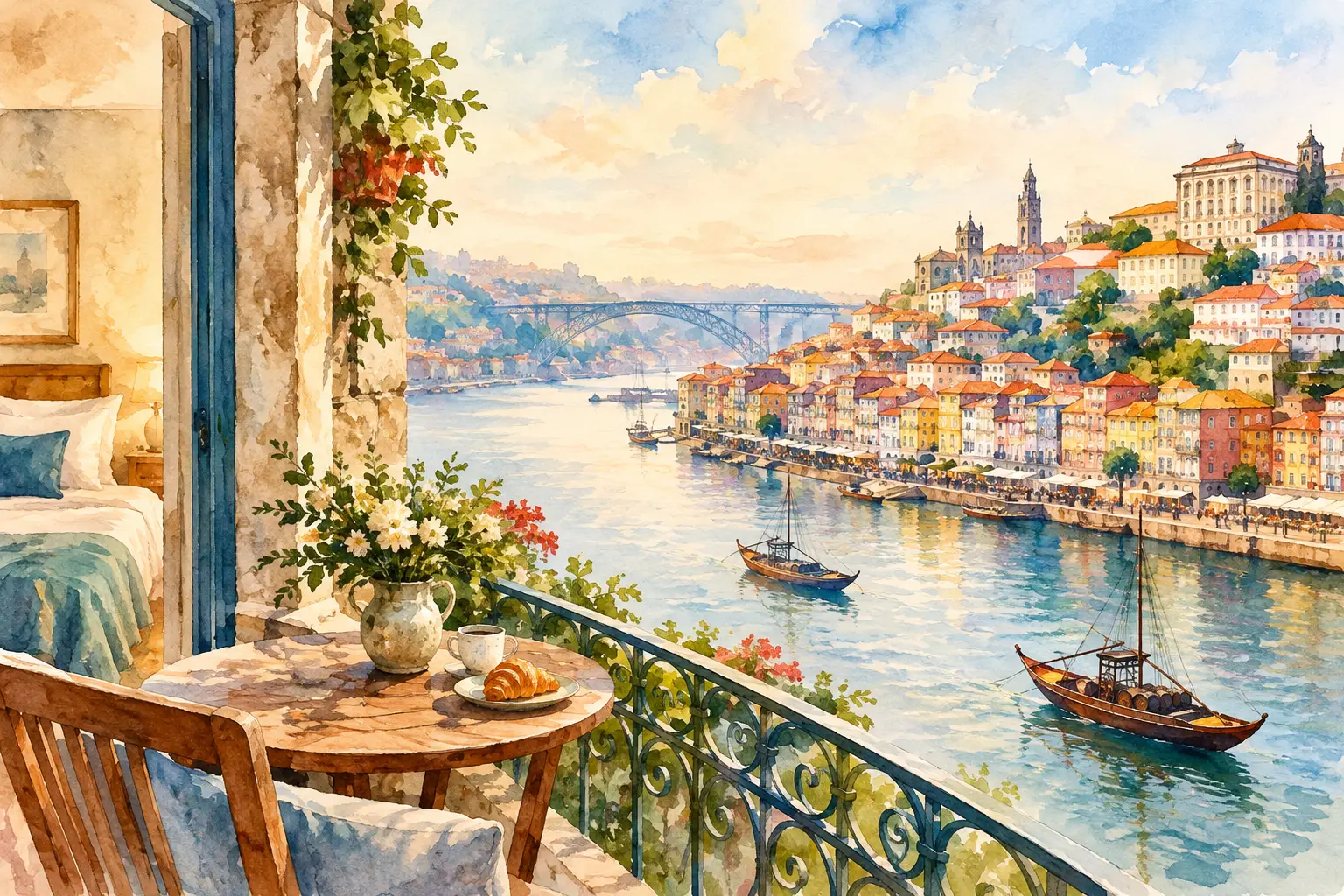



An Honest Porto Heritage Accommodation Review
Porto is best understood at a human pace: through tiled streets that slope towards the Douro, the scent of coffee drifting from a neighbourhood café, and the cool hush behind an old stone doorway. A thoughtful Porto heritage accommodation review should therefore look beyond a handsome façade. The most memorable stays preserve the city’s character while making room for the comforts, privacy and small acts of welcome that turn a visit into a holiday with real texture.
For travellers who choose Porto for its World Heritage City streetscape, its river light and its creative spirit, where you stay shapes the rhythm of each day. A large hotel may offer certainty and facilities. A small historic house can offer something more personal: a sense that, for a few days, you are living within Porto rather than merely passing through it.
What makes heritage accommodation worthwhile?
Heritage is sometimes used loosely in travel. An old building alone is not enough. The finest historic accommodation respects the original proportions, materials and details of a house, yet does not ask its guests to sacrifice a good night’s sleep, a generous breakfast or an easy place to pause between city walks.
In Porto, that balance is especially meaningful. The city’s architectural beauty lies in layers: grand townhouses beside modest façades, iron balconies, granite thresholds, azulejo panels and hidden courtyards. A well-restored manor house should let these traces remain visible. Original staircases, high ceilings or a beautifully aged wall bring atmosphere precisely because they are not interchangeable with the polished surfaces of a conventional hotel.
There is a practical side to this romance. Historic buildings can have stairs, rooms with individual layouts and the occasional reminder that they were built for another century. Travellers who need step-free access, a lift or the predictability of identical rooms should always check the details before reserving. For many others, those variations are part of the pleasure. One room may catch the morning sun; another may feel especially quiet at the end of a lively evening in the city.
A Porto heritage accommodation review: the details to notice
When considering a heritage stay, look first at how the building has been renewed. Sensitive restoration is neither theatrical nor sterile. It keeps the house’s personality intact while attending carefully to heating and cooling, sound insulation, bathrooms, bedding and lighting. You want to admire the old shutters, then close them and sleep deeply.
The relationship between old and new is equally revealing. Contemporary furniture can sit beautifully within eighteenth-century architecture when it has been selected with restraint and affection for the setting. Locally made pieces, Portuguese textiles and original art lend a place a distinct point of view. They feel far more convincing than décor borrowed wholesale from an international design catalogue.
At Casa Camélia, a restored eighteenth-century manor house, each of the nine rooms has its own painted identity, created by Porto artist Marta Vilarinho de Freitas. This is the kind of detail that gives a small house its soul. It also means choosing a room is not simply a matter of bed size. Guests may be drawn to a particular colour, a view towards the garden, or the character of a room beneath an old ceiling.
Privacy is part of the luxury
Small-scale accommodation suits travellers who would rather be recognised by their hosts than disappear into a busy lobby. Nine rooms create a different atmosphere from ninety. Breakfast feels unhurried; returning after dinner feels like coming home; and there is space for a little local advice that responds to your own interests.
That intimacy does bring a trade-off. A boutique house will not usually have a vast spa, a round-the-clock restaurant or every service available under one roof. Yet Porto’s pleasures are close at hand: family-run restaurants, wine bars, galleries and viewpoints are best experienced beyond the hotel anyway. The right heritage address offers a calm base, not a reason to remain indoors all day.
A garden changes the city break
Porto is a wonderfully walkable city, but its hills are real. After climbing from Ribeira towards the upper streets, a private outdoor corner can feel almost extravagant. Gardens are especially precious in the historic centre, where buildings gather closely and the city can seem all stone, rooflines and river mist.
A romantic and vast private garden, shaded by camélia trees, offers a softer counterpoint to an energetic day. In spring, the flowers carry particular resonance. Porto is known as the City of Camélias, and these graceful blooms connect a garden stay to a local tradition rather than simply providing pretty scenery. A terrace, too, gives breakfast or a late-afternoon glass of wine a gentler setting than the pavement outside.
For couples, this quiet can make a city break feel more intimate. Solo travellers often value it for another reason: a peaceful place to read, write, or simply gather their thoughts before heading out again. Small groups may find that a garden creates a natural meeting place without requiring everyone to occupy the same room.
Location means more than a postcode
Central Porto accommodation is not necessarily about being on the busiest street. The most useful position often sits just beyond the crowds, close enough to walk to the principal sights but removed enough for rest. From a well-placed historic house, the Douro River, Clérigos, Livraria Lello, São Bento and the galleries of Cedofeita can become part of a day’s natural route rather than a timetable of taxi journeys.
Consider how you like to travel. If you want to linger over dinner, hear live music or explore the city’s excellent bars, being able to return on foot matters. If early starts for Douro Valley excursions are on your plans, straightforward collection arrangements matter too. Porto rewards spontaneity: a corner shop discovered on the way home, an unplanned stop for pasteis de nata, a viewpoint reached just as the light settles over Vila Nova de Gaia.
A central garden house offers an appealing middle ground. It keeps the city’s restaurants and nightlife within reach, while allowing the evening to end somewhere quiet. For guests extending their holiday towards the coast, a surf lesson, cycling or hiking beyond the city, it also provides a restful return after a more active day.
Breakfast and the rhythm of a good stay
Breakfast can seem a minor detail until it becomes the beginning of every holiday morning. In a heritage house, it should feel generous without becoming overly formal: good coffee, fresh bread, fruit, Portuguese cheeses and pastries, served in a room where conversation can unfold at an easy pace.
A breakfast buffet is useful because travellers keep different hours. One guest may be preparing for a full day in the Douro; another may be planning no more than a slow walk to the river and a long lunch. What matters is not excess but care, including clear options for dietary needs when requested in advance.
The same principle applies throughout the stay. Considerate hospitality is often quiet. It is a room prepared with attention, recommendations that suit your taste rather than a generic checklist, and the confidence that there is someone to ask when you need help organising the next day. Those touches are particularly valuable in a city you are visiting for the first time.
Who will enjoy this style of Porto stay?
Heritage accommodation is a fine match for design-conscious couples, independent solo travellers and friends who would rather share stories over breakfast than queue at a reception desk. It is also well suited to those celebrating a birthday, anniversary or first visit to Portugal, when the setting should feel as special as the itinerary.
It may be less suitable for travellers seeking a resort-style experience, extensive business facilities or a completely uniform room category. Families should consider room arrangements carefully, as historic houses have their own dimensions and practical limits. The honest pleasure of a small property lies in its individuality, not in trying to provide every possible amenity.
Choose a place whose history is still present in the walls, whose contemporary touches feel connected to Porto, and whose location leaves the city within easy reach. Then allow yourself an unplanned hour in the garden or on the terrace. Porto has a way of rewarding travellers who leave a little space in the day for the city to surprise them.