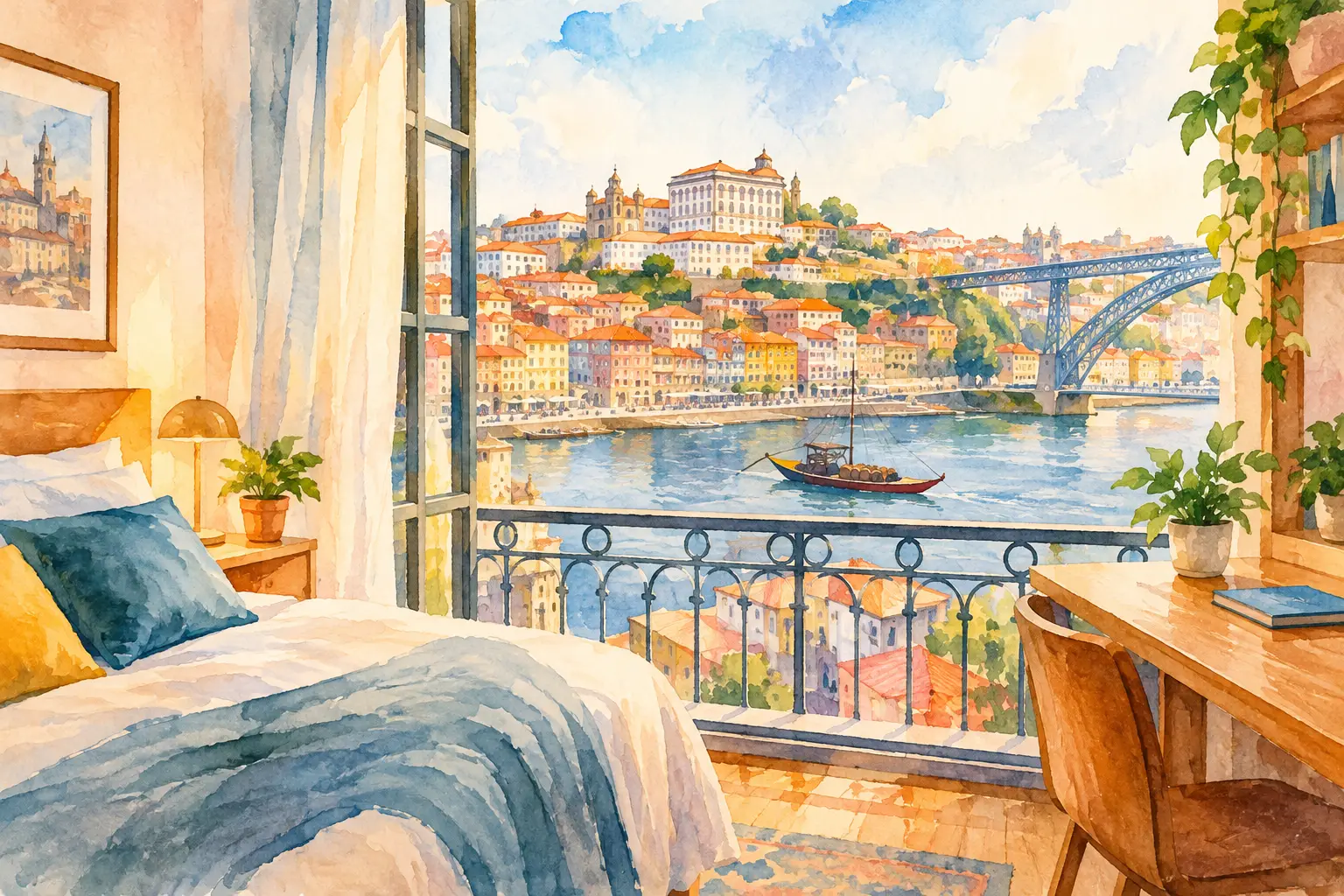



How to Select Private Accommodation in Porto
Porto rewards travellers who choose their base with care. A morning might begin with coffee beneath tiled façades, continue through the steep lanes of Miragaia, and end beside the Douro as the city lights gather on the water. Knowing how to select private accommodation is therefore not simply about finding a comfortable bed. It is about choosing the setting that gives each part of the city the right rhythm.
For some guests, that means a quiet room and an easy walk to galleries, restaurants and river views. For others, it is a historic house with a garden, thoughtful design and the feeling of being received rather than processed. The best choice depends on how you wish to spend your days, and how you hope to feel when you return each evening.
Start with the kind of Porto you want to experience
Porto is compact enough to explore on foot, but it is also famously hilly. A location that looks close on a map may involve a steep climb after dinner, while an address a little beyond the busiest streets can bring a welcome sense of calm. Before comparing rooms, decide whether your priority is immediate proximity to major sights, a neighbourhood atmosphere, or a retreat from the energy of the centre.
The historic centre places you close to landmarks, wine bars, independent shops and the riverside. It is ideal for a first visit, particularly if you want to wander without planning every journey. Yet the busiest areas can be noisy late into the evening, especially around popular nightlife streets. Travellers who value sleep may prefer a peaceful side street within walking distance of the action rather than a room directly above it.
Look beyond the phrase “central location”. Read where the accommodation sits in relation to the places you genuinely want to visit: the Douro riverfront, São Bento Station, the galleries around Miguel Bombarda, the gardens of the Crystal Palace, or a preferred restaurant district. Consider transport too. If you are arriving with luggage, a nearby metro or taxi drop-off point matters more than it may seem on Porto’s cobbles.
How to select private accommodation with real character
Private accommodation can mean many things: an entire flat, a guesthouse, a small hotel, or a room in a historic home. Privacy is not only about having a key to your own room. It can also mean fewer guests, quieter shared spaces, personal attention and a sense that the house has a life beyond its booking photographs.
Begin with the scale of the property. A large hotel may offer a reception at every hour, extensive facilities and a familiar level of predictability. A small residence often provides something different: fewer rooms, more distinctive interiors and a more considered relationship with the building and its neighbourhood. Neither is automatically better. The right fit rests on whether you seek anonymity and convenience, or intimacy and individuality.
Historic buildings deserve particular attention. Their original staircases, high ceilings, shuttered windows and patterned tiles can make a stay memorable, but they may also come with practical features that differ from a newly built hotel. Check whether there is a lift, ask about stair access if mobility is a concern, and understand the layout of the room you are considering. Character should feel generous, not inconvenient.
Photographs are useful, but they should tell a coherent story. Look for images of the room itself, the bathroom, entrance, breakfast area and outdoor spaces, not only close-up details. Notice natural light, proportions, storage and whether the furniture appears chosen for comfort as well as style. The most appealing private stays do not imitate one another. They reveal a clear point of view, often through local materials, art and the careful preservation of the house’s past.
Read reviews for patterns, not perfection
Reviews can reveal what polished descriptions cannot: how a room feels at night, whether the welcome is warm, and whether the surroundings suit the type of trip you have planned. A single unhappy comment may reflect an unusual circumstance. Repeated comments about street noise, poor sound insulation, limited hot water or difficult access deserve more weight.
Pay close attention to reviews from travellers whose needs resemble your own. Couples may value atmosphere and room ambience; solo guests may mention safety and ease of arrival; friends travelling together will often clarify whether beds, bathrooms and common spaces work comfortably for more than one person. If you intend to work during part of your stay, seek recent remarks on Wi-Fi and a suitable place to sit, rather than relying on a general statement that internet access is available.
Positive reviews are equally revealing when they are specific. Phrases such as “quiet despite being central”, “excellent local recommendations” or “beautiful garden after a day of walking” tell you far more than a generic five-star rating. They indicate the details guests carried home with them.
Match the room to your daily habits
A beautiful room is only truly successful when it supports the way you travel. Think through an ordinary morning and evening rather than focusing solely on arrival. Do you like to linger over breakfast before setting out? Would you rather have the freedom of self-catering? Do you need a desk, a bath, blackout curtains or a place to dry clothes after a day at the coast?
For a short city break, a well-run breakfast can be a small luxury. It saves time, gives you a gentle start and may introduce Portuguese pastries, seasonal fruit and local flavours before a day of exploration. For a longer stay or a family trip, kitchen facilities could be more useful. There is no universal answer, but the distinction should be clear before you book.
Outdoor space is another detail worth valuing in a city. Porto’s viewpoints and public gardens are lovely, yet a private terrace or leafy courtyard changes the pace of a stay. It offers a place to read before dinner, enjoy a glass of wine after a long walk, or simply hear birds rather than traffic. In spring, when camellias flower across the city, a garden can feel especially connected to Porto’s quieter beauty.
Ask practical questions before reserving
The clearest accommodation listings anticipate practical needs, but it is sensible to confirm details that could affect your comfort. In particular, establish:
- the exact bed arrangement and whether it suits your travelling companion;
- access arrangements for late arrivals and early departures;
- stairs, lift availability and any mobility considerations;
- heating or air conditioning for the season of your visit; and
- luggage storage, parking or transfer advice where relevant.
These questions are not fussy. They are the difference between a stay that merely photographs well and one that feels easy from the first hour.
Consider service as part of the atmosphere
The appeal of private accommodation often lies in independence, but independence need not mean being left entirely alone. The most generous hosts offer useful guidance without intruding: where locals go for lunch, which river cruise best suits a quiet afternoon, or how to plan a day in the Douro Valley without rushing.
Think about the amount of support you would welcome. A self-check-in flat may suit travellers who know the city and want complete autonomy. A small, attentive property can be more reassuring if it is your first time in Porto, if you are celebrating something special, or if you would value restaurant suggestions shaped by real local knowledge.
Service also appears in small acts of care: clear communication before arrival, a room that is impeccably prepared, and staff who understand that a guest may want either conversation or privacy. At Casa Camélia, the scale of a nine-room manor house allows this balance, pairing the independence of a city stay with the warmth of a personally tended home.
Value is more than the nightly rate
When comparing options, look at the total experience rather than the first price displayed. A lower rate can lose its appeal if breakfast, luggage storage, city taxes, parking or a later arrival arrangement add unexpected costs. Equally, a room with a slightly higher rate may include the calm, location and considered service that make your precious holiday time more enjoyable.
Season matters too. Porto is lively throughout the year, but the feeling of a stay changes with the weather and the city calendar. Summer brings long evenings and fuller streets; winter can be wonderfully atmospheric, with fewer crowds and a greater pleasure in returning to a warm, characterful room. If quiet is essential, ask whether your dates coincide with major festivals, sporting events or busy weekends.
The best private accommodation should make you feel more connected to Porto, not removed from it. Choose a place whose surroundings invite you out, whose interiors make you glad to return, and whose practical details let you stop thinking about logistics. Then leave room in your plans for the unplanned pleasures: a camellia in bloom behind an old wall, a hidden wine bar, or the long walk downhill when the Douro first appears.