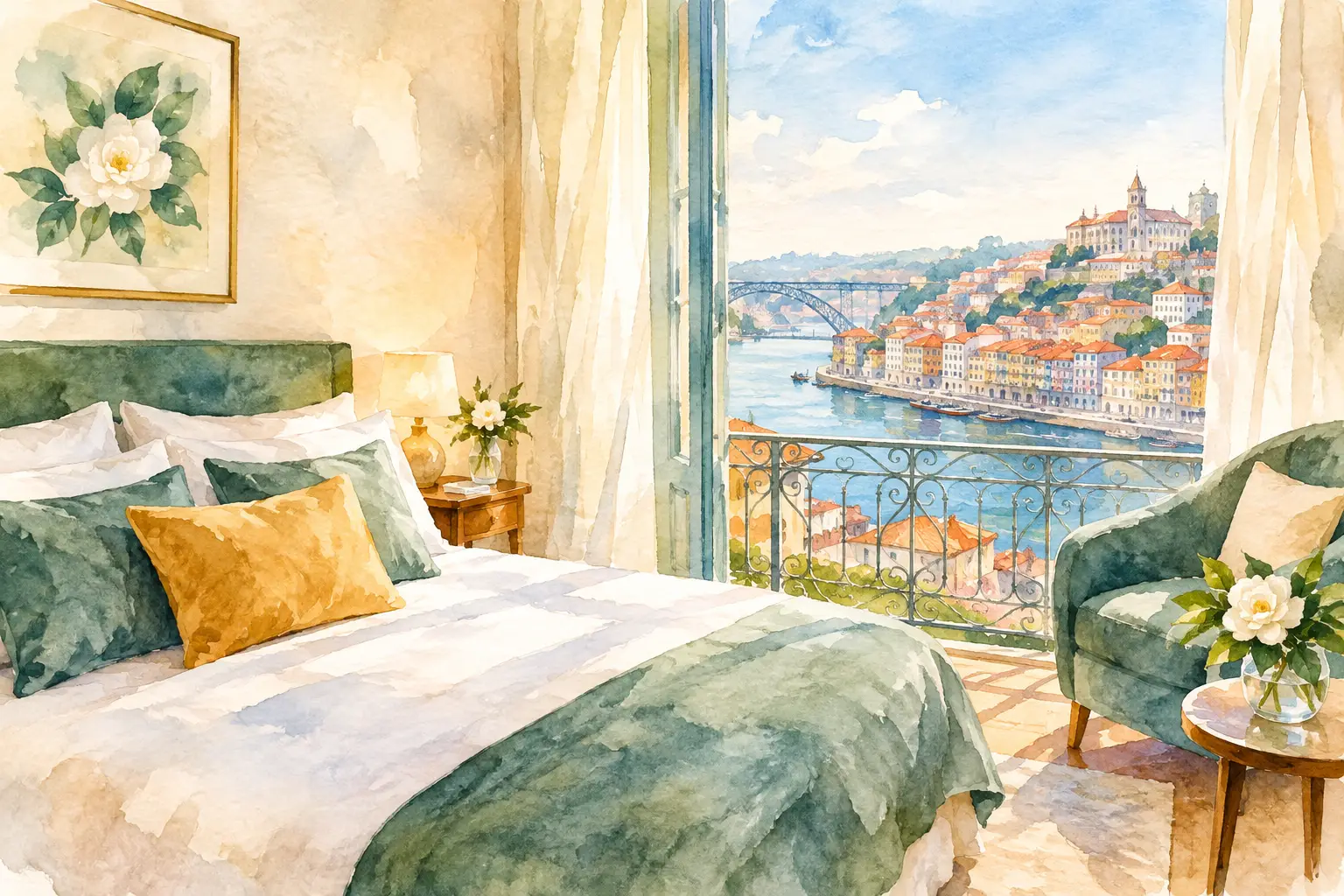



What Makes Porto Rooms Unique at Casa Camélia?
A room in Porto can be far more than a convenient address between breakfast and the next viewpoint. For travellers who choose character over uniformity, what makes Porto rooms unique is their ability to hold the city’s contrasts: aged stone and fresh colour, lively streets and private gardens, grand history and the easy intimacy of a home away from home.
Porto is a World Heritage City built in layers. Its tiled façades, steep streets and river-facing warehouses tell stories of trade, craft and family life, while a new generation of galleries, restaurants and independent makers keeps the city spirited and contemporary. The most memorable rooms reflect that same character. They do not try to smooth Porto into something generic. They let its textures, light and romance remain present.
What makes Porto rooms unique?
The finest stays in Porto begin with a sense of place. Rather than reproducing a familiar hotel interior that could belong anywhere, distinctive rooms take their cues from the city itself: high ceilings in old townhouses, wooden shutters, original stone details, patterned tiles, and windows that frame the sloping streets or soft northern light.
Historic architecture is part of the appeal, but it is not the whole story. A beautiful old building needs thoughtful renovation to feel comfortable after a day walking from Ribeira to the gardens of Palácio de Cristal. The balance matters. Guests may hope for antique character, yet still appreciate a restful bed, a well-considered bathroom, good lighting and space to settle in without ceremony.
That balance is especially meaningful in Porto, where many traditional homes were designed with a sense of proportion that modern buildings rarely imitate. Tall rooms, thick walls and quiet corners lend an unhurried atmosphere. Even before leaving for the day, a guest can feel connected to the city’s past.
Individuality, not a repeated formula
In a small boutique house, rooms need not be copies of one another. One may be washed in a deep, jewel-like hue; another may feel airy and pale, with a view towards the garden. A room beneath the roof might have a more tucked-away, private character, while a garden-level pavilion may offer the pleasure of stepping outdoors with a morning coffee.
This individuality is not simply decorative. It helps guests choose a stay that suits the way they travel. Couples planning a romantic city break may be drawn to a room with generous proportions and period features. A solo traveller might prefer a peaceful, light-filled space that feels safe and personal. Friends travelling together may value separate room styles within the same house, allowing everyone a little privacy while sharing a common base.
There is a trade-off worth welcoming: historic properties rarely offer the identical dimensions and layouts of a larger contemporary hotel. A room may have an unusual corner, an original staircase nearby or a different outlook from its neighbour. In return, it offers personality. For many visitors, that is precisely the point.
Art gives a room its local voice
Porto has long been a city of makers. Its artistic identity can be seen in azulejo panels, carved church interiors, bookbinding, ceramics, fashion and the graphic energy of its streets. When local art is part of a room, it moves beyond a decorative finishing touch. It gives a visitor a more immediate relationship with the city.
At Casa Camélia, each of the nine guest rooms is individually painted by Porto artist Marta Vilarinho de Freitas. Her work brings colour, gesture and a distinctly local imagination into the house, allowing every room to feel composed rather than merely furnished. It is a gentle invitation to look more closely – at the painted walls, at the changing daylight, and at the creative life that continues beyond Porto’s historic façades.
This kind of artistic detail creates a stay that remains vivid in memory. Travellers may forget the exact shape of a standard bedside table, but they remember the colour that greeted them each morning, the texture of a painted surface, or the feeling of sleeping in a room that could not be replicated elsewhere.
The quiet luxury of a private garden
Porto rewards wandering. Its hills lead to miradouros, wine lodges, lively terraces and the broad sweep of the Douro River. Yet the city can also be busy, particularly in the warmer months and around its most celebrated landmarks. A room with access to a private outdoor refuge changes the rhythm of a stay.
A romantic and vast private garden offers a pause between adventures. Here, the sound of the city softens. Camélia trees provide shade, seasonal beauty and a link to Porto’s identity as the City of Camélias. There is something particularly restorative about returning from a long lunch by the river or an afternoon in the galleries of Cedofeita and finding a green, quiet place waiting behind an old manor house.
Not every visitor needs a garden. Some prioritise a rooftop view, a riverside address or immediate access to nightlife. But for guests who want to experience Porto fully without feeling immersed in its bustle at every moment, a garden can be a rare luxury. It makes the room feel less like a stopover and more like a retreat.
A central location with room to breathe
Location is often treated as a simple question of distance. In Porto, it is also a question of rhythm. The best base allows guests to walk to the places that make the city exciting, then return easily when they need rest.
From a central yet tucked-away setting, a morning can begin slowly with breakfast before a walk towards the river. The afternoon might bring a visit to the cathedral, a crossing of the Dom Luís I Bridge, or a leisurely exploration of independent shops and cafés. In the evening, the city’s restaurants, bars and music venues are close enough to enjoy without relying on a car.
A well-situated room also leaves room for the wider region. Porto is a natural starting point for a day in the Douro Valley, a cycle ride, a coastal walk, a surf lesson or an escape to nearby beaches. Returning to an intimate house after a full day beyond the city has its own pleasure: the holiday retains its sense of discovery, but the room remains a familiar and welcoming place to come back to.
Hospitality on a human scale
Large hotels can offer extensive facilities, round-the-clock activity and the reassuring predictability of an international brand. Those benefits suit some trips, especially when guests need conference space, a full spa or every service under one roof. A nine-room house offers something different: attentiveness shaped by scale.
In an intimate property, breakfast feels less like a crowded event and more like the beginning of the day. A beautifully prepared buffet can become a moment to linger, plan a route and exchange a few warm words before heading out. The atmosphere is often quieter, more personal and more relaxed, particularly for guests who value privacy.
Small-scale hospitality also suits Porto’s own character. This is a city best understood through details: a favourite pastry shop, the changing colour of the river, an old doorway noticed on an unplanned turn. A room with warmth and individuality encourages that way of travelling. It asks for a little more curiosity, and offers much more in return.
Choosing the Porto room that suits your stay
When comparing rooms in Porto, it helps to think beyond the number of square metres. Consider how you want to feel at the beginning and end of each day. If your ideal holiday includes long walks, late dinners and nearby cultural sights, choose somewhere central. If you are drawn to architecture and design, look for a restored building where original features are treated with care. If rest matters as much as exploration, seek a garden, a quiet outlook or a smaller house with fewer guests.
The most distinctive room is not necessarily the grandest one. It is the one that gives your visit a particular texture: morning light across painted walls, the scent of camélias after rain, a peaceful breakfast before Porto opens around you. Choose a room that leaves space for the city to surprise you, then makes returning feel like part of the pleasure.