


How to Explore Porto on Foot, Beautifully
Porto reveals itself at walking pace. A blue-and-white tiled façade catches the morning light; a narrow stairway opens onto the Douro; the scent of coffee and warm pastel de nata drifts from a small neighbourhood café. To explore Porto on foot is to meet the city in these in-between moments, when its grand monuments and everyday life sit beautifully side by side.
This is a city of hills, cobbles and sudden views, so the aim is not to see every landmark in a single day. It is to follow a graceful rhythm: a morning among the great buildings, a long lunch, a slow descent towards the river, then an evening in a district that feels alive after dark. Good shoes and an unhurried plan will take you far.
Begin in the centre, where Porto tells its story
Start around Avenida dos Aliados, Porto’s stately central boulevard. Its monumental buildings and broad pavement create a fitting introduction to a city shaped by commerce, craftsmanship and civic pride. From here, São Bento Station is only a short walk away. Even if you are not catching a train, step inside to see the vast azulejo panels that portray moments from Portuguese history in thousands of hand-painted tiles.
Continue towards the Sé do Porto, the city’s cathedral. The route becomes older and more intimate as the streets narrow and the ground begins to fall away. The cathedral’s Romanesque presence is remarkable, but do not rush past its surroundings. From the terrace nearby, rooftops tumble towards the river in a view that explains Porto’s enduring romance.
This is one of the best places to pause rather than press on. Porto rewards looking up: iron balconies, laundry moving between windows, granite doorframes softened by age, and small shrines tucked into corners all belong to the city’s visual language.
Choose the downhill route, not the perfect route
From the cathedral, make your way through the lanes of the historic quarter towards Ribeira. There are several possible paths, and the prettiest one may be the street you had not intended to take. Rua das Flores is a natural choice for its handsome façades, independent shops and cafés, while the quieter medieval lanes around the Sé offer a stronger sense of old Porto.
The descent can be steep and uneven. Those with limited mobility, or anyone travelling with a buggy, may prefer to use a taxi or public transport for part of the journey and reserve their energy for the riverside. There is no virtue in conquering every hill if it means missing the pleasure of the city.
Explore Porto on foot beside the Douro
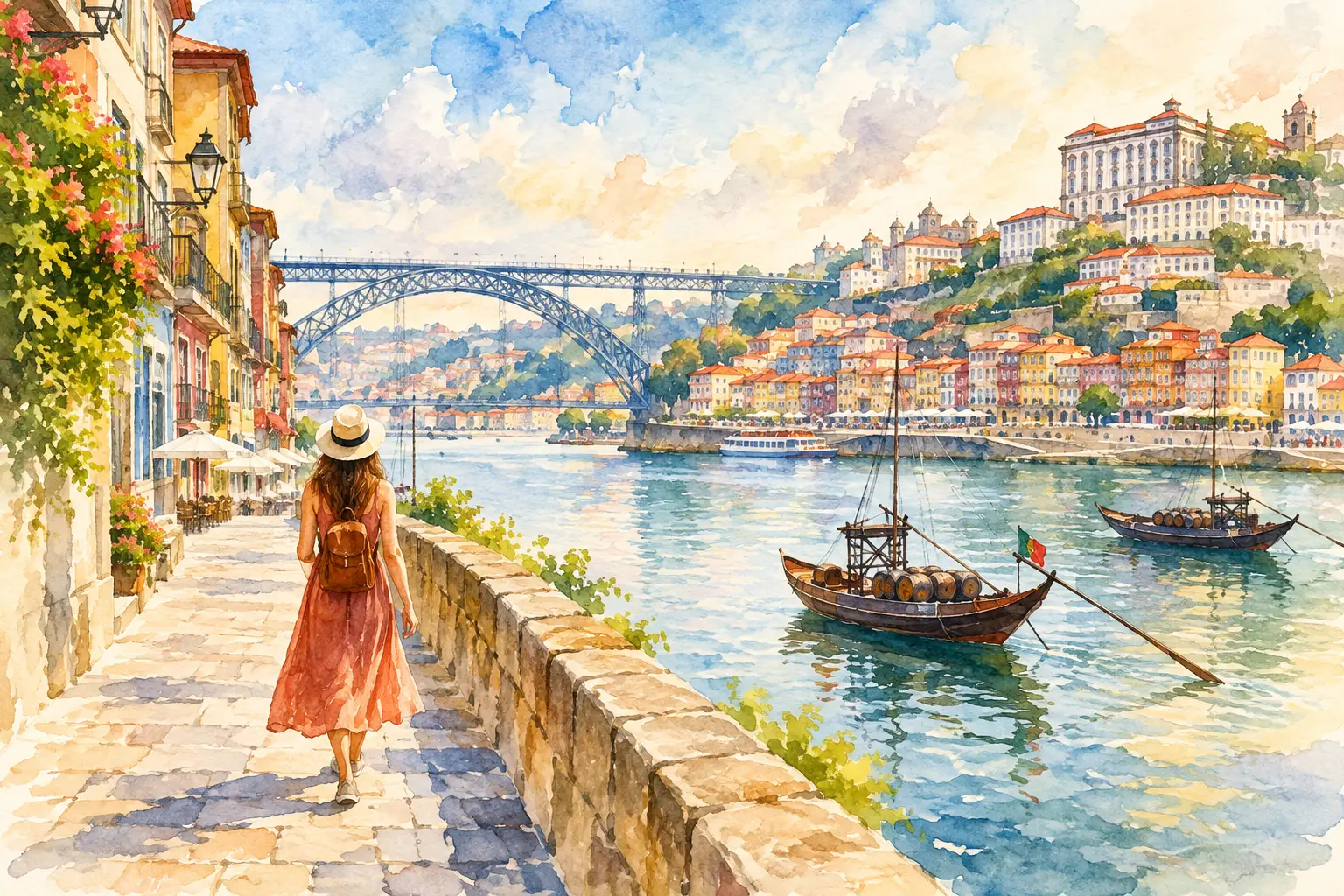
At Ribeira, the river becomes the centre of the scene. Brightly painted houses line the waterfront, traditional rabelo boats rest on the Douro, and the metal arc of Ponte Dom Luís I frames Vila Nova de Gaia on the opposite bank. It is one of Porto’s most photographed views, yet it still has the ability to stop you in your tracks.
Walk along the quayside in the late afternoon, when the light is softer and the river seems to hold every colour of the sky. This is an area made for lingering, although it can be busy in high season. For a quieter experience, move a little west along the river towards Miragaia. The crowds thin, the houses become more residential, and the waterside takes on a gentler character.
Crossing the lower deck of Ponte Dom Luís I gives a close, lively perspective of the river. For wider views, take the upper level later in the day. It is high, open and memorable, though it may not suit visitors uneasy with heights. On the Gaia side, the famous port lodges invite a different kind of exploration, but allow enough time to return across the bridge before your evening plans.
Let the neighbourhoods set the pace
A satisfying walking day in Porto often has less to do with a checklist than with choosing a neighbourhood and allowing it room to surprise you. Cedofeita, west of the historic core, has an artistic, lived-in atmosphere. Here, galleries, design shops and relaxed restaurants sit among traditional residences. It is especially appealing for travellers who enjoy contemporary culture as much as historic grandeur.
Further north, around Bolhão, Porto feels more local and practical. The market area has long been associated with produce, flowers and the pleasing theatre of daily shopping. Nearby streets lead towards Capela das Almas, whose exterior is covered in exquisite blue tiles. Visit early if you want a little space to take in the detail.
For a more contemplative afternoon, walk towards the gardens of Palácio de Cristal. The paths overlook the Douro, while peacocks wander through greenery and stone terraces. It is a welcome counterpoint to the city’s dense streets, particularly after a morning of climbing. Porto’s beauty is not only found in its façades; it also lies in the quiet intervals between them.
Casa Camélia sits within easy walking distance of many of these neighbourhoods, offering a peaceful return after a day among the city’s hills, tiles and river views. Its romantic and vast private garden provides a rare sense of stillness in the centre of this World Heritage City.
A walk for the evening
As daylight fades, head towards Clérigos and the streets around Galerias de Paris. The Clérigos Tower is an unmistakable marker above the rooftops, and the surrounding district shifts easily from afternoon browsing to aperitifs, dinner and music. It is lively rather than hushed, so it suits evenings when you would like to feel Porto’s energy close at hand.
If you prefer something softer, take a slower route through Vitória or back towards the river, stopping at a small wine bar or traditional restaurant along the way. Reservations are wise for sought-after tables, particularly from Thursday through Saturday. The pleasure of walking means you can follow your appetite, but a little planning avoids ending a beautiful evening searching for a table.
Practical notes for Porto’s hills and cobbles
Porto is compact, but it is not flat. Treat it as a series of distinct walks rather than one continuous march across the city. A route that looks short on a map may include a demanding climb, slippery stones after rain or steps that make wheeled luggage impractical.
Wear comfortable shoes with a dependable grip, particularly between November and March, when polished cobbles can be wet. Carry water in warmer months and keep a light layer close by: the Atlantic air can change quickly, even on a sunny day. For the most enjoyable rhythm, begin earlier than you think necessary, take a generous lunch break, then resume your walk in the late afternoon.
It also helps to mix celebrated sights with unscripted turns. Visit Livraria Lello or the Clérigos area early, when queues are generally more manageable, then leave room for a side street, a neighbourhood bakery or a viewpoint discovered by chance. Porto is not a city that asks to be consumed quickly. Its character emerges slowly, in granite, tile, river light and conversation.
Save one final walk for the morning before you leave. Follow the streets while shutters are lifting and cafés are setting out their first tables, then look back towards the city’s layered rooftops. You may find that the Porto you remember most is not a single landmark, but the feeling of having belonged, briefly, to its daily rhythm.