


Plan a Porto Weekend With Time to Wander
Porto reveals itself in fragments: blue-and-white tiles glimpsed from a climbing street, the scent of coffee drifting from a small café, the Douro turning silver beneath the bridges. To plan a Porto weekend well, resist the temptation to race between every famous sight. This is a city best enjoyed with a little space between plans – enough time for a long lunch, a viewpoint found by chance and an unhurried walk home through the old streets.
For a first visit, three days offers a generous introduction to Porto’s historic centre, riverbanks and food culture. The city is compact, but its hills are real, so group each day by neighbourhood and let the rhythm remain pleasantly unforced.
How to plan a Porto weekend around its neighbourhoods
Choose a central base that allows you to walk to both the grand landmarks and the less obvious corners. The area around Cedofeita, Clérigos and the upper old town is especially rewarding: close to galleries, independent restaurants and nightlife, yet within reach of Ribeira and the Douro. A stay at Casa Camélia adds another kind of pause to the itinerary – a restored manor house and romantic private garden where the city’s energy gives way to birdsong and camellia leaves.
Porto is steep and cobbled in places, so comfortable shoes matter more than a rigid schedule. Taxis and ride-hailing services are useful after dinner or when rain arrives, while the historic trams are charming rather than quick. If you are travelling in summer, reserve key restaurants and a port cellar visit ahead. In winter, book a table for lunch and keep a museum or wine tasting in reserve for a wet afternoon.
Friday: arrive, look up, and settle into the city
Begin your weekend in the streets around Clérigos. The famous baroque tower remains one of Porto’s finest orientation points, rising above rooftops of terracotta and slate. Climb it if you do not mind narrow steps, but leave room for the surrounding lanes too. Rua das Flores is lively and handsome, with old façades, small shops and an easy descent towards the river.
Nearby, São Bento station is worth visiting even if you are not catching a train. Its entrance hall is covered in vast azulejo panels that tell stories from Portuguese history in blue and white. Go early evening, when the crowds often thin and the tiled scenes have a quieter presence.
For dinner, seek Portuguese cooking that feels rooted rather than theatrical. Porto does generous, comforting food beautifully: grilled fish, rice dishes, salt cod and seasonal vegetables, followed by a glass of Douro red. If the evening is still young, walk towards Galerias de Paris and the side streets nearby, where wine bars and small music venues bring a relaxed liveliness to the old centre.
Saturday: the historic heart and the Douro river
Start early at Livraria Lello, if it is on your wish list. Its carved timber staircase and stained glass are striking, but timed entry is wise, and the experience can feel busy. Those who prefer a calmer morning may find greater pleasure in wandering around the nearby university quarter, then stopping for coffee and a pastel de nata at an independent café.
From here, make your way downhill through the Sé district. Porto Cathedral stands high above the city, its square opening onto broad views of clustered roofs and the river beyond. The medieval lanes around it retain a sense of the city before grand avenues and polished shopfronts. Take care on the uneven paving and allow yourself to take the slower route.
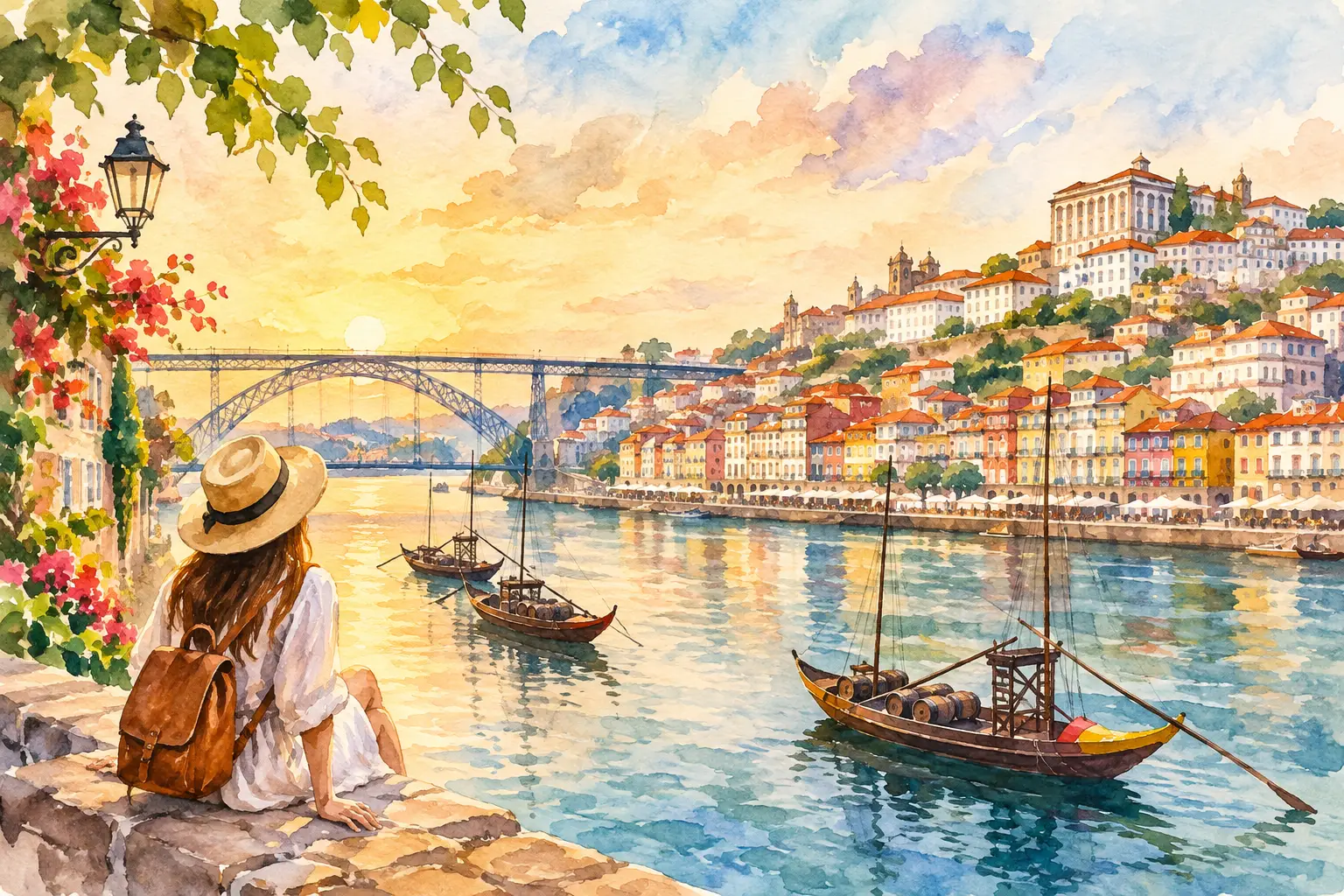
By lunchtime, arrive in Ribeira. The riverfront is Porto at its most cinematic: painted houses crowd the bank, rabelos bob on the water, and the iron span of Dom Luís I bridge frames Vila Nova de Gaia opposite. It is also the city at its busiest. Have a drink by the water if you wish, then step one or two streets uphill for a more peaceful lunch.
Cross the lower level of the bridge to Gaia for an afternoon in the historic port wine lodges. A guided tasting provides welcome context, explaining the journey from the terraced vineyards of the Douro Valley to these riverside cellars. Choose a lodge that appeals to your tastes rather than trying to visit several. One thoughtful tasting is far more memorable than a hurried succession of glasses.
Before returning to Porto, take the cable car or walk uphill to Jardim do Morro. At sunset, the city appears almost theatrical: the river curves beneath the bridge, church towers catch the last light, and Porto’s layered hills recede behind them. It is a popular spot, particularly in warmer months, but there is room to enjoy the view without turning it into a race for the best photograph.
For the evening, consider a dinner in Cedofeita or near Praça de Carlos Alberto. These neighbourhoods offer a more local, creative atmosphere than the riverfront, with excellent contemporary Portuguese cooking alongside traditional taverns. Book ahead on a Saturday, especially if you have a particular restaurant in mind.
Sunday: art, gardens and a gentler Porto
Sunday is ideal for the Porto that sits beyond the headline sights. Begin at the Palácio de Cristal gardens, where paths lead through shaded planting, formal terraces and exceptional views across the Douro. Peacocks wander freely, and the gardens make a lovely counterpoint to the previous day’s cobbles and crowds. Bring a coffee, take a seat above the river and enjoy the city at a softer pace.
Art lovers can continue to the Museu Nacional Soares dos Reis, housed in an elegant former palace, or head to the Serralves estate. Serralves takes more time and is best treated as a destination in itself, combining contemporary art, modernist architecture and expansive grounds. It lies outside the centre, so use a taxi if your weekend is short.
If the weather is bright and you would rather be by the Atlantic, take the old tram or a taxi to Foz do Douro. Here the river meets the ocean, with promenades, beaches and handsome nineteenth-century villas. The light is different from central Porto: wider, saltier and often a little windier. Lunching on fresh fish near the seafront can be a fitting final meal before departure.
Those staying in town may prefer the smaller pleasures of Cedofeita instead. Browse its design shops and galleries, linger over brunch, then visit Igreja do Carmo for its extraordinary tiled exterior. A few relaxed hours in this part of Porto often become the moments people remember most, precisely because they were not planned to the minute.
Make room for Porto’s seasonal character
Porto changes beautifully through the year. Spring brings flowering gardens and mild walking weather, while early autumn offers warm afternoons with fewer summer crowds. June is particularly festive during São João, when the city fills with music, grilled sardines and joyful street celebrations. It is unforgettable, but accommodation and restaurant reservations need to be made well in advance.
Summer is animated and sunlit, ideal for riverside evenings and a day in Foz, though afternoons can be hot on the steep streets. Winter has its own allure: mist over the Douro, cosy dining rooms and a quieter mood in galleries and wine lodges. Pack layers at any time of year. Atlantic weather can shift quickly, and a light waterproof is rarely a regretted addition.
A longer stay opens the door to the Douro Valley, Guimarães or the coastal paths south of the city. But for a weekend, keep the horizon close. Porto rewards attention: the painted ceiling in a church, the pattern of a wrought-iron balcony, the particular colour of the river before rain.
Leave a final hour unclaimed before you go. Sit in a garden, order one more coffee, or walk to a viewpoint you have not yet seen. The best Porto weekends are not measured by how much has been ticked off, but by how warmly the city stays with you afterwards.