


Porto Accommodation Comparison: Find Your Stay
Porto is a city of changing moods: sunlit façades above the Douro, narrow lanes where the evening lingers, and quiet gardens hidden behind grand old walls. A thoughtful Porto accommodation comparison is therefore less about finding a bed than choosing the version of the city you wish to come home to. Do you want the ease of a full-service hotel, the independence of a flat, or the atmosphere of a small house with a story to tell?
For a short city break, the right setting can shape each day. Porto is wonderfully walkable in places, but its hills, cobbles and late-night energy mean that location, character and comfort deserve equal consideration.
What matters most when choosing where to stay in Porto
The best choice depends on how you plan to spend your time. Travellers who intend to see the great landmarks from morning to evening may favour a central address with everything close at hand. Those planning long lunches, galleries and unhurried strolls may prefer a quieter street, still within walking distance of the historic centre.
Porto’s accommodation is also defined by its buildings. Many are beautifully restored townhouses, while others occupy newer addresses or former warehouses. Historic charm can bring high ceilings, original stonework and graceful staircases. It can also mean an older layout, so it is wise to consider lift access, room size and street noise before reserving.
Rather than looking only at a nightly rate, consider the rhythm of the stay. Breakfast on site, a calm outdoor corner and a host who knows the city can add genuine pleasure to a two- or three-night visit. Equally, a self-catering space can be ideal when you would like a slower morning or are travelling with friends.
Porto accommodation comparison: the main choices
Larger hotels for familiar comforts
Larger hotels suit guests who value predictable facilities, a reception desk at all hours and, often, extras such as a gym, spa or restaurant. They can be particularly convenient for a one-night stop, business travel or guests who feel more comfortable with a conventional hotel format.
The trade-off is that the experience may feel similar to one in another European city. Design-led hotels can certainly have a strong sense of place, but a larger property rarely offers the quiet intimacy of a house where every room is distinct. If your holiday is centred on local character, look beyond the lobby and ask what will make the stay feel specifically Porto.
Boutique guesthouses for character and calm
A small boutique property is often the most rewarding choice for couples, solo travellers and culturally curious guests. It offers a more personal scale, with fewer rooms, considered interiors and the feeling of staying in a private residence rather than passing through a hotel floor.
This format works especially well in Porto, where restored manor houses and townhouses can retain their original proportions while embracing contemporary Portuguese design. A garden, terrace or drawing-room-like common space can be a welcome contrast to the lively streets outside. The compromise is that facilities are naturally more selective: there may be no large restaurant, extensive spa or round-the-clock room service.
For many guests, that is precisely the appeal. A smaller stay can offer an unhurried breakfast, thoughtful recommendations and a gentler return at the end of the day.
Self-catering flats for independence
A flat can be practical for families, small groups or visitors staying several nights. Having a kitchen makes it easier to linger over market purchases, and extra living space can be useful after a day of walking. It may also offer good value when the cost is shared.
Yet independence comes with responsibility. Check whether the flat is on a steep street, whether check-in is managed in person and whether there is reliable heating or air conditioning for the season. In the historic centre, charming buildings sometimes have limited sound insulation. There is also a difference between a flat that feels thoughtfully hosted and one that simply provides a code for the door.
Hostels for sociable, lower-cost stays
Porto has imaginative hostels, including some in striking historic buildings. They are well suited to solo travellers who want to meet people and prioritise spending on food, wine and experiences rather than their room.
Privacy is the key consideration. Even a private hostel room may have a busier atmosphere than a guesthouse, particularly during weekends and summer. If restful sleep, a romantic setting or a peaceful place to read matters to you, a small hotel or boutique house is often the better fit.
Choose the neighbourhood before the room
Baixa, Aliados and Santo Ildefonso
For first-time visitors, central Porto is compelling. From here, many of the city’s celebrated churches, bookshops, cafés and viewpoints are within easy reach. You can walk towards Ribeira and the river, then return uphill by taxi or public transport when your legs ask for mercy.
Central convenience does bring activity. Streets around nightlife areas can remain animated late into the evening, so travellers who sleep lightly should seek a room facing a courtyard, garden or quieter side street.
Cedofeita and the arts quarter
Cedofeita offers independent shops, galleries, excellent restaurants and a more residential feeling without losing proximity to the centre. It suits guests who enjoy wandering without a fixed itinerary and prefer neighbourhood cafés to the busiest visitor routes.
This area is a fine middle ground for a long weekend: close enough for the principal sights, but with a little more room to experience Porto’s everyday creative life.
Ribeira and the riverfront
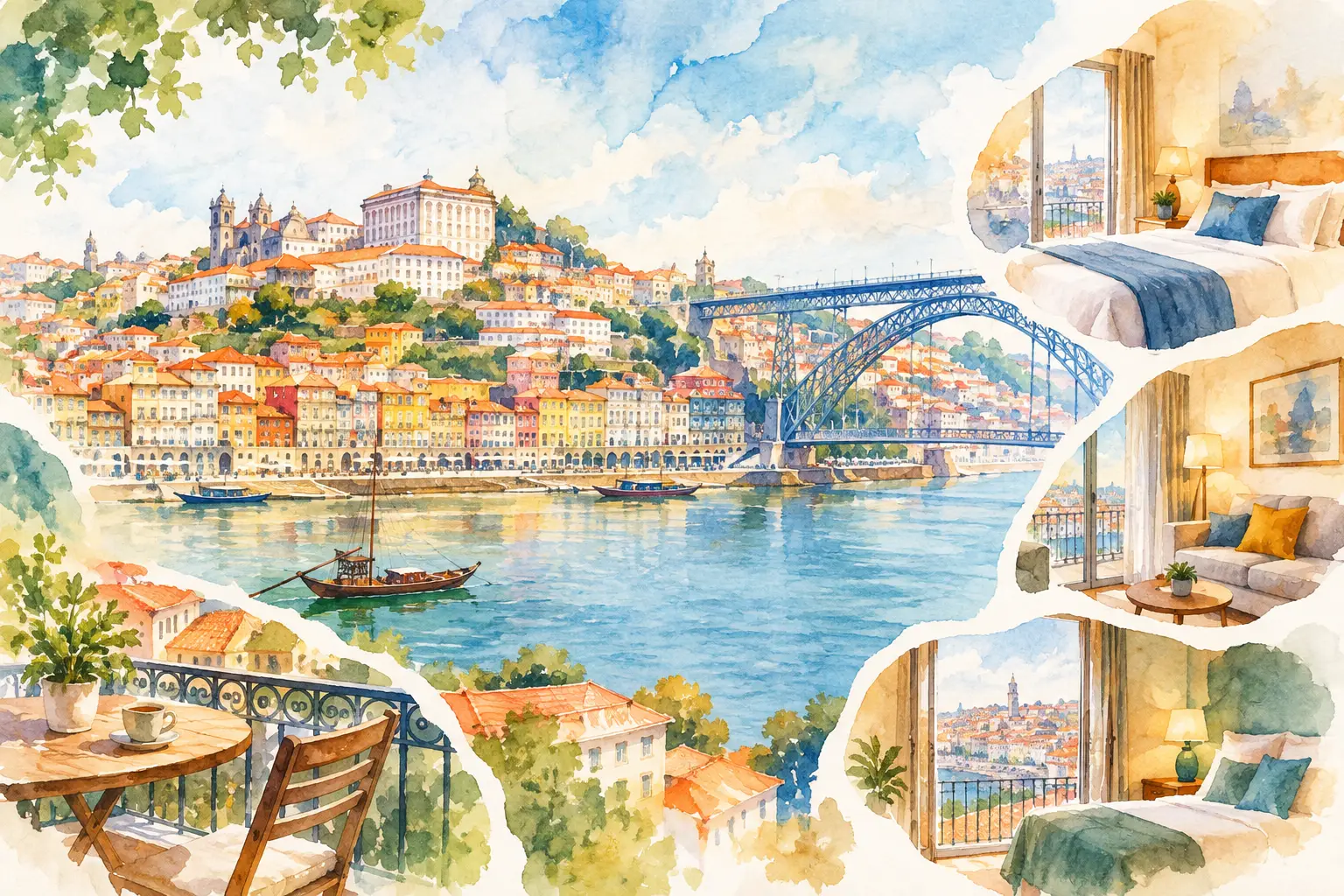
The riverfront is unforgettable at first light and magical after dark, with the Dom Luís I Bridge rising above the Douro. Staying here places you close to boat trips, wine cellars across the river in Vila Nova de Gaia, and some of Porto’s most photographed views.
It is also one of the busiest parts of the city. Rooms can be smaller, streets more tourist-focused and evening noise more noticeable. Choose Ribeira for the river on your doorstep, rather than for quiet seclusion.
Bonfim and Foz for a different pace
Bonfim, east of the centre, has a local, evolving atmosphere and can offer a little more space. It is a considered option for return visitors or anyone happy to use public transport occasionally.
Foz do Douro, where the river meets the Atlantic, is ideal for sea air, coastal walks and a refined residential mood. It is less convenient for repeated trips to the historic centre, however, so it works best when the beach and the city are equally important to your plans.
Match the stay to your kind of Porto holiday
For a romantic break, favour atmosphere over sheer room count. A beautifully designed room, breakfast in a tranquil setting and a walkable address make spontaneous evenings easy. Porto rewards leaving space in the itinerary for a glass of port at sunset or a late dinner in a small restaurant.
Solo travellers may place greater value on warm hospitality, a secure central location and useful local guidance. A good host can suggest the best route to a viewpoint, an independent gallery or a table for one that feels entirely natural.
Small groups should decide early whether shared space or individual privacy matters more. A flat provides a place to gather, while several rooms in a boutique property allow everyone to retreat at the end of the day. For friends with different sleeping habits, separate rooms may make a city break considerably more harmonious.
If Porto is the beginning of a wider northern Portugal journey, central accommodation remains useful. Day trips to the Douro Valley, coastal cycling, hiking and surf excursions often start early. A comfortable breakfast and straightforward transport arrangements are more valuable than being in the heart of the late-night scene.
The details that make a stay feel effortless
Before booking, look beyond photographs. Confirm whether breakfast is included, whether there is outdoor space, and how far the walk is from the sights you most want to see. In a hilly city, a ten-minute walk on a map can feel very different with luggage or after dinner.
Ask about room orientation if quiet is essential, and check whether the property has a lift if mobility is a consideration. During warmer months, air conditioning may be important; in cooler, damper periods, heating and a comfortable lounge can transform a rainy afternoon.
For travellers drawn to history, art and a more intimate kind of hospitality, Casa Camélia offers a distinctive balance. Its restored 18th-century manor house sits close to the centre, yet its romantic and vast private garden offers a peaceful pause from the World Heritage City beyond its gates. With just nine individually designed rooms and art by Porto painter Marta Vilarinho de Freitas, it feels connected to the city rather than separate from it.
Porto is at its most memorable when your accommodation gives you both access and respite: a place from which to step into its colour, music and river light, then return with the feeling that the city has welcomed you personally.